Patrick West

Patrick West is a columnist for Spiked and author of Get Over Yourself: Nietzsche For Our Times (Societas, 2017)

The surprising truth about men and multitasking

From our UK edition

One of the most popular and common beliefs of our times is that women are better than men at performing many tasks at once. The notion that females have a unique gift for ‘multitasking’ has been constantly invoked by women in recent years, proof of their superior cognitive skills and innate, more holistic wisdom. It shows, literally, that they are not so narrow-minded. Likewise, this conceit has been deployed by many a lazy husband as an excuse not to pull his weight around the house: ‘You can’t expect me to look after the children and do the washing. We men are just not hard-wired that way.

Tone policing Nigel Farage will only backfire

From our UK edition

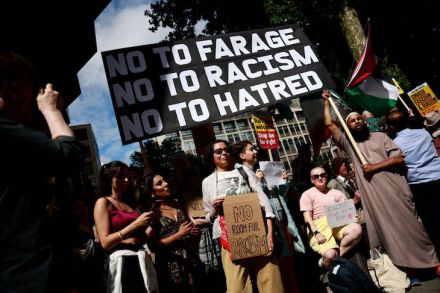
There will always be a certain class of people who sigh that Nigel Farage only reaps what he sows. Ever since milkshakes starting being tossed at a man they regard as an incendiary rabble-rouser, they have argued that it’s his fault for having raised the volume and coarsened the tone of political discourse in this country in the first place. In other circumstances this would be called ‘victim-blaming’: he shouldn’t have behaved so provocatively. He was asking for it.

Ken Bates, Chelsea, and the bad old days of football

From our UK edition

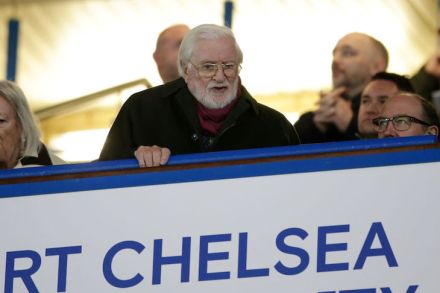
The timing of the death this weekend of Ken Bates, the former owner of Chelsea and Leeds United, will have struck many older football fans as significant, incongruous or – as football commentators are apt to say – ironic. On the same morning in which millions of Englanders of all backgrounds were preparing to cheer on a conspicuously multi-ethnic England team, the announcement of his passing, aged 94, will have undoubtedly evoked memories of time when the sport in this country was in a very different state, and when some of its fans were of a very different disposition. Hooliganism was rampant and racism on the terraces endemic.

In praise of Anthony Gordon

From our UK edition

In an age in which we continue to hear so much about our ‘anxious generation’, it’s heartening to read about one young individual who hasn’t been incapacitated by angst. We live in a time when whole swathes of young people believe they are mentally ill-equipped to face the demands and rigours of the outside world – it was revealed on Tuesday, for example, that the number of people diagnosed with ADHD receiving disability benefits had increased by 40 per cent since Labour came to power. So we should be encouraged by the story of one man who hasn’t quailed when confronted with life’s inevitable challenges.

When did travelling on buses become so intolerable?

From our UK edition

You frequently hear the charge today that the social contract in Britain has broken down. And there is much evidence to support this accusation. The epidemic of shoplifting, the tacit acceptance of fare evasion, rampant mobile phone-snatching in the capital, and most seriously of all, the fragmentation of our once much-vaunted multicultural society into a hotch-potch of mutually-suspicious and resentful ethnic and religious groupings: empirical research and personal testimony points to a society undergoing a process of disintegration. The demeanour of London bus drivers today perhaps reflects how fed up they are of having to deal with members of the public For many people, nowhere is this development more evident than in the normalisation of incivility on public transport.

Why gays turned against Pride

From our UK edition

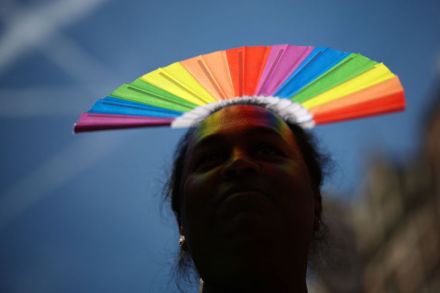
The annual Pride parades celebrated across the globe are not the events they used to be. First held in New York City on 28 June 1970 and going by the name of the Christopher Street Day Marches, they were initially designed to commemorate the first anniversary of the Stonewall Riots, when the gay community in that city rose up in protest against police brutality. Yet what began as a show of defiance and demand for equality by gays and lesbians has incrementally metamorphosed into an event which largely celebrates trans people. And many gays are not happy about this transformation. Not happy at all.

What the sorry state of Hammersmith Bridge says about Britain

From our UK edition

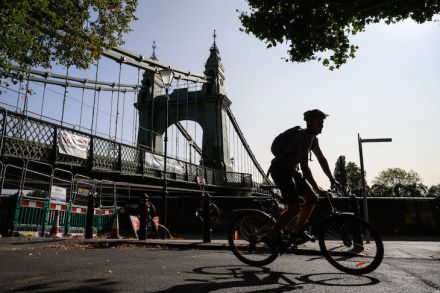
One could be forgiven for thinking that the extensive coverage given to the fiasco surrounding Hammersmith Bridge is typical of a capital-centric press blowing a local issue out of all proportion – it was disclosed this week that the west London structure, which has been closed to motor traffic since April 2019 after cracks were discovered in its pedestals, might never reopen to vehicles. But the reason the debacle has garnered so much attention, and attracted so much interest on social media, is that it is held by many to be symptomatic of this country’s troubled predicament and seemingly intractable problems.

TG Jones and WH Smith deserve to fail

From our UK edition

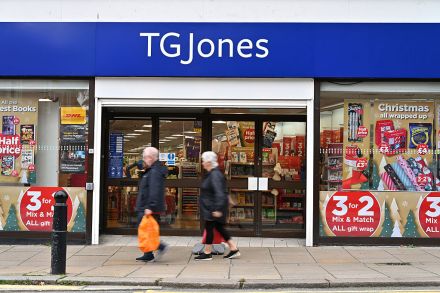
‘Too big to go down’ is an old football maxim and a cautionary tale. It refers to the complacent attitude that creeps up on established clubs, a deluded conviction that given their consistent achievements, they will never be relegated. The same attitude pervades in the world of business. Former household names on either sides of the Atlantic, such as Pan Am, TWA, Atari, Woolworths, BHS and C&A (in the UK) all went bust largely because they thought themselves invincible. The same mood exists at Boots today, which is overpriced and over-reliant on being a source of NHS prescriptions. It also used to be the case at Marks & Spencer until a few years ago, when it woke up to the fact that the likes of Primark and online shopping had arrived in earnest.

The tyranny of Pride is coming to an end

From our UK edition

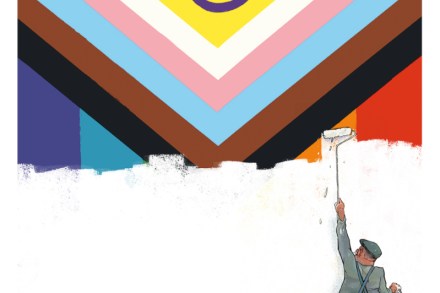
June is a month most people anticipate for various reasons, it heralding the Isle of Wight Festival, the Summer Solstice and Wimbledon. It’s also a time many of us have come to dread, it being the occasion in which Pride Month is foisted upon a compliant and increasingly resentful population. This is why many gays regard the rainbow flag in its modern incarnation as a hostile symbol What began in San Francisco in 1981 as simply the International Lesbian and Gay Freedom Day Parade has evolved into an entire month of worldwide celebrations chiefly dedicated to the trans movement, and at the expense of actual gay people. This metamorphosis can be seen by the original, simple Rainbow Flag having been supplanted by the chevroned, omnicause standard of the Progress Pride Flag.

Putting wildlife on British banknotes ignores the elephant in the room

From our UK edition

The issue of what images to put on new banknotes, and specifically of whom, has become one of the great battlegrounds of the culture wars in this country in recent years. Whenever the subject is broached there always arises the cry that the new note ought to feature a woman or an ethnic minority figure – someone who has been ‘written out of history’ – and that dead, white males have for too long hogged the limelight. This inevitably provokes the response that such special pleading merely amounts to ahistorical tokenism, a kind of retrospective, posthumous form of DEI hiring.

The humiliating truth about the way we think

From our UK edition

Over the long span of human existence, different cultures have held varying notions as to how responsible we are for our own thoughts and beliefs. Before the dawn of the Abrahamic religions, and in places untouched by these faiths, it tended to be the rule that individual members of the group could only be understood as parts of the whole, or in the grander cosmic scheme of things. The ascendence of Christianity in Europe, with its idea of the indivisible soul, tilted matters more towards a belief in individual agency and accountability. This concept, secularised by Descartes, who gave us the commanding rational ego, has proved resilient ever since, despite the best efforts of Freud, neuroscience and gene selection theory to dethrone it.

What’s the real reason Nigel Farage has never been on Desert Island Discs?

From our UK edition

Long gone is the time, towards the end of the last decade, when we all laughed off ‘safe spaces’ as the latest, neurotic fad confined to university campuses. Few are laughing now, because in the ensuing years, as this risk-averse mentality has trickled down into mainstream society, the belief in the primacy of ‘safety’ is having outcomes that are proving ever-more authoritarian, frightening and – ironically – dangerous. Students who grew up with ‘safe spaces’ have become today’s narrow-minded adults The decision last week by the British Museum to postpone a Jewish Culture Month event, citing its responsibility to guest speakers to ‘proceed safely, securely and without intimidation’ is a case in point.

Put Orwell back on the syllabus!

From our UK edition

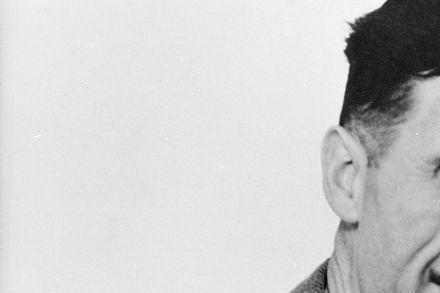
It’s been an unrelenting dynamic of hyperliberalism that when it comes to the teaching of history and literature, it’s imperative that the works of dead white males must be sidelined or erased. In their place must be inserted women and ethnic minorities, whose significance has been hitherto ‘overlooked’ or ‘hidden’. Thus it’s no surprise to read in the Telegraph today that one of the UK’s most popular English A-level courses will from this September be removing George Orwell’s Down and Out in Paris and London from its set text.

george orwell nineteen eighty-four audible

You don’t need AI to tell you if an asylum seeker is lying

From our UK edition

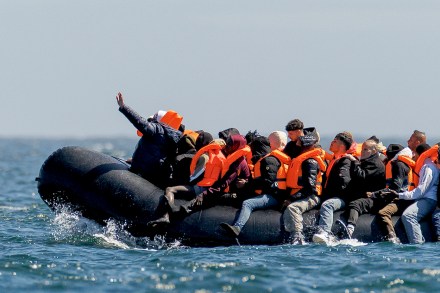
How can you tell when an asylum seeker professing to be child is lying? Often, it’s because he has crow’s feet, a receding hair-line and a beard. In other words, it’s sometimes obvious. That’s what makes so risible those stories we habitually read of men who are patently not children being granted asylum on the pretence that they are. We sigh in exasperation because we know why they have been let in: they have been granted entry by a system manned or manipulated by credulous do-gooders. Human beings are good at intuition, at assessing each other non-rationally through mental processes we don’t fully understand, of spotting fakes and fraudsters by their mien, gait and ostensibly innocuous facial gestures.

Q Manivannan is perfect for the modern Green party

From our UK edition

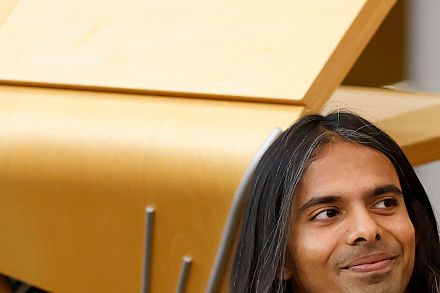
A whole raft of new terminology has emerged since the Great Awokening ten years ago. Much of it suggests that politics has become increasingly superficial and inauthentic. ‘Virtue signalling’, ‘lifestyle leftism’, ‘elite cosmopolitanism’ and what Neil Davenport calls ‘the aesthetics of radicalism’ vie and jostle alongside that ubiquitous accusation: ‘performative’. In an age when the personal has become the political, striking a pose is now inextricably entwined with having a viewpoint on worldly affairs. Dying your hair pink, sporting a keffiyeh and curating your online profile to accommodate your preferred pronouns and flags of convenience: these are all contrived and combined declarations of selfhood and political creed.

The irony of the woke war on GCSE French

From our UK edition

Not content to degrade and mangle the English language in their mission to make it conform to their progressive ideology, the forces of hyperliberalism are now seeking to foist changes on languages spoken by people elsewhere. As revealed in yesterday’s Sunday Telegraph, GCSE students are being allowed to use gender-neutral nouns, pronouns and adjectives in their Spanish, German and French lessons. In a move designed to make the curricula more inclusive, pupils in French classes are currently permitted to use the pronouns ‘iel’ or ‘ille’ instead of ‘il’ or ‘elle’, and ‘iels’ to represent an all-encompassing gender-neutral term for ‘ils/elles’. While students in this tongue are allowed to change ‘amies’, meaning ‘female friends’, to ‘ami.e.

Reform can thank Starmer for its success

From our UK edition

The foremost question Labour party members should be asking themselves this morning, following yesterday’s predicted disastrous showing in the local, mayoral and devolved government elections, is this: do you care more about the short-term survival of your party or the long-term survival of your country? Because as it stands, and if the predicted coup against Keir Starmer is set in motion later today, that is the choice you will now have to make. Starmer’s passive timidity in the face of this threat has made matters worse The reason why Starmer has been such a dithering and inept Prime Minister is that, wittingly or not, he has always placed party before country.

Why so many drivers jump red lights

From our UK edition

The signs that civic society in this country is disintegrating grow more apparent by the week. In a year which has witnessed the arrival in earnest of a shoplifting epidemic, the continued normalisation of fare-dodging on London’s train and tube network, and a surge in fuel theft at garage forecourts, it now transpires that drivers are increasingly ignoring traffic lights. According to a report in the Sunday Times, between 2022 and the end of last year, there was a 61 per cent increase in the number of drivers caught going through red lights. Across the 29 police forces that supplied figures to a freedom of information request, this figure rose from over 85,000 to more than 137,000.

Mental health is an inauthentic crisis

When it reaches the stage when everyone in the entire country is diagnosed as having mental health problems, will we have to accept that being mentally ill represents mankind’s new norm, thus rendering the whole concept meaningless? This is not some idle philosophical hypothesis. This is a question we will one day have to ask ourselves if matters continue on their current path. According to new research from Zurich Insurance, 51 per cent of people aged between 15 and 19 now have a mental or behavioural disorder such as anxiety, depression or ADHD, and if present trends continue as they have, by 2030 this figure will hit 64 per cent. We have indeed crossed a momentous boundary.

Finland’s sad secret to happiness

In recent years it’s become a hackneyed truism that Nordic nations have found the key to happiness. The Danes, who often take first place in global rankings for mental wellbeing, pride themselves on hygge, that feeling of cosiness evoked by wrapping oneself in blankets and being surrounded by candles. The Swedes promote lagom, the concept of the optimal medium. And while the Finns also appear to be satisfied with their lot – Finland came first in this year’s World Happiness Report for the ninth time in a row – they have no well-known term that encapsulates their attitude to life. In the spirit of Nordic oneupmanship, however, that could be about to change.