
The elegant, charismatic and narcissistic explorer Vilhjalmur Stefansson wasn’t the average adventurer that Alaska attracted in 1912. When he arrived in Seattle from the Gold Rush port of Nome, he told journalists that he had discovered “a lost tribe of whites” in the uncharted High Arctic. He also sold politicians the vision of an undiscovered land rich in gold, raw metals and oil that, only nine years after the Wright Brothers’ first flight, would soon be covered with airfields.
The Canadian government quickly offered Stefansson unlimited resources to lead an expedition back to the High Arctic. His objective was to claim what may have been the greatest geopolitical prize for Canada and the British Empire: the mysterious continent at the top of the world. But the Canadian Arctic Expedition didn’t go to plan. In fact it went disastrously wrong.
The story is a compelling combination of betrayal, catastrophe, madness, mutiny, murder and revenge
Giles Milton is the bestselling author of a dozen works of narrative history. His previous book, The Stalin Affair, was a gossipy, action-packed thriller. In contrast, Empire at the Edge of the World is an intense, darker and more complex affair, which may come at first as a surprise to readers until they realize that it shares the same DNA of deep scholarship, the ability to combine a pithy sentence with the perfect quote and the desire to turn the spotlight on people who were once household names but are now largely unknown.
The book effectively uses previously unpublished sources to tell the true story of the ill-prepared Canadian Arctic Expedition and capture the ego and hubris that drove its controversial leader Stefansson to desert his own expeditions. He relates the horror of the sinking of its flagship the Karluck amid the sea ice; the death of 11 of its 25 crew and passengers in the brutal battle to survive afterwards on barren Wrangel Island; Stefansson’s assumed death, and then his incredible walk out of the wilderness on 11 November 1918, of all days; and the tragic events that followed his refusal to abandon his vision of colonizing the Arctic.

Like many great polar ship-trapped-in-ice disaster stories, such as Alfred Lansing’s The Endurance and Hampton Sides’s In the Kingdom of Ice, Milton’s contains a compelling combination of betrayal, catastrophe, starvation, madness, mutiny, murder (thankfully not cannibalism) and revenge. It places us powerfully in the midst and forces us to ask ourselves one question: would we have done anything differently? This reviewer always comes up with the same answer: no.
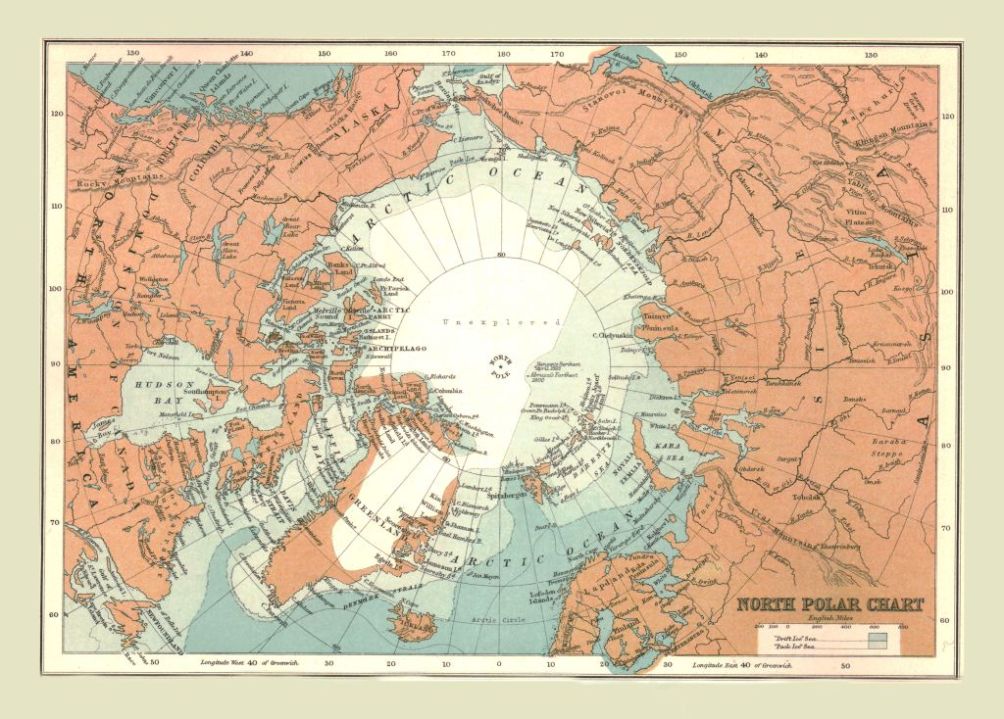
It is hard to believe now, but a map of the Arctic in 1912 – and into the 1920s –was likely to have a large area marked as unknown or unexplored on the other side of the North Pole from Europe. Many scientists were convinced that hidden in this area “as isolated from the world as Mars” was a zone rich in natural resources. Some explorers even claimed to have seen this “Arctic Atlantis” in the distance. The only problem seemed to be reaching it.
In short, punchy chapters Milton plunges the reader into this land of ice, isolation and darkness for two thirds of the book. He builds a sense of unease around the chaotic preparation for the expedition by, for example, quoting the youngest scientist’s belief that Stefansson would bring them all back safely, or the captain of the Karluck’s concerns that the ship was underpowered. He even mentions the sinking of the Titanic, which jars slightly and takes the reader briefly out of the world the author has constructed.
Milton uses the minutiae of his research to skillfully evoke the interior of the Karluck like a film set: the whale grease that still covered the surfaces of the old whaler and the library that Macmillan publishers provided for the voyage, which included Modern Woman’s Rights. It was a book, comments the author drily, unlikely to find many readers among the all-male crew – “the cook with his dirty fingernails and cigarette butts that dropped into the food and the ship’s doctor addicted to strychnine.”

Details such as these, woven effortlessly together, make one turn the pages quickly as the great cinematic set pieces unroll remorselessly. We witness the Karluck getting trapped in the sea ice, the coming of the Arctic darkness, the terrible crushing of the ship and the survivors’ fight to cross the ice to Wrangel Island 80 miles away; with them, we fear the brutal life that awaits on the barren island, where murder will be planned and carried out, until everyone is too exhausted, ill, dying or dead to care.
Deftly, Milton intercuts all this with parallel stories of the increasingly self-obsessed Stefansson’s adventures after he left the Karluck, and the fates of the other ships in the expedition, giving us much needed time to catch our breath. We will need it, since the last third of the book forces us back to the horror of Wrangel Island, to which Stefansson – now in Milton’s eyes more a fantasist than an explorer – sends five inexperienced young men and an Inupiat seamstress and cook, Ada Blackjack, to colonize, setting in motion the events that led to his downfall.





Comments