
A lovely, intelligent female acquaintance, roughly my own age, keeps telling me to grow up and date women roughly my own age. And she has a point. If I dated women of my cohort, we could discuss the fall of the Berlin Wall, the genius of the first R.E.M. album, and agree that in those days it was easier to get off a sofa. But life, as always, isn’t simple. As I say to my female friend: “I wish I could. But my loins, when they are functional, have different ideas.”
The awkward truth is that young, slender, fair-skinned women remain an erotic ideal
And I really do wish I fancied women my age. It’s a seller’s market for sane and solvent men with their own hair, or so I am told. Unfortunately, while my knees are almost ready for their pension, my libido still reckons it can get into a nightclub. In other words, I can admire a woman’s intelligence, enjoy her wise and funny stories, and then wish to God I wanted to see her in tight fitting jeans, but I do not.
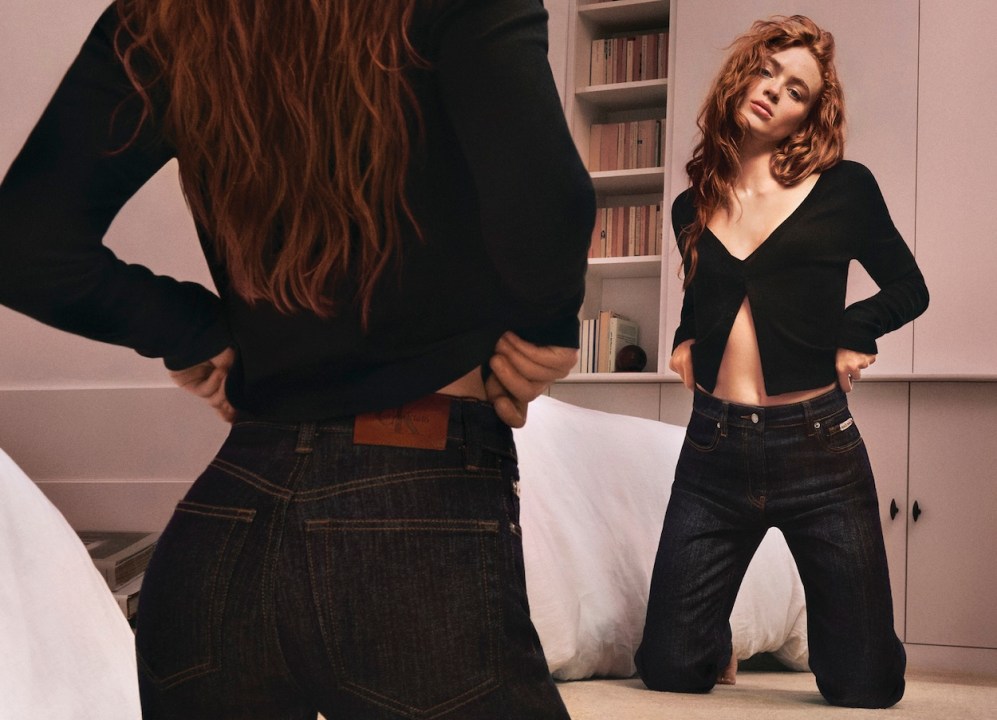
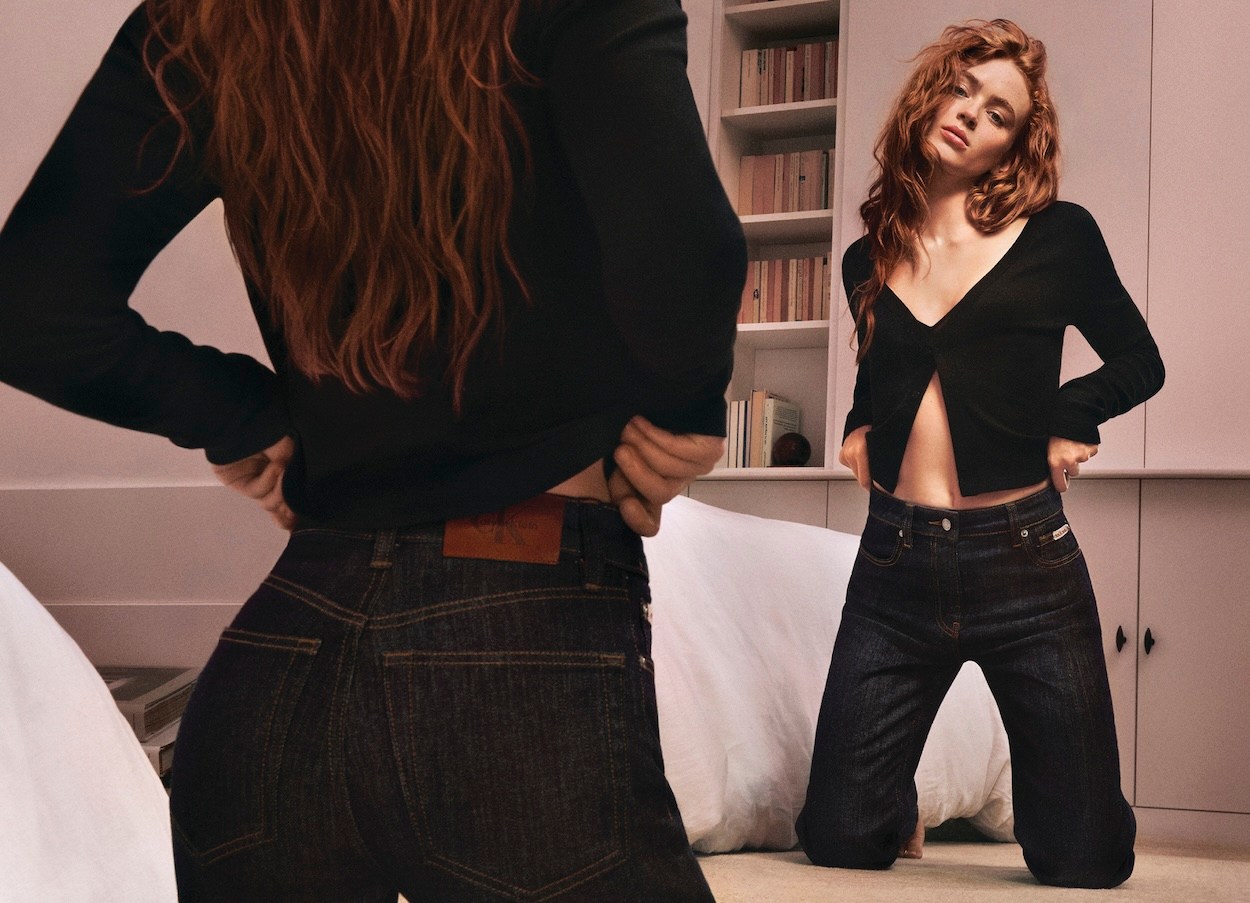
Which brings us to Sadie Sink. Once a child star in Stranger Things, she is now fronting Calvin Klein’s new jeans campaign: she’s 24, slender, redheaded, and she’s so delicately pale she looks like a Pre-Raphaelite nymph at the end of a Narnian winter. In the ad, a kitchen faucet loses control at the sight of her and a slice of toast orgasmically hurls itself into the air. I empathize with the fixtures.
And Sink is just part of an interesting new pattern. The advertising industry has spent 20 years trying to make us prefer women who are older, or fatter, or wrinklier – or black or brown and so on. Dove began it with soap in 2004. By 2020 Calvin Klein, the firm now employing Sink, was filling a Manhattan billboard with a chubby model in her undies; Jaguar relaunched itself with an advertisement containing no cars, only a troupe of multicolored genderfluids in overly bright clothes.
The stated and worthy purpose was representation. The unstated purpose was re-education: show us enough of this and we would, somehow, learn to want it, and grow out of the old ideal. Like abandoning the fax machine, or giving up cigars. It hasn’t really worked. The sales figures show this, and an industry that believes in profit more than it believes in “progress” is now walking it all back.

But, really, the notion we would buy into this was silly in the first place. Sexual desire is hard-wired, it is not a passing preference. And humans, especially males, are hard-wired to desire the young, the slim, and, yes, sometimes the fair. As men lust for them, women aspire to be them.
Why? The appeal of youth has an obvious evolutionary explanation: it signals reproductive potential. Men have evolved with one overwhelming purpose – to breed – and a woman’s fertility peaks between the ages of 18 and 25.
Slenderness is, interestingly, somewhat more variable. A glance at the painted works of Titian or Rubens will tell you that body ideals shift with culture (and the price of polenta) and one of the poster girls of this trend, Sydney Sweeney, of American Eagle fame, is notably curvy. But she is also not fat. She looks fit, healthy, and vigorous.
Finally we approach the most awkward criterion of all. “White.” Or, more precisely, “fair.” Sadie Sink’s snowy skin is, if I am honest, part of what I find beautiful, along with her red hair. I could pretend otherwise, but I am not sure who benefits from my lying about a ginger.
The preference for fairness has a history as long as humans have been recording the vagaries of lust. Ancient Egyptian painters gave their women paler skin than the men. Greek and Roman women whitened their faces with lead. Tang Chinese beauties swallowed powdered pearls for pallor. Heian Japan painted its ideal women white, and a Japanese proverb still claims that a fair complexion cleverly hides seven flaws. I wish that was true of my own British face.
Then there’s Islamic paradise. The Quran likens the maidens of heaven to “sheltered eggs.” generally seen as praise of their whiteness; a hadith in Sahih al-Bukhari has houris so pale and translucent that the marrow of their legs shows through the flesh. For me this crosses the line from eroticism into forensic pathology, but the point remains.
Pharaohs, Athenians, Heian courtiers, and early Islamic theologians: that is an awful lot of people brainwashed by modern advertising, or suffering from “western imposed beauty ideals.” These cultures prized the palest women back when Madison Avenue was a deer track. And nor is this ancient preference a racial thing per se; nobody in Chang’an was pining for a “blonde Swedish ellege student,” they wanted pale Chinese women.
Scientists have explored this preference for female fairness. Status is definitely part of it: pale skin says that somebody else is pulling your turnips, while you, the rich alabaster-skinned lady, shelter at home. Sexual dimorphism is another aspect: in most populations women are paler than men (and skin darkens with age), so fairness codes as feminine and young.
None of this means only one sort of woman can sell pants. Aerie, American Eagle’s sister brand, is prospering mightily on diverse models, and good for them. But the awkward truth is that young, slender, fair-skinned women remain an erotic ideal for a great many people, indeed billions, and they won’t give up that ideal because somebody explains that they ought to.
Which brings me back to my acquaintance and her excellent advice. If she can teach me to fancy somebody by a sheer act of will, I shall listen with enormous interest. It would save a lot of trouble, and I could split the bill in restaurants. Until that moment, I shall look at the latest jeans adverts with unexpected concentration, tinged with fond nostalgia.






Comments