Lucy Worsley’s Victorian Murder Club opened with its presenter unexpectedly channelling that gravelly voiced bloke who used to do all those film trailers beginning ‘In a world…’. ‘The London Thames,’ she intoned as gruffly and menacingly as she could, ‘winding silently through the capital. But in Victorian times…’ dramatic pause ‘…it had a sinister side.’
She then introduced ‘a story that has haunted me since I first heard it’ – possibly, you couldn’t help thinking, from a TV producer keen to find her another true-crime project. In the late 1880s, a serial killer dismembered several women while also taunting the police and never being found. Yet, this was not Jack the Ripper, but ‘the Thames torso murderer’: somebody, Lucy convincingly suggested, who most of us know nothing about. Indeed, one of the central mysteries in what followed is why we don’t – because this is quite a tale.

It started in Rainham where that classic Victorian figure, a lighterman, came across a bag in the Thames containing a woman’s lower torso. Over the next few weeks, various other body parts showed up in different parts of the river and the Regent’s canal. Between them, they made up an almost complete corpse, except for the head. The police, said Lucy with evident satisfaction, ‘drew a blank. Can I do any better?’
After this week’s episode, we still don’t know if she can – although she has promised a final ‘unmasking’ (not always a reliable guarantee in true-crime documentaries of course). If she does fail, however, it won’t be through any lack of impressively swotty sleuthing.
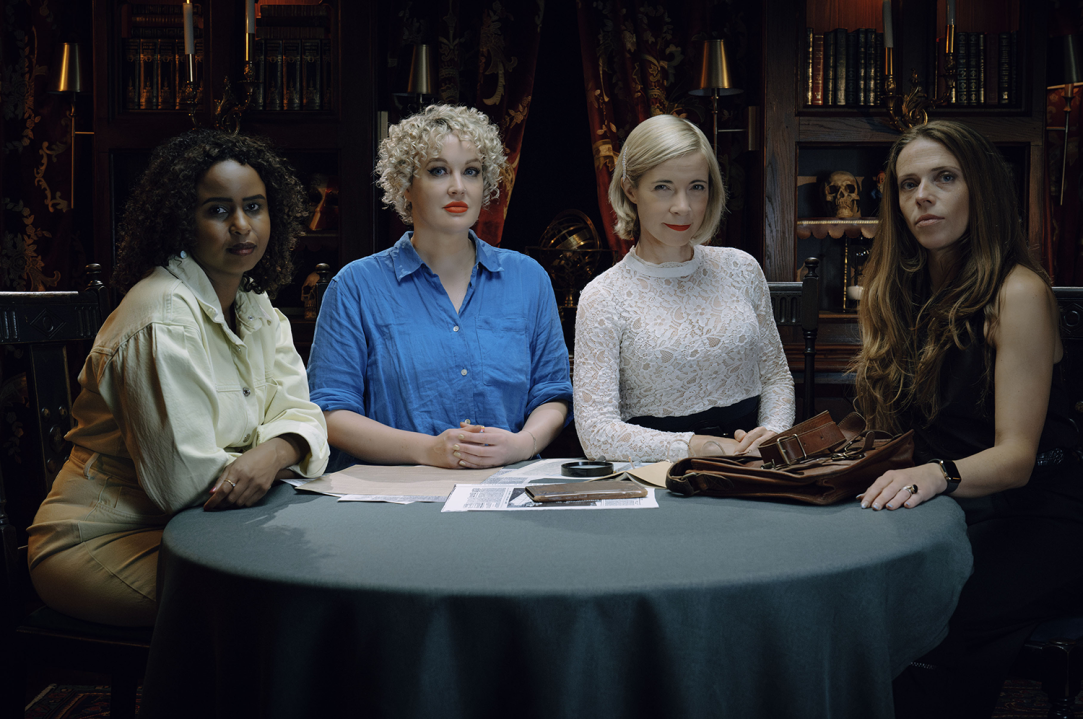
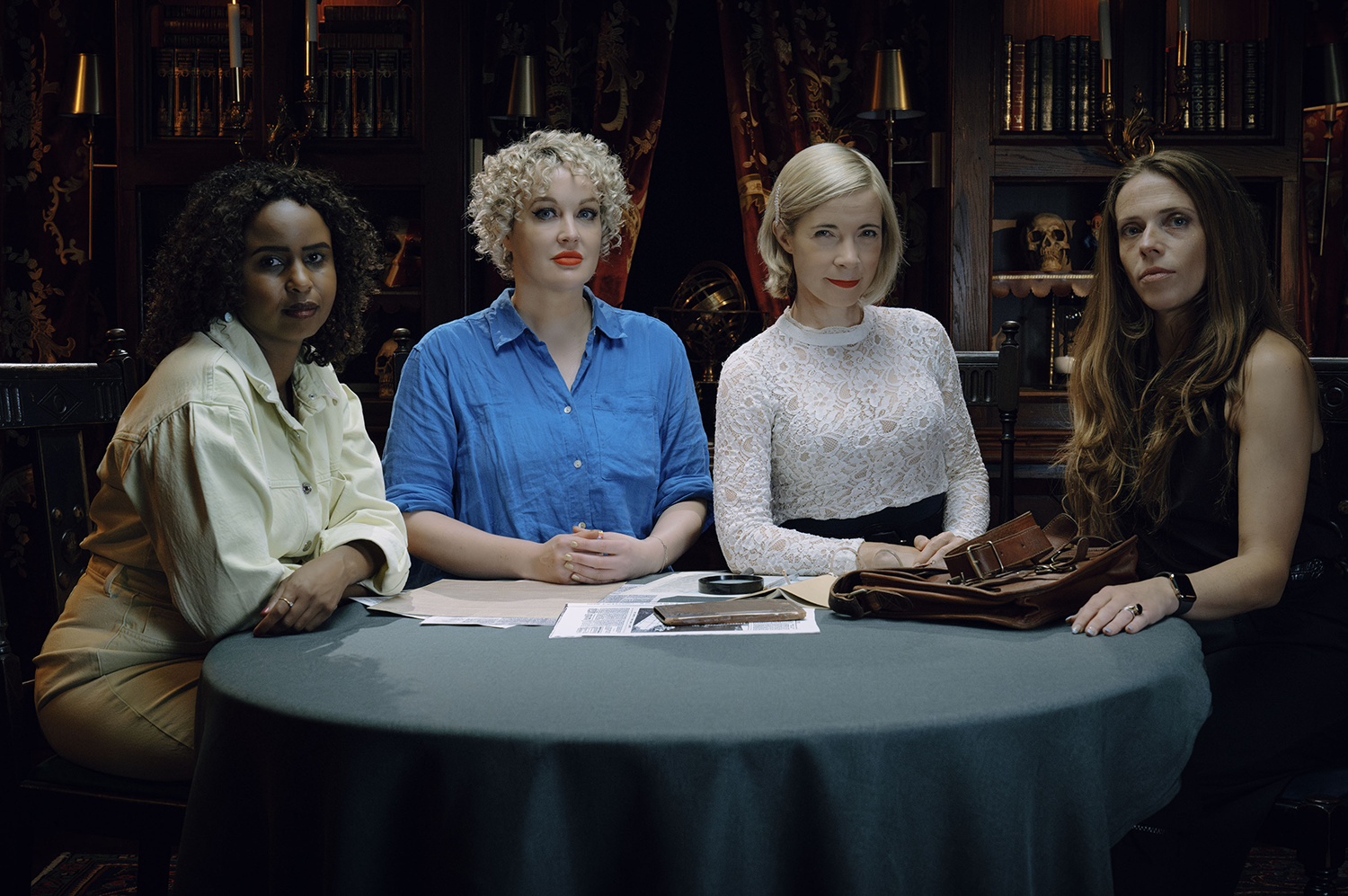
On her special 19th-century map, she marked with a red cross every spot where a body part was found – not just in ‘the Rainham mystery’, but in the similar ‘Whitehall’ and ‘Battersea Park’ mysteries that came next. She also formed a ‘Crime Club’ of herself and three other scholarly women, who sat around a table looking solemn as they pursued every conceivable lead with what seemed the twin aims of leaving no stone unturned and of spinning the whole thing out into three hour-long episodes by means of much random conjecture.
The most random concerned the identity of the victims. Might the Rainham one be Emmeline Cross who’d disappeared a few years before and whose background was explained in some detail? Might the second be an equally well-chronicled servant called Lilly Vass? The answer in each case was an assiduously researched ‘no’.
Adding to the disappointment at this stage was that, despite being both male and Victorian, the original investigators turned out not to have demonstrated a patriarchal indifference to the death of women, but to have been extremely assiduous themselves. Presenting the post-mortem findings to a female pathologist in the obvious hope of finding them wanting, Lucy asked the crunching question: ‘Were they male, these doctors?’ ‘Yes,’ the woman replied. ‘I think they did a fantastic job.’
Nor did Lucy get a great deal out of an investigative psychologist who, having carefully pondered the evidence, concluded: ‘I think we’re dealing with a very dangerous individual.’
No wonder there was a touch of desperation in the closing cliffhanger after parts of a fourth headless corpse were discovered in Whitechapel. This, declared Lucy, readopting her film-trailer persona, ‘begs a horrifying question: could it be that the Thames torso murders were the work of Jack the Ripper all along?’ (Personally, I’m guessing not.)
Can You Keep a Secret? is a strange new sitcom starring Dawn French. A summary might suggest something very dark. French plays Debbie Fendon, whom we first saw giving some of her late husband William’s life insurance to her grieving, clinically depressed adult son. But then it transpired that William (Mark Heap) was still alive – a long story involving an overdose of Parkinson’s pills, a misdiagnosis of death by a mentally ill village GP and a funeral director with an apparently unclaimed corpse. As a result, Debbie pretended the corpse was William’s and took the insurance money. Now all the couple need to do is make sure nobody ever sees him, and they can carry on watching telly together. Except that, as we learned from the ‘Coming Up’ bit at the end, Debbie is about to be blackmailed…
And yet, in spite of all this, we couldn’t be further from a Nighty Night-style black comedy – because the show is a distinctly jolly affair whose tone is breezy to the point of utterly frictionless.
Stranger still, it works pretty well. Granted, the policy of playing everything for laughs might be even more effective if there were more laughs. Nonetheless, with French and Heap predictably great and Debbie and William’s companionable relationship rather touching, Can You Keep a Secret? promises to be a perfectly enjoyable mid-table sitcom – and, needless to say, there are worse things to be than that. Still strange, though.




Comments