The constant parade of shocking and disturbing revelations from the Epstein files has been going on for a considerable time now. It shows no signs of coming to an end. Just when we all think that we’ve seen the worst of it, another 10,000 documents enter the public domain. Even though the stories have been widely disseminated, the details of the abuse of young women by the wealthy and powerful remain just as distressing – and scandalous – no matter how many times they are repeated.
At some point in the future, Hollywood – or a streaming service, or AI, or however we get our entertainment by then – will probably make a film about the Epstein scandal. It has everything that viewers might want: a diabolical antihero who commits sexual crimes with impunity and conceals his wickedness with charm and money; a supporting cast of billionaires, politicians, businessmen and even royalty; exotic locations, not least Epstein’s Bond villain-esque private island, Little Saint James aka “Epstein Island”; and, of course, the antagonist being brought to a brutal form of justice, although the question of whether it was suicide or murder will take a skilled – and brave – director to answer.
It is hard to think of an A-list actor who wishes to play Epstein, however, for fear of ruining his career. Therefore, if the film did struggle to get made, viewers might look elsewhere for a tale of shadowy, behind-the-scenes powerbrokers, kinky sexual obsession and the belief that America really is controlled by a cabal of billionaire pedophiles, all of whom get their kicks from trafficking and abusing young girls.
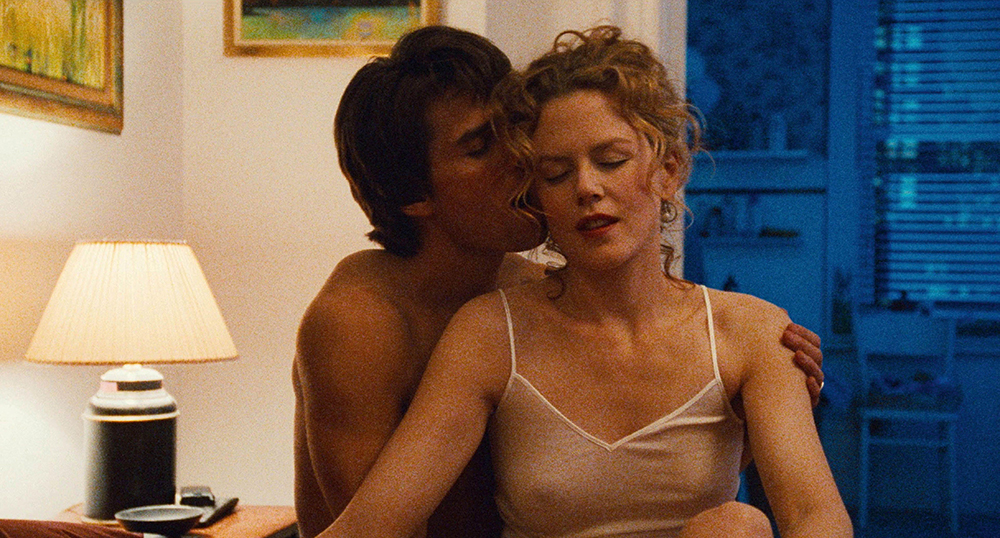
And there is no more prescient picture – and now, no more controversial one – than Stanley Kubrick’s cinematic swansong, the 1999 Tom Cruise-Nicole Kidman erotic drama Eyes Wide Shut. The film had attracted feverish interest during its prolonged production, which lasted a staggering 400 days, making it the longest continuous film shoot ever undertaken.
Cruise and Kidman, who were married during filming, were so keen to work with Kubrick that they cleared their schedules to accommodate his whims. Because the famously secretive director offered no hints as to the film’s content or storyline, other than its being a loose adaptation of Arthur Schnitzler’s novella Dream Story, excitable journalists filled in the blanks. There would be scenes of real, unsimulated sex between Cruise and Kidman (thereby, one imagines, putting an end to the persistent rumors that Cruise was gay.) There would be transgressive moments of drug abuse, cross-dressing and explicit erotic content that would make the film outrageously daring. The world would be appalled.
I called it an “erotic drama” above, but in fact Eyes Wide Shut is, intentionally, about as erotic as a visit to Walmart. Over the course of its slow-paced 159 minutes, Cruise’s character, Bill Harford, has his virility mocked by his wife, Kidman’s Alice, who recounts an erotic fantasy she once had of sex with a naval officer. Angered and yet strangely excited by this, Bill begins wandering around a dreamlike New York where he has near-miss encounters with various men and women, culminating in the most Epstein-ish scene of all: a masked orgy in a mysterious mansion, where Bill’s password for admission – “Fidelio,” ironically enough – proves inadequate to conceal his identity, and he is exposed and humiliated in front of the guests, only escaping without more serious punishment when a woman offers to take his place. Not very long later, she winds up dead, and Bill – horrified and fascinated in equal measure – investigates what happened.
Such a summary makes the film sound more conventional than it is, but in fact, in typically Kubrickian style, it comes festooned with gnomic dialogue, György Ligeti’s oft-repeated and haunting piano-based “Musica Ricercata II” and, in the witty casting of Cruise – Hollywood’s go-to action man reduced to a prowling, impotent voyeur – a neat subversion of expectations that indicates that Eyes Wide Shut was not meant to be taken entirely seriously.
It came out in cinemas in July 1999, a few months after Kubrick’s death, aged 70, from a heart attack in his sleep, and was a decent box office hit thanks to the weight of expectation placed upon it – although many audiences, expecting something more prurient, were disappointed by the relatively mild sexual content.
Although the film has, like all Kubrick’s later pictures, been reassessed after a muted initial critical response, it is only in the past few years that it has become an almost totemic example of cinema-as-prediction. Much of the initial interest revolved around the Epstein-adjacent character of Victor Ziegler, played by the director and occasional actor Sydney Pollack.
Ziegler appears in two extended scenes, one at the beginning of the film and one toward the end, and is portrayed as a suave and influential powerbroker, with a dark side. In a conversation with Bill, he admits to masterminding the orgy to cater to his “friends” and angrily states: “I don’t think you realize how much trouble you got yourself into last night just by going over there. Who do you think those people were? Those were not just some ordinary people. If I told you their names… no, I’m not going to tell you their names… but if I did, I don’t think you’d sleep so well at night.”
This is not very far from Epstein’s building up a collection of the not-so-great and not-so-good, giving them everything that they apparently wanted – money, sex, flattery – and then recording their details, whether for kompromat or for his own salacious interest. Pollack’s Ziegler, the audience is invited to believe, is the prurient representative of this mysterious and shadowy world – in his first appearance, he has been found in the aftermath of having sex with a young woman who has overdosed – but as he makes clear to Bill, his tactics, including having him followed across the city by mysterious heavies, are underpinned by a simple reason: “To keep you quiet about where you’d been and what you’d seen.”
Much of the interest revolved around the Epstein-ish character of Victor Ziegler, played by Sydney Pollack
If Eyes Wide Shut was simply prescient in its suggestion of underground networks of sexual brutality, then it would be remarkable by itself. Yet it has also been suggested that Kubrick and Pollack, both of whom died relatively young – Pollack from cancer in 2008, at the age of 73 – were murdered, rather than expiring from natural causes.
A rumor swept social media that 24 minutes of footage concerning “elite sexual rituals, child sacrifice and organized depravity” were removed from the picture on the insistence of Warner Bros., which was, apparently, angry and frightened that Kubrick had somehow got wind of the satanic practices of these powerful figures in Hollywood. The conspiracy theory goes on to suggest that Kubrick had to be disposed of immediately, because he knew too much, but that Pollack was also a liability.
It is fanciful in the extreme, and the most basic research into Kubrick’s physical state (he was overweight and unhealthy) suggests that he was lucky to survive as long as he did, especially given the pressure that a long shoot and edit process put him under. (There is a more convincing, less dramatic theory that the film as it exists was not his final cut and that he would have edited it once again before release.)
There are countless flaws with this idea, not least the fact that Cruise and Kidman are very much alive. Equally, the film is based on a Schnitzler novella that came out a century ago. If the rumors were true, this would have been the longest-running and most meticulously planned conspiracy of all time.
Still, the film’s haunting qualities, which are even more apparent now than when it was originally released, do rely on our increasing realization that Epstein really was a ringmaster catering to a perverted elite – something itself often dismissed as a grandiose conspiracy – and that the film’s depiction of this elite is far less fanciful than originally believed.
And it is grimly fitting that, while it is not known whether Epstein himself saw Eyes Wide Shut, he received an email in 2016 from one anonymous powerbroker saying, “I am trying to find high-end Eyes Wide Shut parties – do you know any?” Although Epstein did not reply, it is tempting to imagine Kubrick watching the whole farrago unfold and enjoying – if that’s the mot juste – the strange and unexpected afterlife of his swansong film.



Comments