When you think about Simpson’s in the Strand (never Simpson’s on the Strand), it is impossible to consider the 198-year-old restaurant without remembering its literary antecedents. P.G. Wodehouse praised it as ‘a restful temple of food’ in his 1910 novel Psmith in the City. It has popped up in everything from Sherlock Holmes to Howards End and, when that epitome of thespian Britishness David Niven wished, in the 1961 film The Guns of Navarone, to speak wistfully about a golden idyll to a dying friend, Simpson’s was the idyll he chose.

Yet all good things decline at some point. Before Simpson’s closed in 2020, another victim of the pandemic, it had been weakening. Its signature silver dining trays, which once groaned with ribs of roast beef, had been anaemic and miserable, and the clientele consisted of weary businessmen ploughing through their meals without any joie de vivre. It all had the taint of a third-rate hotel – ironic, given that it lies next door to the (unrelated) Savoy – and it needed a new chatelain who would breathe life into the old dear.
Enter Jeremy King, perhaps London’s best-loved restaurateur. After a notorious spat with the new owners of The Wolseley, which saw him literally barred from the premises after an ill-tempered fight, King has relaunched himself as a phenomenon in his own right. His Jeremy King Restaurants group has enjoyed conspicuous success with the Arlington and The Park restaurants: the former a rebranded version of another one of his big hits, Le Caprice.
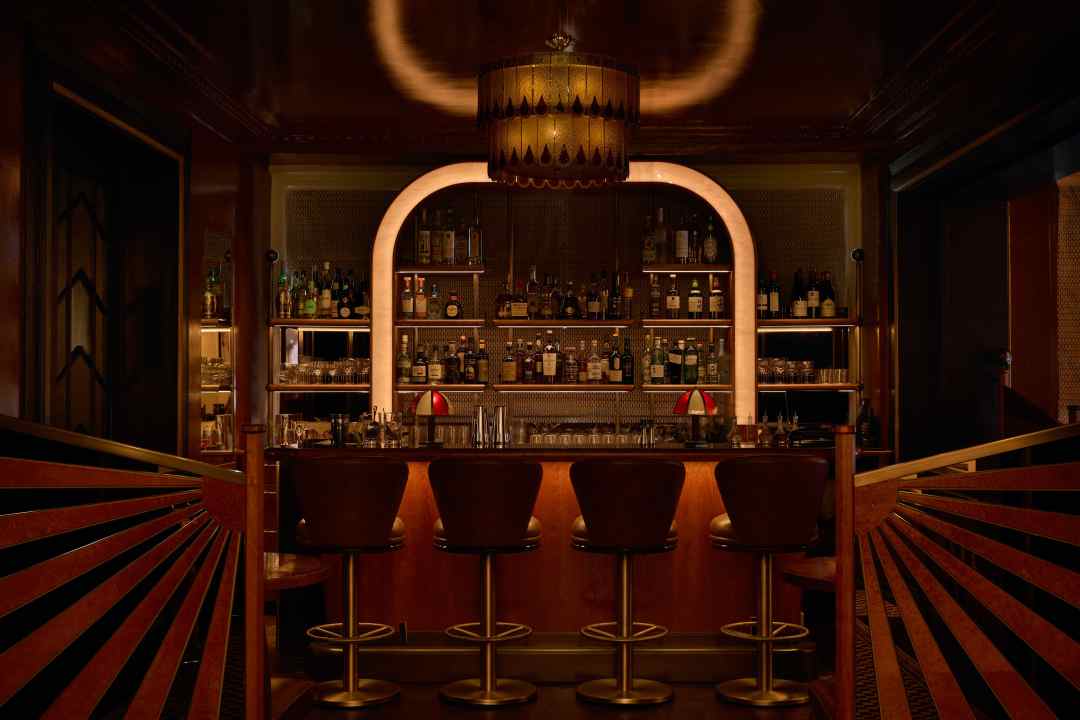
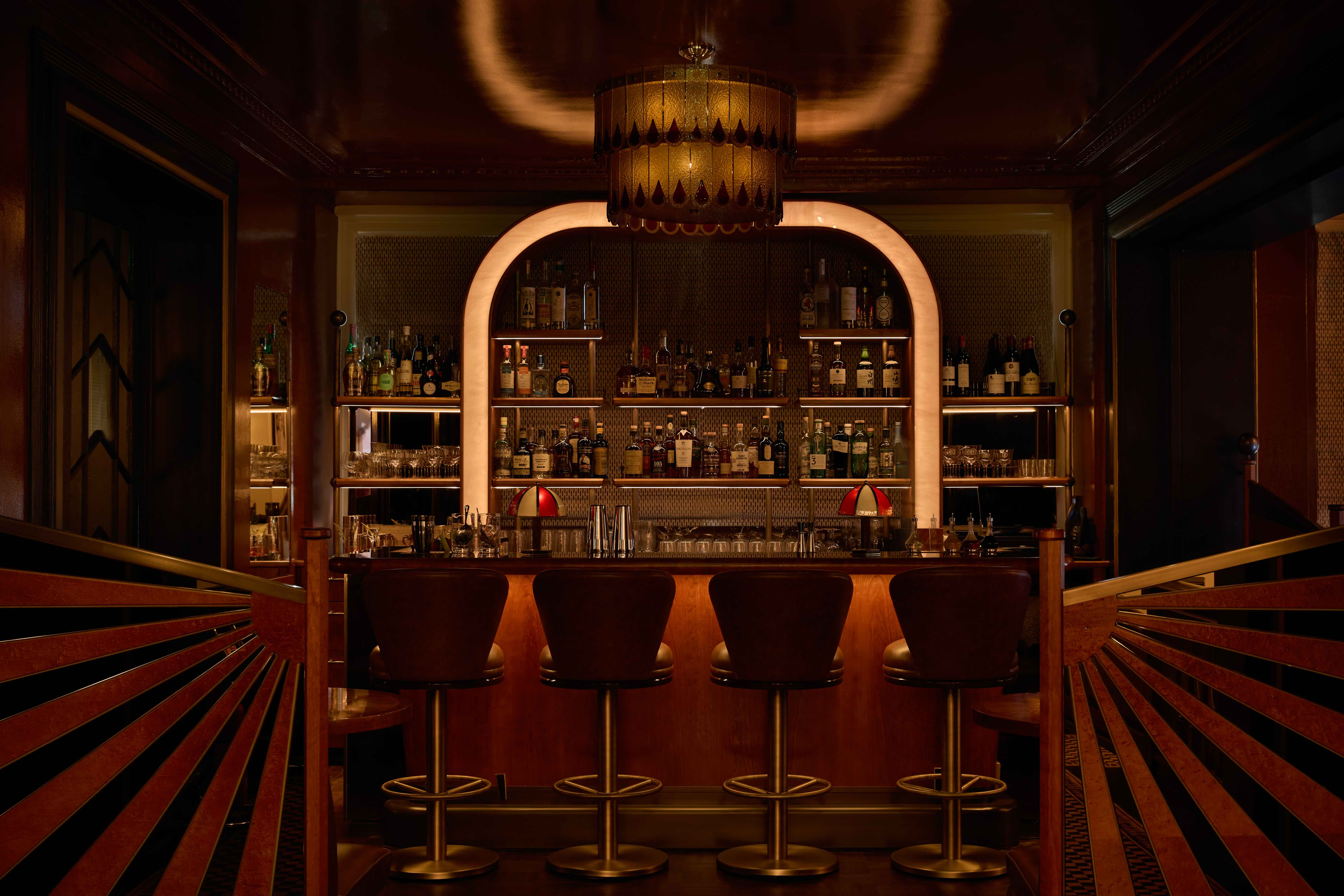
King sought a new challenge – and they don’t come bigger than Simpson’s. After a lengthy and undoubtedly expensive refurbishment, the establishment reopened this month in considerable glory, with two restaurants – the old-school Grand Divan and the first-floor spot Romano’s – as well as the sure-to-be-iconic bars, Simpson’s Bar and Nellie’s Tavern.
The Grand Divan, which was turning tables with aplomb when I visited, is a particular delight. A Wodehousian fantasy of a room, it is a symphony to dark wood and darker oxblood red leather banquettes, where the diners are well-heeled and better fed. I clock St John’s chef Fergus Henderson and the food critic Tom Parker Bowles as soon as I walk in, and the clientele – ‘audience’ might seem a better term for somewhere so theatrical – relish old-school dishes including prawn cocktail and its famous roast rib of beef. Gleaming silver platters of meat glide up and down the room and a friendly waiter tells me they get through a dozen of these behemoths a day. That is an awful, awful lot of cow.
At the heart of the restaurant is King himself, a suave and approachable figure who roams the room with the air of a benevolent headmaster. (This, as anyone in hospitality knows, is very rare indeed.) When we sit down in the yet-to-open Romano’s upstairs, armed with a Martini Sofia – the house martini, with a dash of rosewater – he is refreshingly modest about the scale of both his ambition and (likely, if early word holds true) success.
‘The interesting thing for me is to see how much Simpson’s means to so many people,’ he tells me. ‘Not always in the way you expect, either. I’ve had grown men come in and burst into tears because it’s the place they associate with their last meal of the holidays before they went back to boarding school. It is a restaurant that needed love and attention and which comes steeped in history.’
‘Any changes I’ve made have been to reflect this great tradition it has. But it’s been a labour of love getting to this point’
He is keenly aware of his responsibilities to such a well-loved institution, which opened in 1828 and has been based at 100 Strand since 1904. ‘Any changes I’ve made have been to reflect this great tradition it has,’ King tells me. ‘But it’s been a labour of love getting to this point. I first tried to acquire the restaurant in 2000 because I’d said, as far back as the 80s when I first dined here, “if ever I own a restaurant, this will be it”. I tried again in 2008 and 2015 and then once more in 2022. It’s the place I’ve gone after more than anywhere else.’
King, a vigorous 70, spends long hours in the restaurant in its opening weeks – ‘I come in at about 8 a.m. in time for the breakfast service and then stay until some time between 9 and 11 p.m.’ – and this degree of care is evident in the smallest of details. During our interview, we conduct an impromptu tasting of ham and sausages with the head chef (all agree that the most flavourful, molasses-coated ham is the one to put on the breakfast menu). He also regularly breaks off our conversation to say hello to various staff who pass by. In typical King fashion, he not only knows all their first names but is au fait with everything that seems germane to their work.
I ask him as we’re parting whether this really is the worst time to be in the hospitality industry, caught in a perfect storm of post-Covid, post-Brexit and now mid-potential third world war horrors. King, a pro to his fingertips, laughs. ‘I’ve often been asked this, and I always say the same thing. I was there when the IRA were calling in bomb threats in the 80s, and I heard stories about what it was like during the Blitz, when restaurants were being blown to smithereens. Bad? People don’t know they’re born.’ It’s this attitude – bloody-minded and always aware of the past – that defines the reborn Simpson’s. Long may this restful temple of food attract its worshippers.





Comments