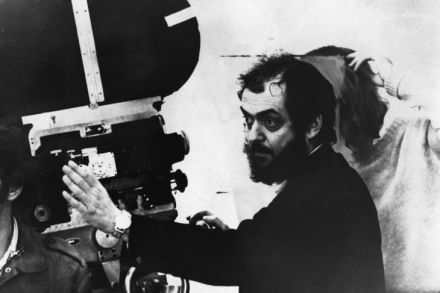
Stanley Kubrick

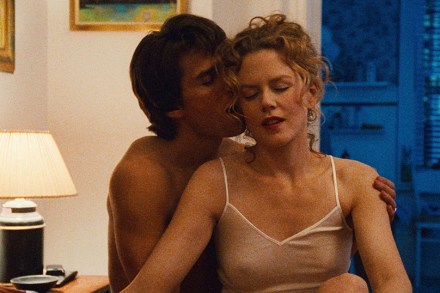
Looking back at Eyes Wide Shut, after Epstein

The constant parade of shocking and disturbing revelations from the Epstein files has been going on for a considerable time now. It shows no signs of coming to an end. Just when we all think that we’ve seen the worst of it, another 10,000 documents enter the public domain. Even though the stories have been widely disseminated, the details of the abuse of young women by the wealthy and powerful remain just as distressing – and scandalous – no matter how many times they are repeated. At some point in the future, Hollywood – or a streaming service, or AI, or however we get our entertainment by then – will probably make a film about the Epstein scandal.
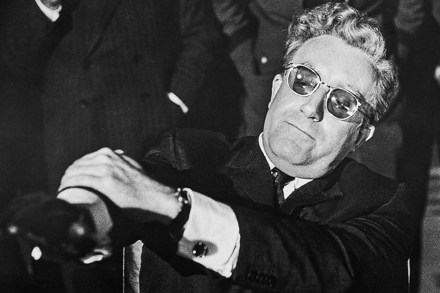
The Dr. Strangelove taxonomy of DC types

I tweeted the other day that my social life in Trump’s DC is just getting dinner or drinks with a different Dr. Strangelove character every week. It sounds like an exaggeration, but it’s not. Not really. Every week brings its own apocalypse – and the cast of characters responds accordingly. Find here a taxonomy of DC types: Dr. Strangelove (The theorist) The end of the world approaches and only the strong will survive it. Hands trembling slightly from too much caffeine and suppressed grandeur, he (it’s always a he) declares his grand theory of the world in so many words. Women, of course, will be spared. Perhaps you, too, will be counted among the lucky ones. Oh, you’re over 30? If you just read a little more Spengler. Learned a little more about semiconductors.

dr strangelove

The harrowing true story behind Barry Lyndon

From our UK edition

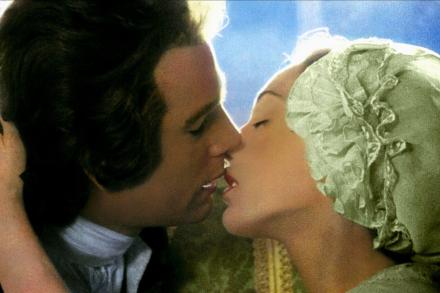
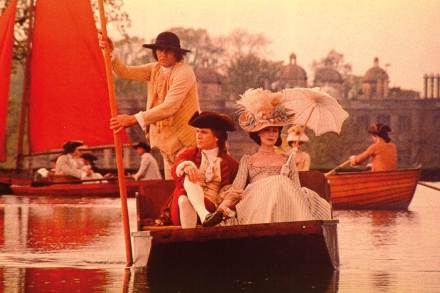
Stanley Kubrick’s swooningly gorgeous film, Barry Lyndon, has just been re-released in cinemas to mark its 50th anniversary. Much ink has been spilled about its hypnotic beauty, its lavish attention to historical detail, its dreamy, luscious, candlelit photography. Yet William Thackeray’s bitingly satirical novel of the same name is often neglected – as is the true, harrowing story that inspired it. The book Barry Lyndon (first published in 1844) bore its genesis from the story of a real adventurer, Andrew Robinson Bowes, whose cruelty to his wife, the Countess of Strathmore, was notorious.

The luck of Barry Lyndon

Shortly after Stanley Kubrick’s adaptation of William Makepeace Thackeray’s novel The Luck of Barry Lyndon was released in American cinemas in 1975, it was mercilessly parodied in the satirical publication MAD magazine. Over seven pages, “Borey Lyndon,” as it was called, was treated as an embarrassing flop, something to be ridiculed and regretted. The opening caption set the tone: “So you think Historical Movies are a thing of the past?! So you think no one wants to see Costume Epics any more?! So you think they’re too dull and slow-moving to hold your interest?! Then you probably just woke up after seeing this latest dull extravaganza! Well... here’s a chance to be put back to sleep — with MAD’s even duller version of ‘Borey Lyndon’!

Barry Lyndon

Disclaimer is the best show on TV — and the most underrated

When the Oscar-winning filmmaker Alfonso Cuarón announced that his next project would be a seven-part adaptation of Renée Knight’s novel Disclaimer, it was met with a mixture of excitement and surprise. Excitement, because anything that Cuarón involves himself with tends to be an event; surprise, because after a series of high-profile recent projects that have included everything from a near-experimental sci-fi blockbuster (Gravity) to a black-and-white Mexican drama he shot himself (Roma), it seemed almost mundane, rather as if Stanley Kubrick, at the peak of his success, had decided to make a movie out of a Harold Robbins potboiler.

disclaimer

Frederic Raphael settles old scores with a vengeance

From our UK edition

Last Post is a collection of reminiscences, anecdotes and a settling of old scores by Frederic Raphael in the form of imaginary letters to many of the people who have been part of his long life. You might expect a nonagenarian’s critical faculties to have ‘mellowed by the stealing hours of time’, but far from it. Raphael’s intelligence and acerbic wit are undiminished.  George Steiner suffers a sustained attack for being gauche, malicious and too obviously ambitious Those who have crossed his path will be aware of his ability to ‘verbalise easily’ and, as he himself confesses: ‘It is one of my failings that I know how to hurt people.’ Jonathan Miller is criticised for being insufficiently conscious of his Jewish heritage.

Eyes wide open

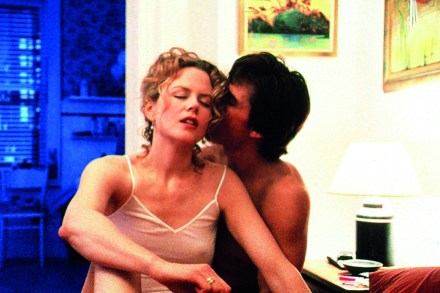
Dear Stanley, Did I ever hear you laugh or see you smile? I like to think I amused you from time to time, but laughter was scarce among your responses. A pause was your applause. During the many months we worked together you were often friendly, always somber. You never hinted why. Private anguish was nobody else’s business; work its narcotic. Might it be that, throughout your life, success was as much revenge as pleasure? You seemed as much lonesome as autocrat; mark of the still photographer you first were; and the kid before that? As far as our script for Eyes Wide Shut was concerned, you apologized for not being able to specify what you wanted. You could promise only to recognize it when you saw it.

eyes wide shut kubrick

Spartacus wasn’t Stanley Kubrick’s only slave

Leon Vitali is an actor who passed through the looking glass of Stanley Kubrick’s camera and became Kubrick’s right arm. When the documentary film maker Tony Zierra discovered Vitali’s story while investigating Kubrick’s final, flawed film, Eyes Wide Shut, he decided to first make a film about Vitali, who is sixty-nine and not in good health. This is only fair, as Kubrick took over Vitali’s life, admittedly with Vitali’s consent. Kubrick is an object of worship to film lovers and the people who merely work in film. The critics have tended to go along with the cult, though Pauline Kael and Roger Elbert both expressed strong reservations.