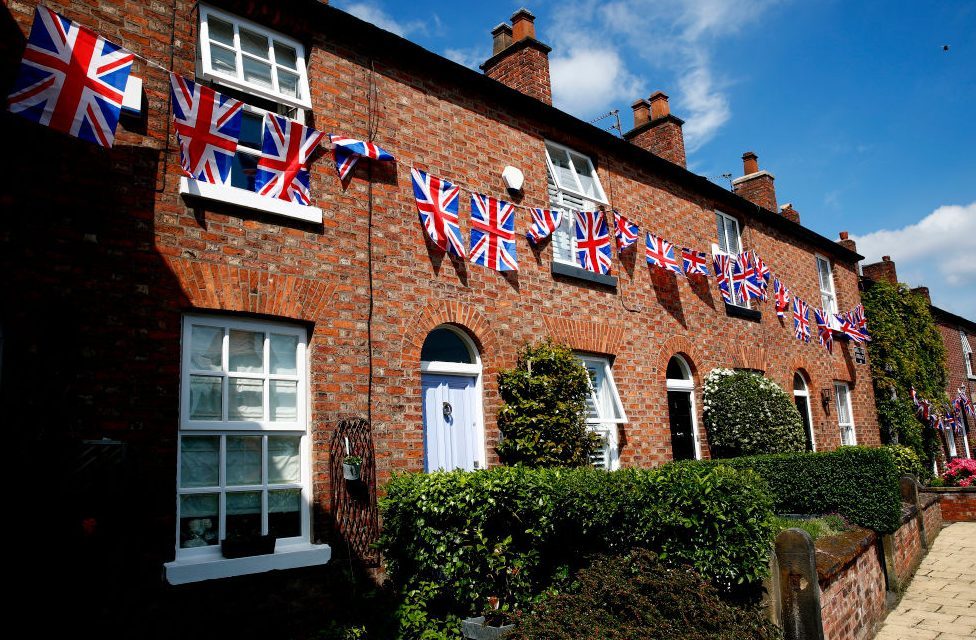
The residents of Bibury in the Cotswolds, long voted England’s most beautiful village, must suffer tourists entering their cottages and photographing them at lunch. They think it is a museum. As if in emulation, London’s Belgravia, Marylebone and Bayswater are now promoted as ‘villages’. Adverts for Battersea Power Station show two giant chimneys and invite buyers ‘to make London’s newest village your home’. The American bank Citigroup is refashioning its 40-storey tower in Canary Wharf as a ‘vertical village’.
The weakening of urban redevelopment in Britain in the 1970s brought the urban village to life
The word village might appear to have lost all meaning. Yet its potency is undeniable. Throughout history, the English village implied hard labour, ill health and poverty. To live in a village meant failure. Millions fled to the city.
Today the word is transformed. It evokes smallness of scale, intimacy and closeness to nature. It appeals to the commuter, the weekender, the work-from-homer, the pensioner and, needless to say, the developer. The word has lost any sense of isolation. We all crave to live somewhere that is ‘a village really’.
This transformation was famously narrated in Ronald Blythe’s post-war documentary, Akenfield. Planners after the Second World War had forecast the collapse of the traditional village in favour of the suburb and the town. When I was a boy, almost every village was surrounded by a zone of derelict cottages and outhouses.
The railway and the motor car certainly rescued many, especially those within commuting distance of a city. Gradually, ‘escaping to the country’ became fashionable for the retired and young families alike. Villages even sprouted their own council estates. But it was not until the turn of the last century that villages from East Anglia to the Cotswolds and the South-West experienced what amounted to a middle-class invasion. Cottage prices per square foot rose to compare with Chelsea and Notting Hill. The village as a symbol of poverty was transformed. Ailing schools and local services recovered. Pubs became ‘gastro’, shops became ‘artisanal’ and Women’s Institutes became book clubs.
More significant was a mutation of the word itself. The qualities attributed to rural communities were applied as much, if not more, to urban ones. The street pattern of the village was evoked in the backstreets, terraces and squares of inner cities. In his Uses of Literacy, Richard Hoggart recollected the suburbs of Leeds in his boyhood as ‘homogeneous and well defined as villages … friendly, cooperative and neighbourly’. They had, after all, to share toilets.
In the two decades after the Second World War, thousands of such close neighbourhoods were wiped out by Modernist redevelopment, most savagely in Liverpool, Manchester and Glasgow. As a young reporter, I witnessed the clearance of Manchester’s Moss Side as tearful residents were ferried to soulless tower blocks and new towns, leaving their communities bulldozed. At the same time, the American sociologist Jane Jacobs vividly depicted street life in New York’s Greenwich Village. Its pavements were torrents of vitality, where residents met, conversed, worked, played and prospered. Jacobs’s city was about people, not concrete and asphalt.
The weakening of urban redevelopment in Britain in the 1970s brought the urban village to life. The creation of conservation areas in the 1970s gave residents an opportunity to be consulted over the fate of their neighbourhoods. The result was one of the few instances in British history of urban revolt. In 1973, the residents of London’s Covent Garden took to the streets and forced the GLC to abandon its plan to turn it into a second Barbican. The vitality of Covent Garden today vindicates that revolt.
Certainly, the initial drive to urban villages was in areas of gentrification. This bordered on the comical. Kensington blossomed with Earls Court Village, Hillgate Village, Stratford Village and thirty similar entities within just a few square miles. Likewise, provincial cities promoted their adjacent ‘villages’ as adding to their charm. Hence Manchester’s Altrincham and Worsley and Birmingham’s Bournville.
But villages also formed in poorer areas. Liverpool’s dockland residents defied eviction in 1983 and formed the Eldonian Village, a co-operative that would design its own housing. My most heroic survivor is in London’s Cricklewood, where the Railway Terraces enclave fought for its life and has even published its village history.
What remains extraordinary is the inability of the planning profession to respect these developments, let alone design for them. Villages are not merely random groups of people, forming and dissolving as the city economy dictates. They are dramas of human identity acted out on stages set for them by buildings. How these buildings are arranged is critical to the cohesion and stability of the resulting community.
When, in 2010, the Clay’s Lane estate in Stratford was being cleared to make way for the Olympics’ ‘Athletes’ Village’, the final fifty residents pleaded to be rehoused together, protesting that they were ‘a community’. The Olympic authorities offered them £8,500 each and told them to clear off. As for the idea of athletes forming a village in two weeks, it was a reduction to absurdity.
This is not a trivial matter. Local communities matter more and more as humans grow ever more apart. Employment and ageing are dispersing families, while social media is suppressing physical contact. A third of British households are now composed of one person, up from a quarter two decades ago. Doctors increasingly regard loneliness as an illness in need of remedy. The village and its defining quality of neighbourliness are the answer to that need.
The most recent boost to the village – rural and urban – was the pandemic. It showed that family, friends and mobile phones were not enough to forge mutual assistance. WhatsApp could not supplant an active neighbourhood. There is no comforting embrace online. There is no substitute for physical contact.
The task now is to grant the urban village the same recognition as the rural one: that of the civil parish. It is to give its communities a voice, as happens in virtually every European nation. If Andy Burnham is serious in his new localism, he should devote it to enhancing a truly local democracy. The creation of urban community councils and leaders has long been opposed by local and central authorities. That should change. It is not metro-mayors that England needs. It needs micro ones. All power to the village.
Simon Jenkins’s The Village in Britain: And Why Place Matters is published this month by Penguin/Viking.






Comments