Goldman Sachs inspires awe and envy in equal measure. Those who survive the Wall Street investment bank’s annual cull earn fortunes. Leavers join an alumni network that makes the Freemasons look like plodders. The “Government Sachs” roll call includes prime ministers (Mark Carney, Mario Draghi, Rishi Sunak and Australia’s Malcolm Turnbull); US Treasury secretaries (Robert Rubin and Hank Paulson); and central bank governors galore, not to mention two recent BBC chairmen (Gavyn Davies and Richard Sharp).
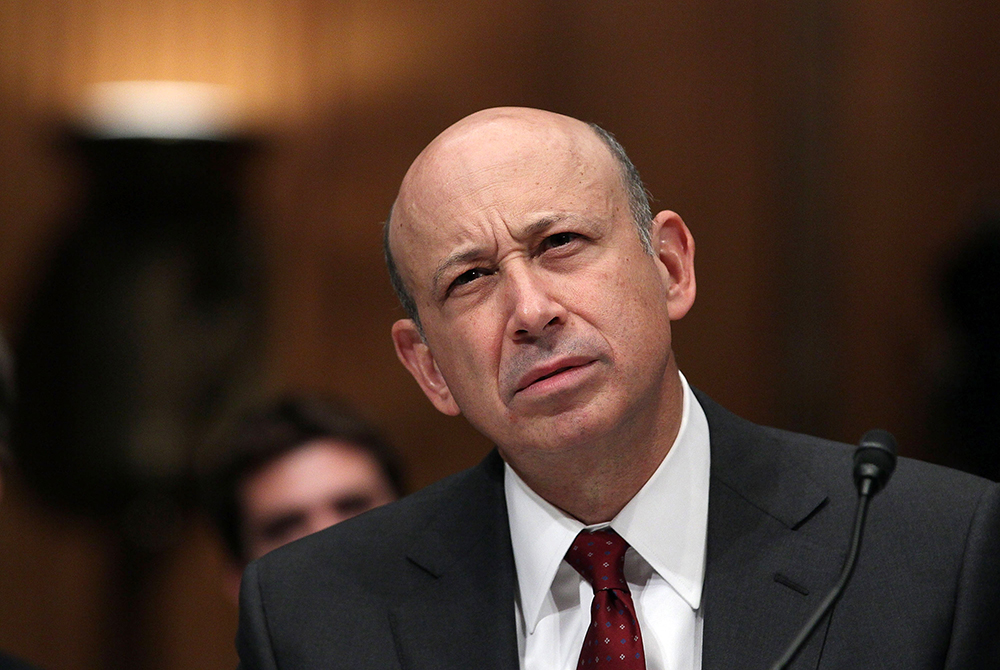
After the global financial crisis, which Goldman navigated more adroitly than rivals, Rolling Stone compared the bank to “a vampire squid wrapped around the face of humanity.” New York magazine ran a cover story which asked: “IS GOLDMAN SACHS EVIL?” Lloyd Blankfein does his level best to make light of all this in Streetwise, a pacy, often wry account of his career at Goldman, where he served as CEO and chairman from 2006-18.
One top Goldman executive sold his Nantucket house for $55 million in the wake of Lehman collapsing
The story of Blankfein, the son of a postal clerk, is a tribute to social mobility and Goldman’s meritocratic culture. He grew up in the housing projects in Brooklyn, winning a place at Harvard. After a stint as a tax lawyer, he joined the commodity trader J. Aron, later acquired by Goldman. Thereafter he conquered impostor syndrome and outsmarted rivals for the top job.
As editor of the Financial Times, I had regular dealings with Blankfein, along with other Wall Street CEOs. He was a thoughtful co-chair of our annual business book award. In 2009, recognizing his leadership during the financial crisis, the FT named him Person of the Year. Our relationship was friendly, if occasionally spiky.
His pet moan was that newspapers ran more stories about Goldman than rivals because the name alone attracted more clicks. True, but then Goldman was one of the most powerful banks in the world. In his memoir, he offers some media advice to beleaguered CEOs: “If you want to hurt a reporter, ignore him. If you really want to hurt him, indicate that you’re unaware of his work.”
Wisecracks aside, Blankfein likens Goldman’s role to Adam Smith’s invisible hand directing capital and investment where it is most needed in the economy. His legacy as CEO was to steer the bank through the crisis but also to preserve its culture as an advisor, financier and investor.
Blankfein’s “triple play” required managing multiple inherent conflicts of interest. Critics argue that Goldman was never the same after it went public in 1999. Shareholders’ money was now at risk rather than the partnership’s. In fact, Goldman had little choice but to follow the herd. Rivals such as Salomon Brothers, Bear Stearns and Morgan Stanley had already floated their shares on the New York Stock Exchange. They all needed capital to finance deal-making and trading. London had gone full Big Bang. Ten years on, Wall Street consolidated, too. Goldman became a full-service merchant bank.
Yet something was lost. Disaffected employees, especially those who lost out in the IPO, claimed the client was sacrificed in the stampede to get rich. Others pointed to the rise of cut-throat traders at the expense of (supposedly) genteel investment bankers. Trader Blankfein punctures the hypocrisy. Some of the white-shoe types who openly wailed about the dangers of going public happily voted in private in favor of taking the money.
Post-IPO, Goldman grew from 10,000 to 45,000 employees. Risk management became an existential challenge. In the run-up to the crisis, Goldman took on extra risk and the bankers (including Blankfein with $67 million remuneration) took home sackfuls of cash in 2007. The following year, when the financial system came close to meltdown, Goldman survived – but only just.
Blankfein insists that Goldman was properly hedged. He minimizes the bank’s exposure to the insurance giant AIG, pointing to the purchase of credit insurance on the mortgage-backed securities which it was also selling to clients (and buying itself). Goldman’s trademark has always been deft footwork.
In his memoir, Blankfein has a pop or two at the Alpha Male colleagues who went missing in action during the crisis. One top Goldman executive sold his Nantucket house for $55 million in the wake of Lehman Brothers collapsing. When challenged, he said: “I have a fiduciary duty to my family.” But the boss does pull his punches. He skirts over the giant 1MdB fraud in Malaysia, where Goldman advised the country’s sovereign wealth fund. Nor is there mention of Goldman’s role in arranging swaps that effectively allowed Greece to borrow €1 billion without adding to its official debt, thus easing its path into the euro.
These are minor omissions by a man who survived the crisis and a bout of cancer. Unlike many of his peers, he kept his reputation intact. Anyone with corporate ambition and an interest in recent financial history should read this book.



Comments