Dark Greens
Sir: Both your leading article and Angus Colwell’s cover piece (‘Zacked Off’, 28 March) are bang-on. Although I have never been an activist, I do have some previous as an environmentalist. Among other things, I was briefly employed by the Green party at the turn of the century. I felt I could support it because it represented something important that was otherwise missing from political discourse. It was vaguely liberal, or even libertarian, but not really on the left-right axis. In the mid-2010s I rejoined the party for two years and found that it had been heavily colonised by ‘progressives’ but still contained a decent core.
No longer. At the last election, I received a flood of Green fliers which put virtue-signalling about Gaza front and centre, occasionally mentioning climate change as a vague afterthought with nothing about any other environmental issue. Later, my Green local councillor was suspended from the party for being incorrect on trans. Zack Polanski didn’t move the party in this direction, he doesn’t have the talent to move anything. He has just exploited what had already happened.
In short, you’re quite right that the Green party is no longer green. There really is an opportunity for the Conservatives here – the environment is far too important to be seen as just another ‘progressive’ good cause.
Martin Parkinson
Bristol
Labour pains
Sir: I’m not a Conservative voter but I am a longtime Spectator reader and enjoy the articles even when – and often because – I disagree with them. But I found myself in unusual concord with your leading article suggesting the Tories are now the true Green party. I have many disagreements with the Greens, not least the motion at its conference last weekend on whether Zionism is racism – which is in itself arguably racist – but its abandonment of important environmental issues is astonishing.
To my great regret, my own party, Labour, is piss-poor on the environment and on agriculture’s relevance to our economy and history. And I rather relish the irony of Kemi Badenoch (clad in gumboots in your online picture) sticking up for the green cause. While I’m unlikely to vote for her, I’m proud to live in a country where the opposition leader is the child of Nigerian immigrants who grew up without the benefit of the pleasures of our lovely countryside and yet understands its abiding value.
Salley Vickers
London W11
The price of crime
Sir: Sarah Langford (‘À la cartel’, 28 March) makes very valid points about the link between poor harvests, rising food prices and crime. However, there is nothing new in this relationship, or its identification.
In 1867, Georg von Mayr examined the price of rye in Bavaria over the period 1835-61 correlating it with the number of offences over the same period. He concluded that ‘for every halfpenny increase in the price of rye there would be one theft per 100,000 persons’.
A more contemporary idea may be for law enforcement agencies to look again at the relationship between economics – particularly when it comes to rising global prices – and crime.
Von Mayer did not have the benefit of big data or AI, and these could lead to a more ‘predictive’ and intelligent approach to tackling certain types of crime. They may also play some part in bringing about the increased police effectiveness sought by commentators such as Nick Timothy (Diary, 28 March).
Richard List QPM
Aylesbury, Bucks
I blame the Tories
Sir: Steve Hilton’s assertion that Britain’s current problems can be traced to the ‘second half of the Conservative years’ (‘California dreamin’’, 28 March) is puzzling. The rot set in with Tony Blair’s election in 1997. But it was made worse by the government Mr Hilton advised in the first half of the Conservative years which did nothing to eradicate the worst aspects of New Labour: uncontrolled immigration; the ‘green’ agenda that burdens us with unaffordable energy; and the thoroughly unequal Equality Act which legalised discrimination based on ‘protected characteristics’. The administration Mr Hilton served was culpable for this missed opportunity; the nation suffers to this day.
David Soskin
Former special adviser to the Prime Minister, No. 10 Policy Unit (1995-1997)
Petworth, West Sussex
No solution
Sir: Two dinner conversations and Rory Sutherland’s excellent article (‘Engineers beat lawyers’, 28 March) have confirmed my thesis that political animals are lousy at policy, because their skill is in winning arguments, not solving problems. The core problem-solving disciplines are mathematics, engineering and physics, but people with these backgrounds rarely go into politics. Additionally, anyone interested in party politics generally starts with a set view of what’s wrong and how to fix it. As a policy adviser (and former marketer and physicist), I’ve found it impossible to get even basic ideas across to any party.
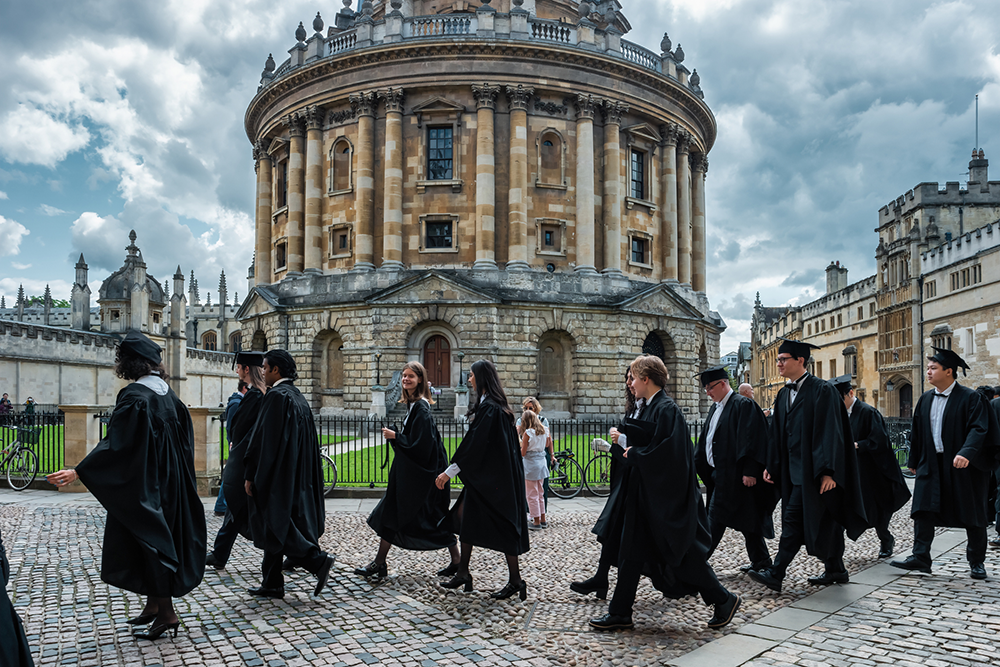
Oxford’s PPE provides skills in defending the indefensible. Perhaps any holder of that degree should be automatically banned from public office.
Andrew Probert
London SW1P
No change there
Sir: Charles Moore is in good literary company when he complains about the state of his local roads (Notes, 21 March). Writing from Oxfordshire to a friend in Nigeria, the novelist Barbara Pym observed: ‘Life in 1977. Concorde, costing I don’t know how many millions, flies over our heads, clearly visible from our cottage window, while the road outside is as full of potholes as in the 16th century.’
John Hicks
Manchester
Write to us letters@spectator.co.uk

Comments