Green party

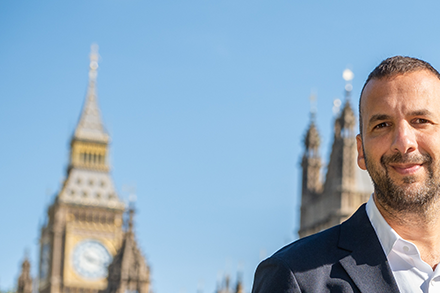
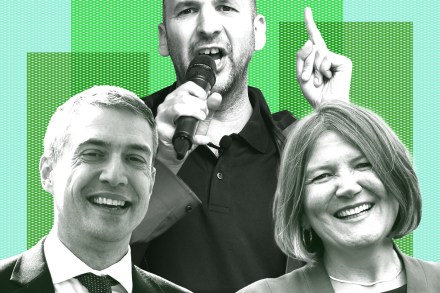
Revealed: the Green plot against Zack Polanski

From our UK edition

As Keir Starmer struggles to keep his crown, another leadership battle is raging. Away from the media spotlight, there is a fight for the future of the Green party between its various official ‘Special Interest Groups’ and its leader, Zack Polanski. What are they fighting about? Why, Palestine and racial politics of course.  On one side, Polanski and his officials are at least trying to appear to be dealing with allegations of anti-Semitism and extremism within the party. On the other, a powerful affiliate group, the Global Majority Greens (GMG), is accusing its leader of creating a ‘hierarchy of racism’, with allegations of anti-Semitism taken more seriously than other complaints.

The obvious truth about anti-Semitism

From our UK edition

There are many ways to do nothing. One is to sit on your hands; another is to call for ‘a conversation’. I have noticed quite a lot of calls for ‘a conversation’ since the stabbing of two Jewish men in Golders Green last week. Some politicians and pundits have even been bold enough to call for a ‘national conversation’. This is when you can tell people are pulling out the big guns. One reason I say it is also a variant on doing nothing is because this has happened so many times before. I remember Theresa May standing near the site of the London Bridge attacks in 2017, surrounded by various leaders, insisting that we need to tackle ‘extremism’. The results were a real stunner – even for connoisseurs of inertia.

March of the Greenshirts: Polanski’s party are the real racists

‘Back us to stop the far right,’ say the Greens. But what if parts of the Greens are the far right? Saiqa Ali, a Green candidate in next week’s elections for Streatham St Leonard’s, Lambeth, posts on her Instagram account a picture of the Earth suffocated by a giant serpent with the Star of David on its skin. She thinks that the British government includes too many ‘Zionists Jews’, and that Donald Trump is ‘owned by Jews’. Not even the Z-word, that last one. Not even Israel. Just… Jews. Ali also posts a picture of an armed man in what looks like a Hamas headband, captioning it: ‘Long live the Resistance.’ If it is a Hamas headband, this may actually be a criminal offence.

Zack Polanski must dream of Athens’s radical democracy 

From our UK edition

A Greek essayist c. 420 BC argued that Athens’s radical democracy, giving the vote to every adult male citizen, resulted in the poor having total power to impose their will on the rich. Zack Polanski, leader of the Green party, must dream of such a world. The essayist agrees that, since the poor row the ships which control the Athenian empire, they have a right to enjoy political power which allows them to serve their own interests in the weekly Assemblies. But he thinks that, while the educated rich are most concerned about what is just and good, the common poor are ignorant, disorderly good-for-nothings. Their power simply ensures that they can satisfy their own lawless needs.

Voters get the politicians they deserve – so get ready for PM Polanski

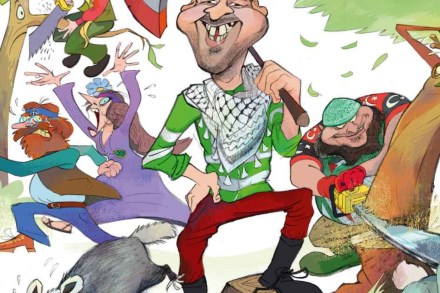
It is a truism that in a democracy the voters get the government they deserve – and so we should probably not complain too much if our next prime minister is a snaggle-toothed halfwit who presents to voters an infantile diorama drawn from fairy tales in which dancing is more important than manufacturing, people can be whatever they want to be, the military should be abolished and everyone will be happy except for the Jews, who are to be hounded and vilified and attacked. Zack Polanski’s Greens are the embodiment of what the American writer Rob K. Henderson called ‘luxury beliefs’, which are beliefs in the main based upon fictions – and they are soaring in the polls.

Letters: Ban PPE graduates from public office

From our UK edition

Dark Greens Sir: Both your leading article and Angus Colwell’s cover piece (‘Zacked Off’, 28 March) are bang-on. Although I have never been an activist, I do have some previous as an environmentalist. Among other things, I was briefly employed by the Green party at the turn of the century. I felt I could support it because it represented something important that was otherwise missing from political discourse. It was vaguely liberal, or even libertarian, but not really on the left-right axis. In the mid-2010s I rejoined the party for two years and found that it had been heavily colonised by ‘progressives’ but still contained a decent core. No longer.

Does British politics have a problem with the ‘omnicause’?

From our UK edition

51 min listen

It is undoubtable that – under the leadership of Zack Polanski – the Green Party have soared to new heights. Having won their first parliamentary by-election in February, polls consistently show them as a force to be reckoned with on the left of British politics. Much of their success has come at the detriment of Labour, with disgruntled further-left progressive voices opting to vote Green. This, though, is a brand of eco-populism that comes at the expense of the Green Party's roots, or so argues Angus Colwell in the Spectator's cover article this week. Have the Greens ceded the issue of the environment?

Does British politics have a problem with the 'omnicause'?

The Tories are the real green party

From our UK edition

You might describe it as the Polanski paradox. The party which calls itself Green, which has concern for the environment as its raison d’être, has never been more popular. Four Green MPs returned at the last general election. Victory in the recent Gorton and Denton by-election. Local election gains in May predicted to be sweeping. Running second in many national opinion polls, and in the projected seat tally for the Scottish parliament. And yet while the Green party surges ahead, green issues fall by the wayside. As Angus Colwell explores in this week’s cover piece, Zack Polanski has focused the Green party away from the environment and turned it into a movement of the populist left.

How the Green party abandoned its environmental roots

In the summer of 1972, Lesley Whittaker walked into a pub in rural Warwickshire. She had something for her husband Tony. It was a copy of Playboy magazine. In that issue, there was an interview with the biologist Paul R. Ehrlich, who died this month aged 93. In it, he repeated the thesis of his 1968 book The Population Bomb, where he wrote that ‘in the 1970s hundreds of millions of people will starve to death’. There were simply too many of us. Worldwide famine was imminent. Lesley and Tony were terrified. Along with a local businessman, Michael Benfield, and his future wife, Freda Sanders, they talked about it over pints at the Bridge Inn, becoming known as a ‘Gang of Four’. Over several months, they roped in 39 others, and set up the People party in 1973.

Green surge: could Labour lose London?

From our UK edition

15 min listen

Deputy political editor James Heale and deputy editor of The House magazine Sienna Rodgers join Patrick Gibbons to discuss the challenge the Greens pose to Labour in London. James's political column this week explains how the shockwaves of the Gorton and Denton by-election have reached the capital. Could Labour's 'strongest heartland' fall to the Greens through their coalition of 'urban professionals, young Muslims and the economically disaffected'? Plus: as Sienna reveals Zack Polanski's podcast tastes – in an exclusive interview for The House's cover (out Monday) – we extend an interview to the Green Party leader to join us on Coffee House Shots. Produced by Patrick Gibbons.

Green surge: could Labour lose London?

Labour’s plan to unite the left

From our UK edition

It is easy to criticise the Budget. The process was a chaotic mess. For many on the right, Rachel Reeves’s £26 billion tax raid to placate Labour MPs was a form of madness as well as badness. But good politics means understanding your opponents. One former No. 10 Tory thinks there was method in the madness: ‘It totally makes sense for Labour to move to the left.’ Nearly half of those who voted Labour last year would not vote for the party today. The number of voters fleeing Labour to the right – to Reform or the Tories – has remained steady since January at between 13 and 16 per cent, or one in seven of their 2024 voter base. Two-thirds of those votes have been lost to Reform.

Letters: The case for decriminalising cannabis

From our UK edition

Back to reality Sir: The harms caused by cannabis are not a result of a failure to police it properly (‘Stench of failure’, 8 November). They are primarily because the distribution of it is controlled by criminals rather than corporations. Criminal gangs maximise their profits by pushing more addictive forms of drugs, and their activity wreaks misery on their families and communities. Psychosis is only associated with skunk, which is a more addictive form of cannabis, high in THC relative to CBD. Smokers of this are estimated to be 2.6 times more likely to have psychotic-like experiences than non-smokers. Herbal cannabis is not associated with psychosis; in fact, the high levels of CBD in it have some therapeutic and even antipsychotic benefits.

Trump’s gilded age, the ‘hell’ of polyamory & is Polanski Britain’s Mamdani?

From our UK edition

31 min listen

A year on from his presidential election victory, what lessons can Britain learn from Trump II? Tim Shipman writes this week’s cover piece from Washington D.C., considering where Keir Starmer can ‘go big’ like President Trump. Both leaders face crunch elections next year, but who has momentum behind them? There is also the question of who will replace Peter Mandelson as ambassador to the United States. Can Starmer find a candidate who can get the Americans on side? Host Lara Prendergast is joined by The Spectator’s political editor Tim Shipman, features editor Will Moore and commissioning editor Mary Wakefield.

Is Zack Polanski our Zohran Mamdani?

From our UK edition

Like Zohran Mamdani in New York, Zack Polanski offers the thrill of cost-free rebellion. Mamdani leapt to prominence at the end of June by unexpectedly winning the Democratic party nomination in the New York mayoral race, and doing so as an avowed socialist who claims that by taxing the rich he will relieve ‘the despair in working-class Americans’ lives’. Polanski has made waves since the start of September as the new leader of the Green party of England and Wales, using a rhetoric calculated to appeal to left-wing activists, while proclaiming himself the champion of plumbers and hairdressers. He has conjured up an alliance between utopian socialists like himself and sturdy, hard-working people who provide services on which we all depend, and who are struggling to get by.

Greta Thunberg and the ship of hate

From our UK edition

I was amused to read about the spat that broke out on Greta Thunberg’s flotilla between conservative Muslims and members of the LGBTQ+ community. According to newspaper reports, the convoy stopped in Tunisia on its way to Gaza and picked up a self-described ‘communist queer militant’, along with other gay activists. This led to the departure of several devout Muslims. ‘Why involve these dubious activists serving other agendas that do not concern us and have nothing to do with Gaza?’ said one of the aggrieved participants. Linking the plight of Palestinians to every other woke cause is relatively new Why indeed? The surprise isn’t that this unlikely coalition fractured somewhere in the Mediterranean, but that these schisms don’t occur more often.

Why haven’t the Greens cut through more?

From our UK edition

19 min listen

The Green Party leadership election is underway, pitting new MPs Adrian Ramsay and Ellie Chowns against London Assembly Member Zack Polanski. The Greens achieved their best ever result at the 2024 general election, but they’ve remained static in opinion polls ever since. Lucy Dunn and Luke Tryl of More in Common join Patrick Gibbons to try to make sense of this. As Luke says, the dynamics within the leadership election are symptomatic of a wider divide over party strategy – two of the seats they won last year come from more liberal, traditionally left-wing seats, while two others come from traditionally conservative-leaning, rural shires. Plus, does Corbyn’s new party complicate any attempt to make them the anti-system party of the left?

‘An era of five-party politics’: John Curtice on the significance of the local elections

From our UK edition

20 min listen

Legendary pollster Prof Sir John Curtice joins the Spectator’s deputy political editor James Heale to look ahead to next week’s local elections. The actual number of seats may be small, as John points out, but the political significance could be much greater. If polling is correct, Reform could win a ‘fresh’ by-election for the first time, the mayoralties could be shared between three or more parties, and we could see a fairly even split in terms of vote share across five parties (Labour, the Liberal Democrats, the Conservatives, the Green party, and Reform UK).  The 2024 general election saw five GB-wide parties contest most seats for the first time. These set of local elections could solidify this ‘five-party political system'.

The Caroline Lucas Edition

From our UK edition

35 min listen

Caroline Lucas was elected as the first ever MP for the Green Party and served as their leader three times. Having completed a PhD in English, worked for Oxfam, and been involved in local Green Party politics, she went on to serve in the European Parliament for a decade. In 2010, she was elected to Parliament as the MP for Brighton Pavilion and, during her 14 years in Westminster, the Green Party went from 0.9% of the national vote to 6.4%. Although she stepped down, a record 4 Green Party MPs were elected at the 2024 election. On the podcast - the 150th episode of Women With Balls - Caroline tells Katy Balls about growing up with different politics to her Conservative-voting parents, why her views on nuclear weapons haven’t changed, and whether the left can be patriotic.

Kamala ambushes potential spoiler candidate

Vice President Kamala Harris is spending millions on new ads against Green Party candidate Jill Stein in swing state Wisconsin, warning potential supporters that a vote for Stein is a vote for Trump. The advertisement also attempts to smear Stein by asserting that she has links to KKK leader David Duke and Russian president Vladimir Putin. “You can tell a lot about a person by the company they keep,” a voiceover says. “Stein isn’t sorry about swinging the 2016 election to Trump.” The ad was paid for by the Democratic National Committee but approved by the Harris campaign.Why would Harris be using air-time to attack Stein just two weeks out from the election? There are a couple of theories.

Why Democrats and Republicans are so worried about third parties

In the closing months of the 2022 midterms North Carolina residents began receiving text messages and phone calls from unfamiliar numbers, a ritual all too familiar to a swing-state voter. The benevolent voice on the line had seen the recipient’s name on a petition to allow the Green Party on the ballot and wanted to ensure the signature was on the up and up. With validity confirmed the anonymous caller would reveal himself to be a Green Party representative. “If the Green Party is on the ballot, it’ll take votes away from Democrats, giving Republicans a huge advantage. It will help them win North Carolina in 2022 and 2024. There’s far too much at stake to let this happen. Are you interested in asking to have your name removed from this petition or leave it as is?

third party