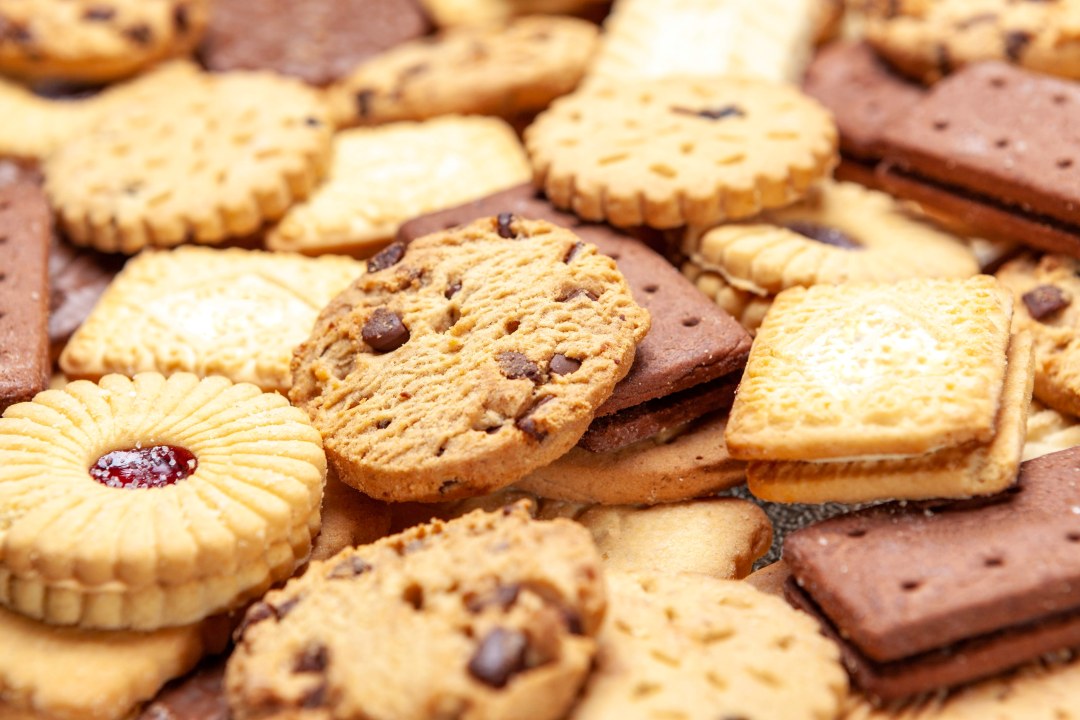
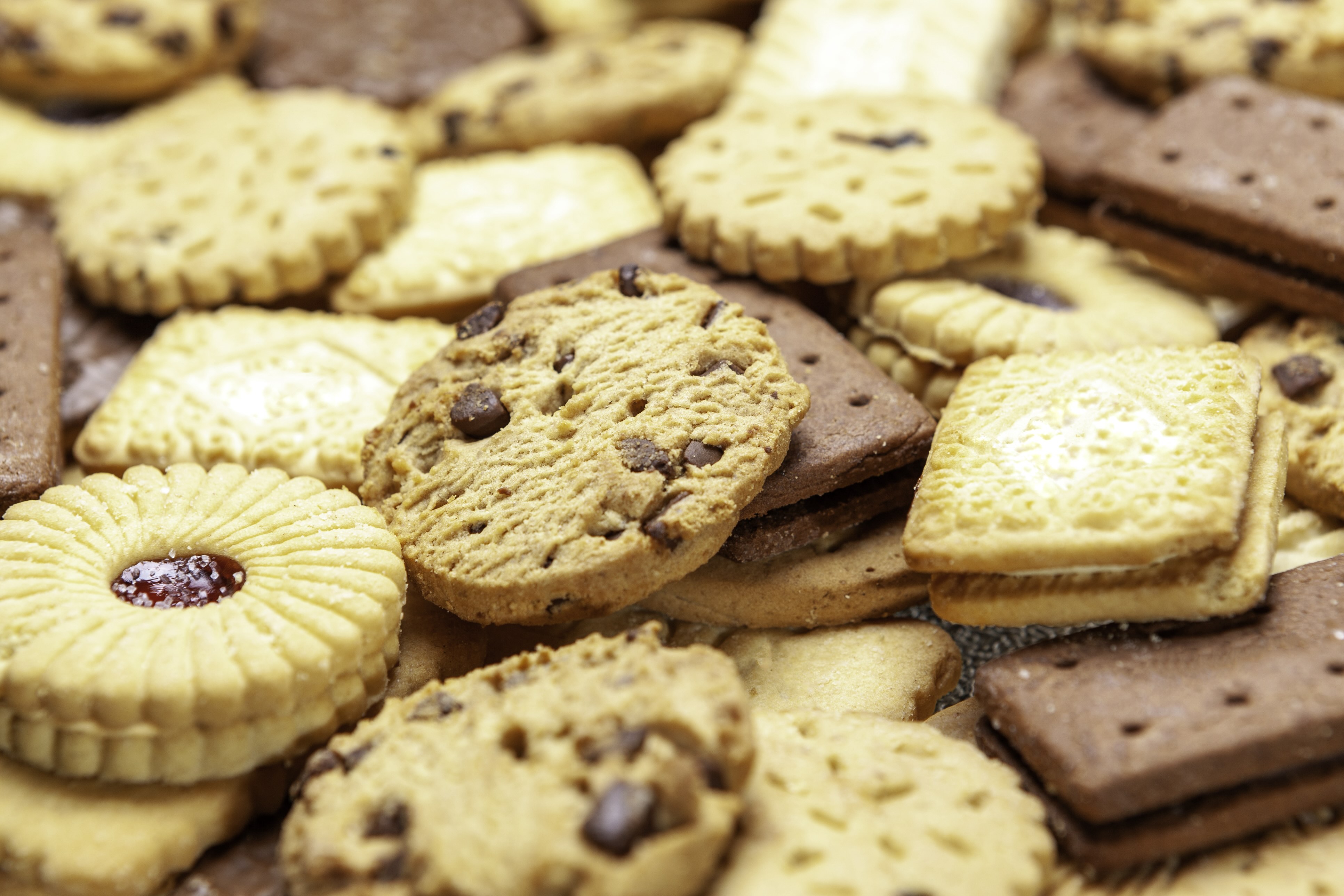
Have you heard of National Biscuit Day, a McVities marketing concoction, which came and went last week? Probably not, but in my view, it was as meaningful a prompt to reflect on British culture as any. There are, of course, both sociologies and histories of the Great British Biscuit, though more as the silent partner in the Great British Tea. In her book Watching the English, Kate Fox makes the good (if obvious) point that tea and all that goes with it is a social lubricant central to English identity and vital for retaining the ability to keep buggering on.
My personal interest in biscuits is rooted firmly in the biscuits, not the tea, and specifically in my attachment to their buttery embrace, their reliability, their sheer availability. Biscuits are a hug. Biscuits are a mother. Biscuits are sex. Biscuits also make you fat.
There’s a lot there to unpack, therefore, in a life lived in tension with the biscuit tin. But one can also keep it simple: some people are savoury (crisps, cheese, pizza) and some are sweet (cake, chocolate, biscuits) – I am sweet.
Less simply, I am also an emotional person prone to adrenaline spikes and jagged anxiety. Tucking into mounds, tubes, tins of biscuits does two main things: it provides a dopamine spike, and temporarily suppresses cortisol, the stress hormone. Chewing itself is also grounding, soothing, and meditative. It slows your thoughts down and gives your brain some breathing room. And, crucially, when the euphoria and intense rush of comfort dies away, the sugar and additives leave a dull dirty feeling, but it’s still a quieter state, and you’re so full of biscuits your brain stops asking for more, which is peace itself.
As a child with limited funds living in a road without shops, books performed the work for me that biscuits would go on to do. All at sea at two in the morning, with a bad tummy and sweaty from a sequence of nightmares, my ten-year-old self would reach across her pillow to young adult romance classic Darkling by K.M. Peyton and turn to page 176, a particularly sexy love scene.
As I became solvent and independent enough to buy my own comfort biscuits at the quantities I truly wanted, for reasons only I knew (and sometimes, barely that), books became things I read once or max twice each, not 180 times.
To this day, I never eat in the middle of the night, but there have been times – exhausted and ill in remote India, jetlagged and trying to settle in a mean hotel in Seattle, that I have stumbled out in the streets in a near-fugue state and found a small rural kiosk selling paper-thin factory butter biscuits (plentiful in India) or a tube of Oreos (America) and found a modicum of comfort.
My biscuit relationship intensified when I left home at 16 for Bedales, the arty boarding school in Hampshire. I was homesick; bereft. Then at Cambridge, the biscuit habit continued, as did the intermittent feelings of perplexity and dissatisfaction, worry and rejection – the anti-UPF (Ultra-Processed Foods) zealots of today would no doubt say the two went hand in hand.
I don’t know about that. What I do know was that biscuits continued to regulate and soothe me. When I began to put on weight, they gave me a dark and private, almost satisfying, sense of pathos. I was never properly fat (I was always fit), but I did get heavier at university, and it was not a mystery why. It was not metabolism or thyroid. It was the urgent, parched need for comfort and peace.
I always say that I sympathise with alcoholics who say they can’t have a single drop in the house. I am like that with the biscuit tin. Unless it is empty, it requires constant adjustment and control, and the biscuit voice usually wins. How can it not? Put plainly, I love the things.
Being a biscuit addict in a biscuit kingdom has been tough
Being a biscuit addict in a biscuit kingdom has been tough. Were our national go-to, say, mousse or jelly, I’d be a different person with a different way of handling boredom, greed, unease and disorientation. But as National Biscuit Day has given me cause to reflect, there are also advantages to being a biscuit-addiction sufferer, and survivor, in Britain – your craving is not wholly out of step with cultural syntax, and instead of hiding in plain sight, your addiction is simply part of the ether. The other advantage is demystification. Biscuits are not like drugs or booze, because they are respectable in all places at all times; nobody looks at you oddly when you pull out a packet of Hobnobs, unless perhaps you’re in a lecture theatre. And, just like in matters of the heart, when something feels so easily available, the intensity of your interest does eventually die down.
As for where I am now on the biscuit-dependence continuum, I’d say I’m in a good place. I’m a keen home cook and have discovered that if you bake your own stuff, you often lose the desire to eat kilograms of it. Being surrounded by clouds of flour and sugar all day also blunts the potentially dangerous sweep through the biscuit aisle.
When nothing will do but a whole packet of custard creams, Bourbons, Fingers or chocolate-covered digestive (the cheapies are always the best; you can stuff your Florentines), then simply go for it. So far, I’ve survived. After all, the human body has endured worse. Long live biscuits.




Comments