
In her seminal 1967 essay “Goodbye to All That,” Joan Didion writes of her former self, a 20-year-old naif arriving in New York City for the first time: “Was anyone ever so young?”
Lena Dunham – an avowed Didion stan – should have used that line as the title of her new book, an account of the messy process of making Girls, the HBO show she created, scripted, directed and starred in. Despite her inexperience and juvenile blunders Dunham, at age 25, produced a hit. Why, then, call her memoir Famesick? Because, she contends, the most important story she has to tell is how her body turned on her “right in sync with the public.”
It’s true that Dunham has been the object of sustained fascination since Girls launched in 2012. Hailed as a comic genius both as writer and actor, she was also quickly derided as a privileged, narcissistic over-sharer, to say nothing of the misogynistic scorn heaped upon her for her looks and weight. It’s been a lot to contend with.
Still, going by her new book – beautifully written, often touching, and sometimes laugh-out-loud funny – both her fans and her haters are on to something. Not only is Dunham a marvel, keenly observant and terrifically fluent, she’s her own worst enemy, prone to impulsive pronouncements and dislikable behavior. At age 40, she seems unwilling, or incapable, of really growing up. (Either way, she definitely wants a sick note.)

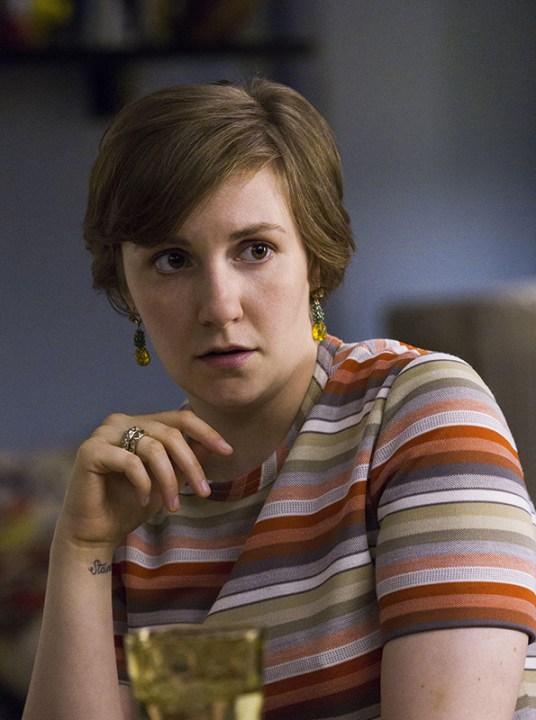
But does Dunham’s artistry earn her a pass? In Girls, she brilliantly satirized herself and her generation via the main characters, four 20-something female friends living in hipster Brooklyn, all self-absorbed, insecure and underemployed. Dunham not only wrote the snarky dialogue, she also displayed a shocking willingness to “go there” in her role as Hannah Horvath – appearing naked in raunchy sex scenes, behaving by turns pathetically needy and ridiculously grandiose, often tearing up or lashing out like a spoiled child.
It was a performance that both attracted and repelled viewers. Even people who had trouble stomaching Girls recognized its groundbreaking genius, and the show, widely imitated, has never been equaled. The current HBO offering I Love LA is a direct Girls rip-off, albeit with a gay man and a black woman cast in the core four to align the show with today’s inclusivity agenda. The cute and small-boned lead Rachel Sennott whips off her top often enough, but the jolt of seeing Dunham expose her fleshy, far from perfect body in front of the camera is missing.
It’s enjoyable to take the wild ride of Girls alongside Dunham as she describes how she landed a blind pilot deal from HBO, scripted and cast the show, and soared and struggled through the subsequent six seasons. She’s not shy about admitting what an idiot she could be, how she annoyed her friends and family, and the challenges of dating while living in the spotlight. But in the book’s second half, as Girls winds down, Dunham’s tone turns darker and whinier, and some of the natural sympathy one feels for her and her (many) health travails – endometriosis, colitis and other ailments clearly exacerbated by intense professional pressure and some youthful hijinks – seeps away.
By the final pages of Famesick, I longed for Dunham to be stronger and clearer – to reflect honestly on the past, and not make excuses or cast blame on others in a passive-aggressive way that’s too typically female. Surely someone who penned the scalpel-sharp personal jibes on Girls should be as willing to hold herself to account.
Spare a thought for Jenni Konner in this regard. When HBO green-lit the Girls pilot, Konner was assigned to Dunham to oversee the production as her co-showrunner. A seasoned professional, Konner was there to ensure this fresh comic voice could be heard, while the expensive shoot remained on track. Konner’s warmth, competence and creative thinking, so in tune with her own, appealed to Dunham from the start. Konner also made her feel “safe in all my incarnations”; an odd way to describe someone who was not exactly the boss, but a colleague to whom Dunham was responsible. But Dunham quickly blurred all lines, declaring Konner her best friend, her soulmate and her favorite sleep-over buddy. In hindsight, given subsequent events and how she is portrayed in this memoir, Konner, 15 years Dunham’s senior, must regret indulging in such a high school dynamic with her producing partner.
As Dunham’s health collapsed, ultimately leading to a hysterectomy at age 31, Konner was supportive. But after that operation, when the show’s production schedule continued to be upended by Dunham’s absences, Konner dared to inquire when Dunham would recover. She also suggested that the string of gastrointestinal and gynecological issues Dunham experienced might have psychological, not merely physical, causes. Dunham criticizes Konner for being insufficiently sensitive. And after numerous shooting days were lost and Dunham was (contractually) required to be examined by a doctor hired by HBO’s insurance company, Konner is somehow to blame for this, too.
The pair eventually split as business partners, and no longer speak, although the break did not come before the infamous Murray Miller incident. In fall 2017, Miller, a member of the Girls writing staff, was accused by actress Aurora Perrineau of sexual assault. Perrineau alleged that five years earlier, having drunk to excess on a night out, she awoke in Miller’s bed to find he was having intercourse with her without her consent. Miller denied the allegation. Konner and Dunham issued a joint statement saying they believed the accusation was “misreported.”
Days later, facing a public backlash, they apologized and said they spoke out of “blind faith” and were wrong to intervene. The Los Angeles District Attorney’s office evaluated the evidence and declined in 2018 to move forward with criminal charges.
Done and dusted? Hardly. Dunham remains so horrified by her behavior that in Famesick she refuses to spell out exactly what occurred. Like a child spooked by a bogeyman, she calls it the “Big Bad” and leaves readers to Google the full details. This is the “one thing in my life about which… I feel genuine shame,” she declares.
Believing all women is a good thing to do, but so too is supporting a friend at a painful moment. Rather than continuing to beat her chest, like a penitent monk, Dunham could have taken the opportunity, in her memoir, to assess the matter more reasonably, like an adult, and recognize how out of an abundance of loyalty she chose to stick up for someone she cared about, when a more prudent person would have kept quiet.
Instead, she makes an excuse: she was mentally muddled immediately post-surgery at the time, otherwise she would never have agreed to the offending statement. She wants to be off the hook and she also desires – if only subconsciously – to stick it to Konner. How dare her coldhearted former friend take advantage of Dunham’s weakened state to trick her into saying something she would forever regret?
At 40, Dunham seems unwilling, or incapable, of really growing up. (Either way, she wants a sick note)
When Dunham first came on the scene with her stiletto-sharp wit and scathing self-deprecation, she reminded some people of Woody Allen. Dunham’s movies, like Allen’s, are about ostensibly brainy New Yorkers stumbling around, humiliating themselves. Just as Allen often did, she gave herself the lead role, first in Tiny Furniture, the feature she made on a shoestring budget in 2010, and later in Girls.
But Allen casts himself as a romantic hero capable of attracting brilliant, sexy women, while in Dunham’s scripts, the character she plays rarely lands a great guy. Her on-screen relationship with Girls love interest Adam Driver was highly dysfunctional: he’s an angry recovering alcoholic, she’s insecure enough to keep trying to make things work despite his toxic behavior. Dunham’s complaints in Famesick about Driver’s volatility on set don’t seem fair: hire an intense, hot-headed young actor to play the same, and some rage-fueled outbursts are inevitable.
Notice, too, that Allen, hardly Hollywood handsome with his nebbish glasses and scrawny frame, got away with acting the charming Lothario, even while he pursued increasingly younger women. Dunham has always stirred anger in certain quarters for having the audacity, as a woman of only average looks, to depict herself seeking romantic and sexual satisfaction, always with men her own age.
Most telling is how differently the two auteurs react when they’ve run afoul of right-thinking people. Her penance in the Miller matter was not an isolated incident; Dunham has issued several high-profile apologies for various perceived offences. After the 2014 publication of Not That Kind of Girl, a book of her autobiographical essays, she apologized for the “insensitive” nature of her jokes about her interest, aged seven, in studying her baby sister’s genitals and later giving her candy in return for kisses. Allen has never apologized for anything, not even his choice to seduce Soon-Yi Previn, the college-aged daughter of his then-partner, Mia Farrow. He stated merely: “The heart wants what it wants.”
Dunham, a young woman thrust into stardom during the social media age, was fated to face challenges that Allen – a man whose career blossomed slowly in a different and less censorious time – never has. Still, I wish Dunham wouldn’t double down, as she does in Famesick, about how much she has suffered. She’s a survivor! She moved to London in 2022, got married and created a new TV show. The rom-com Too Much, which debuted on Netflix last July, is about another abrasive, sharp-tongued young woman, who, wouldn’t you know it, moves to London and falls in love. Although the show lacked the bite and the freshness of Girls,plenty of people watched and enjoyed it. Dunham is currently working on several new projects, including another Netflix show and a Broadway musical.
I wonder if Famesick is Dunham’s riposte to all those frustrated creatives who seethed when she got handed the opportunity of a lifetime while still in her early 20s. Perhaps she is trying to deflect envy and ask for pity. Before moving to London, Dunham had the word SICK, in big capital letters, tattooed on to the back of her neck. It seems strange that a woman of such bravado would emphasize her illnesses. Does she intend to downplay her success, propitiate the online critics and offer up a blanket excuse for all the times she’s been less than perfect? Maybe so. That would be a very girly thing to do.




Comments