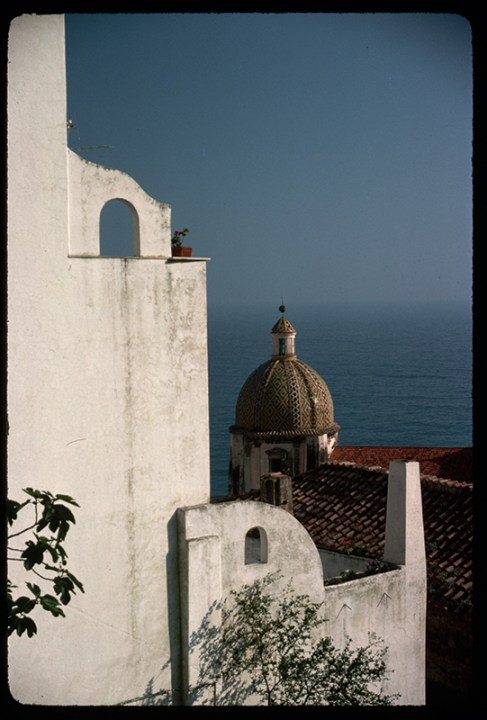

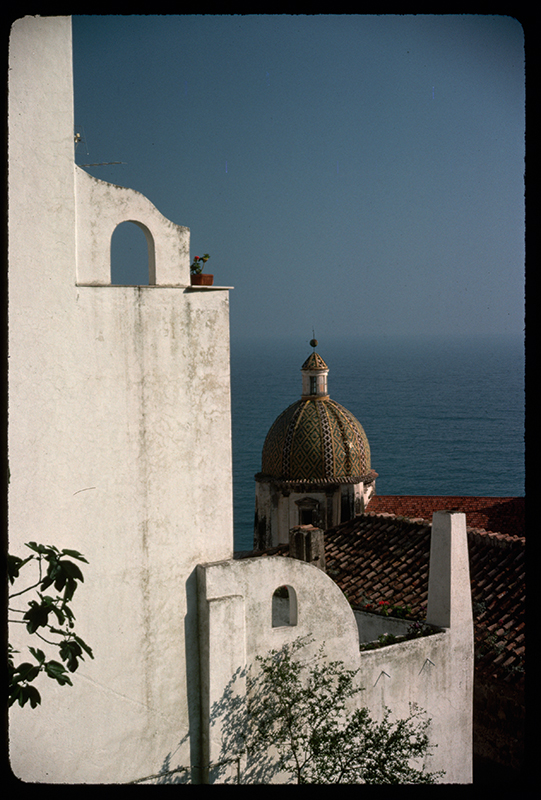
Look out from the balcony of your room at Le Sirenuse and you’ll see the trio of rocks jutting out of the Tyrrhenian Sea that gave the hotel, one of the last true greats in the world, its name. The three jagged islets form an archipelago, which is said by the Greeks to have been the home of sirens whose enchanting songs lured sailors to their deaths. Le Sirenuse, a scarlet palazzo wedged into the cliff-face of Positano, boasts similar powers of attraction. In a place known around the world for its beauty, Le Sirenuse stands out. It has developed a reputation as the loveliest hotel in the world; somehow, it exceeds that billing.
The mention that one is staying at Le Sirenuse typically elicits a knowing – and faintly envious – nod
Originally built as a summer retreat for the Sersale family, an Italian clan with a rich history, the villa was opened to guests in 1951. Franco Sersale, one of the four siblings who founded the hotel, refurbished the space through the years, while subsuming adjoining houses as part of an elegant sort of manifest destiny. The place is now owned by Antonio Sersale, Franco’s son, and his wife Carla, who have kept up Franco’s habit of packing the place with fine art – the place almost doubles as a museum.
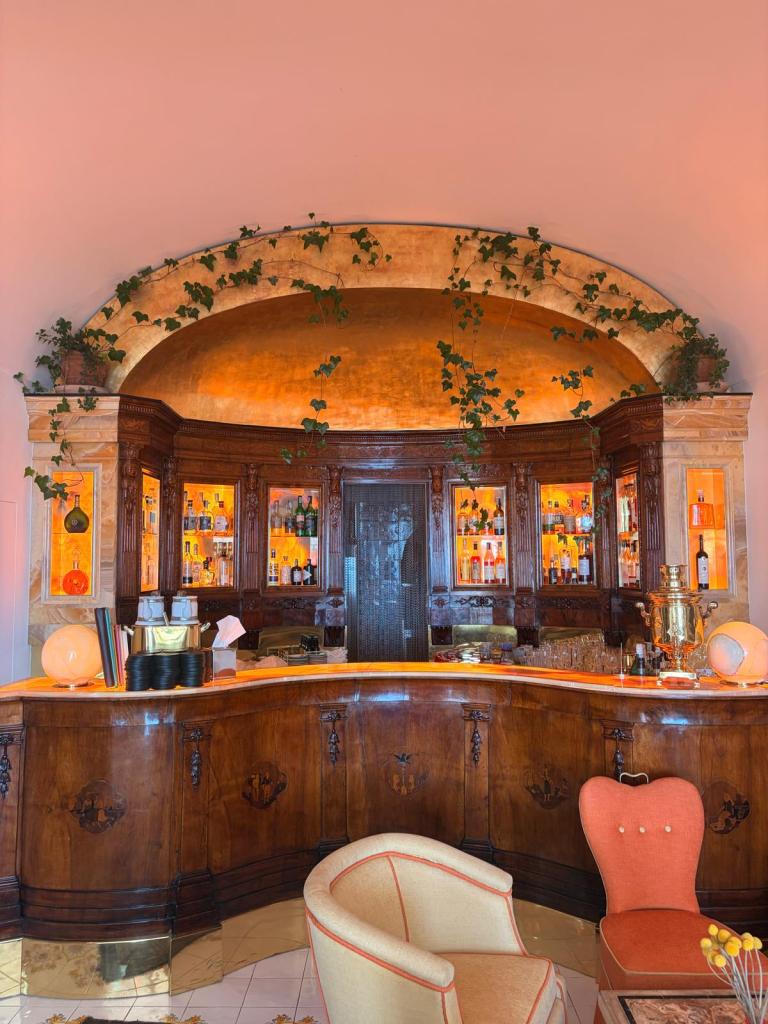
There is a neon sign reading “Don’t Worry,” by the British artist Martin Creed, hanging from the vaulted ceilings of the speakeasy. At one point I turned a corner and found a striking painting from Stanley Whitney. Even the pool is a masterpiece: its floor features a mosaic by the sought-after Swiss artist Nicolas Party.

The hospitality of Le Sirenuse feels as though it is designed to have a light touch. You’re only reminded of how seamless the service is when you reflect on yet another lovely day spent. Seemingly insurmountable tasks are resolved with ease; a desperate request for cigarettes one night was resolved with quiet alacrity.
“Positano bites deep,” John Steinbeck wrote upon discovering the seaside town. “It is a dream place that isn’t quite real when you are there and becomes beckoningly real after you have gone.” Steinbeck stayed at Le Sirenuse, which at the time was run by the Marquis Paolo Sersale, Franco’s father, a sophisticate and patron of the arts. Much has changed about Positano since the American author’s discovery; Le Sirenuse has expanded, but its unique charm and beauty – he described it as “a first class hotel, spotless and cool” – has remained intact.
There is one glaring failure of imagination in Steinbeck’s assessment of Positano. Explaining his impulse to share the place with readers rather than conceal its existence for himself, Steinbeck reasoned that the vertigo-inducing terrain meant Positano would never become a tourist destination. “There isn’t the slightest chance of this in Positano,” he wrote confidently. The tourist of the 21st century is perhaps more intrepid than his forebears. It has become one of the most popular getaways on the planet, owing no doubt to its comfort in front of an iPhone camera. Yet no degree of pixelated familiarity will prepare you for the real sight; Positano is one of the great visual pleasures of the world. And it’s worth wading through the throngs. Winding staircases and narrow alleyways usher you through this teetering hulk of pastels impossibly perched on a mass of rock jutting out from the sea like a psilocybin-induced miracle. Amid the smattering of colors stands Le Sirenuse, looming just beyond the sparkling tile dome of the Chiesa di Santa Maria Assunta, a 10th-century church that, as history tells it, is the site of quite a few miracles. From the boats that ferry tourists around the coast, the mention that one is staying at the hotel typically elicits a knowing – and faintly envious – nod.
Should you decide to venture outside the hotel, Da Adolfo is worth the trip. It’s a magical little restaurant, a bare-bones shack on the beach accessible only by boat (or a 500-step climb down the precipitous cliff face that might have actually killed Steinbeck). A small tender bearing the restaurant’s logo, a bright red fish, ferries happy diners from Positano’s port to the restaurant.
Back in Positano, I made my way to a booth occupied by an old man and his tiny dog, where you can shoot air rifles at soda cans. “Più rompi più vinci,” his booth declared, which translates to “the more you push the more you win.” I pushed a few times and, perhaps owing to the lovely white wine served at Da Adolfo, missed. Never mind. It was nearly dusk, and so time to go down to the shore, where bars and restaurants line the beach, and have a drink.
Three Australian girls – drunk and in search of uppers to straighten out a day’s worth of drinking on a boat – guided me to Music on the Rocks. This charming nightclub, the only one in town, is carved into the limestone cliffs of the coast. The crowd is a mix of locals, Italians on leave from Milan or Rome, and tourists; it is one of those places where Champagne is sprayed rather than drunk.
I made it back to the hotel in the early hours of the morning, and to my horror realized I once again craved a cigarette at an hour when all the tabacchis were closed. My apologies were dismissed with a warm smile; my request was resolved without fuss.


Comments