

In Citizens, his account of the French Revolution, Simon Schama wrote how the Jacobins recruited children into ‘relentless displays of public virtues’. These youth affiliates, the ‘Young Friends of the Constitution’, encouraged children to attend sessions at the group’s headquarters in Paris, while ‘throughout France, “Battalions of Hope”, consisting of boys between the ages of seven and 12, were uniformed and taught to drill, recite passages from the Declaration of the Rights of Man and of the Citizen and parade before the -citizen-parents in miniature versions of the uniform of the National Guard’.
In Lille, a ‘children’s federation’ was formed, two of whose members, César Lachapelle, aged eight, and Narcisse Labussière, nine, were noted to declare: ‘We will live for our patrie, and our last sighs will be for her… When our parents and teachers boast endlessly of the wisdom of your decrees and when from all parts of France we hear applause for your immortal work, when all of France showers blessings upon your heads, how can our hearts remain insensible? No, Messieurs, recognition and respect know no age.’ They sounded insufferable.
You might call Youth Parliament a way to engage people in politics. You might also call it a grotesque charade
The use of children has been a feature of authoritarian and illiberal regimes down the years, most notoriously during China’s cultural revolutions when teenagers were encouraged to attack teachers, while the recruitment of adolescents has been found across many communist regimes. Last September, far-left extremists at a traditional French riot in Aurillac brought children along, showing them how to throw ‘foam cobblestones’. Sweet.
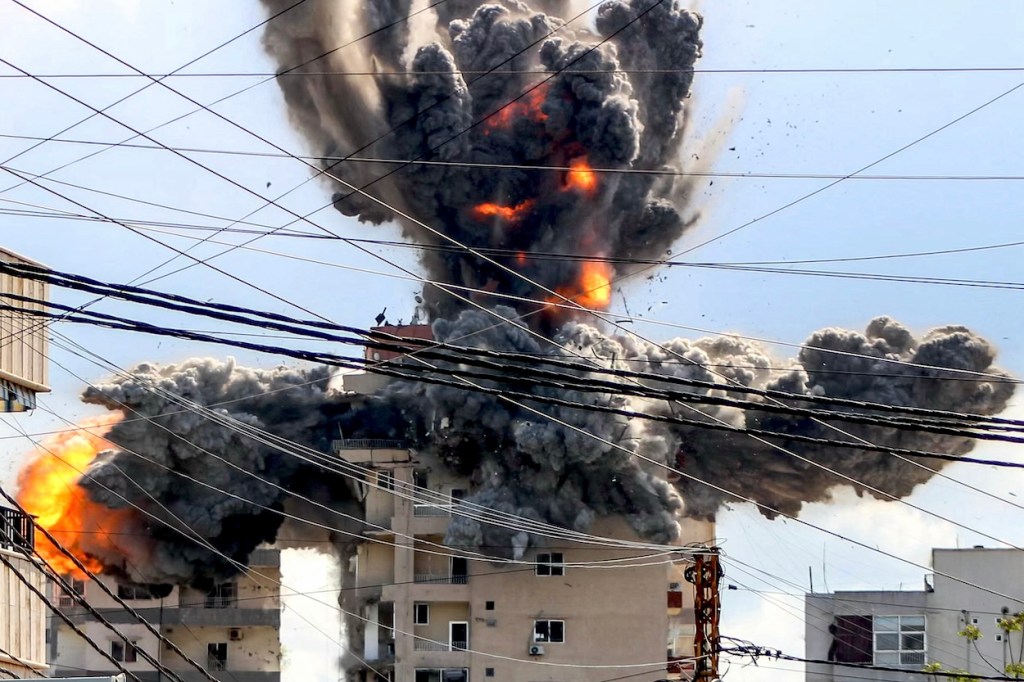
In contrast, the use of children as political human shields has historically been viewed with discomfort by the more politically moderate, creepy even. Not so much today, where numerous schools have recruited children to bunk off to attend climate protests. At the recent Labour party conference there were dozens of schoolchildren outside, ‘campaigning’ for free school meals, apparently with the blessing of their teachers. In the United States, children have been encouraged to pester politicians over the ‘Green New Deal’; in Ireland, a group of nine- to 12-year-olds from a community centre in Cork were utilised to promote asylum through the medium of rap music.
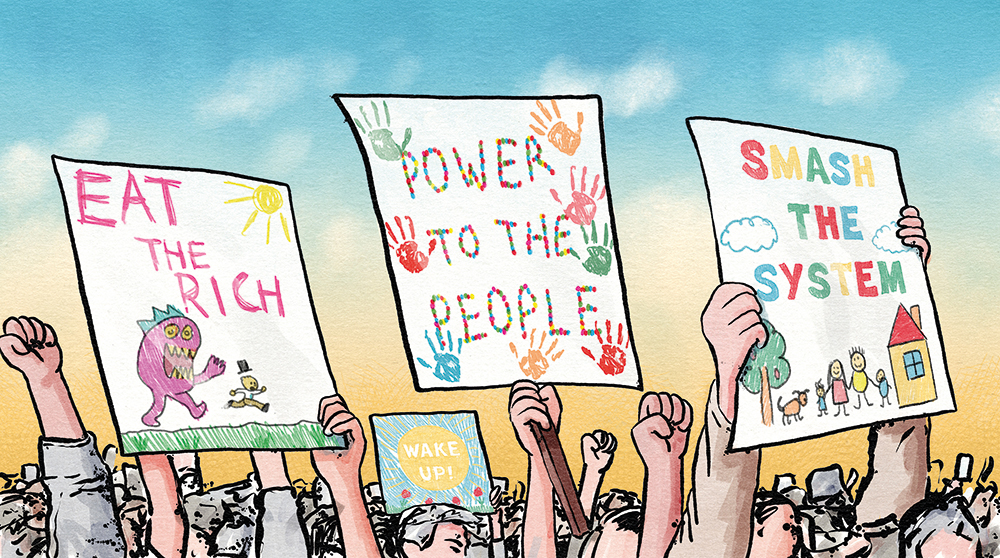
The taboo against using children to promote political ideas has largely been broken, driven not just by naked calculation but also a mawkish sentimentality about the opinions of children, their purity and goodness. It’s a form of populism that might be called totulism – politics dictated by tots.
The trend became notable in the 2010s, when politicians and journalists began repeating the profound thoughts of children on the hot-button issues of the day. In 2017 the New York Times reported that at the Advent School in Boston, ‘a teacher asked a group of students the big question: “What is gender?” The first answer came from a second–grader: “It’s a thing people invented to put you in a category.”’
There was a five-year-old girl who wrote to Pope Francis calling for looser immigration controls because ‘my dad works very hard in a factory galvanising pieces of metal’. Meanwhile, President Joe Biden produced a letter from ‘Charlotte’ asking why men get paid more, and ‘I think you should fix this since your the presitent’ [sic]. Horrible cynics such as myself suspected that most of the young children were simply repeating what they’d been told by parents and teachers or, in the case of various social media posts, recounting similar stories, simply made up. The trend subsided for a while – but hasn’t gone away.
MP Tom Hayes recently described visiting a school in Bournemouth where a little girl asked him: ‘Why is a South African-born person, who lives in the United States, has funded a presidential election there, and is now part of the US government, threatening to get involved in UK politics? I can’t even have a say in UK politics.’ The pupils are aged four to seven.
The newfound respect for the political opinions of children inspired the creation of the ‘UK Youth Parliament’, established in 1999 and comprising 400 representatives aged between 11 and 18. Footage of this parliamentary theatre shows young people repeating the prevailing moral views and clichés of their elders and betters, just as eight-year-olds in 1792 might have done. Various local councils have set up youth panels in order to send representatives. The young Jacobins of the Belper Youth Council in Derbyshire recently ‘explored their town’s links to the Transatlantic Slave Trade’.
If you think 11 is a bit early to start a life in politics, there is also the Children’s Parliament Select Committee, in which children as young as seven got to grill representatives from water companies in 2022.
You might call it a way to engage young people in politics. You might also call it a grotesque charade, embarrassing and demeaning to the institution, and it is certainly telling that, at a time when MPs have never been less powerful or prestigious, when most are merely lobby fodder whose actions are irrelevant to most decisions, we encourage children to cosplay as MPs.
Reflecting on the creation of the Youth Parliament, the former Labour politician Tom Harris recently joked: ‘I can live with most of the votes I cast as an MP, including my vote for the Iraq war. But I’ll never forgive myself for voting to allow this lot to use the chamber.’
Younger people tend to be far less knowledgeable about current affairs and far less tolerant of opposing views
It seems like bad form for middle-aged columnists to sneer at the dreams of young people, but I’d rather my daughters had OnlyFans accounts than joined the UK Youth Parliament to serve as human shields. That’s exactly what they are, and as with earlier authoritarian regimes, this mockery of a parliament allows grown-ups to use children to further their aims. At the beginning of last year, the Youth Parliament chose to debate the motion that ‘16- and 17-year-olds should be allowed to vote in all elections and referendums’ and, ominously, that this should be ‘accompanied with more political education throughout school’. Another motion declared: ‘All young people in the UK must have access to a standardised level of political literacy and democratic education.’ This is something which Labour activists have long wanted to push, both enfranchising a demographic guaranteed to vote left, but also further institutionalising the political ‘education’ of schoolchildren.
Well, they’ve got their way, and the government has said it will give 16-year-olds the vote. The move was phrased in the language of ‘hope’, of helping young people and showing a belief in them – and what kind of -monster would argue against the children, our future?
Perhaps someone who pointed out that younger people tend to be low-information voters, far less knowledgeable about current affairs, far less tolerant of opposing political views, more likely to believe in zero-sum economics and much more likely to believe in conspiracy theories. They have lower levels of what psychologists call ‘crystallised intelligence’, or what the rest of us might call ‘wisdom’. Whenever teenagers have been involved in politics, the results have been dismal; if you visit America and wonder why there are no public toilets, it’s because a group of high-schoolers started a campaign, the Committee to End Pay Toilets in America. The result of this egalitarian campaign: there are now no toilets at all. Understanding the law of unintended consequences is beyond many adults, indeed many MPs, but completely alien to most children.
While there are obvious political machinations behind the rise of totulism, it also reflects a deeper collapse in authority following the cultural revolution of the 1960s, a movement driven by youthful rebellion against parental authority. This has left adults unable to wield authority in a culture which prizes youthful innocence and rebellion. Without that authority, adults are easily manipulated by infants and adolescents.
This has informed the recent debate over gender more than any other. In 2023, Minnesota Lieutenant Governor Peggy Flanagan argued that we should support sex changes for minors because: ‘When our children tell us who they are, it is our job as grown-ups to listen and to believe them. That’s what it means to be a good parent.’ Is it though? As columnist Mary Harrington put it: ‘It’s an abdication of responsibility to allow kids to choose their own bedtime, let alone their own “gender”.’
Our job as adults is to nurture and protect children, and to love and cherish them – but it doesn’t mean that we have to listen to their opinions about politics. Recognition and respect do not, in fact, ‘know no age’.

Comments