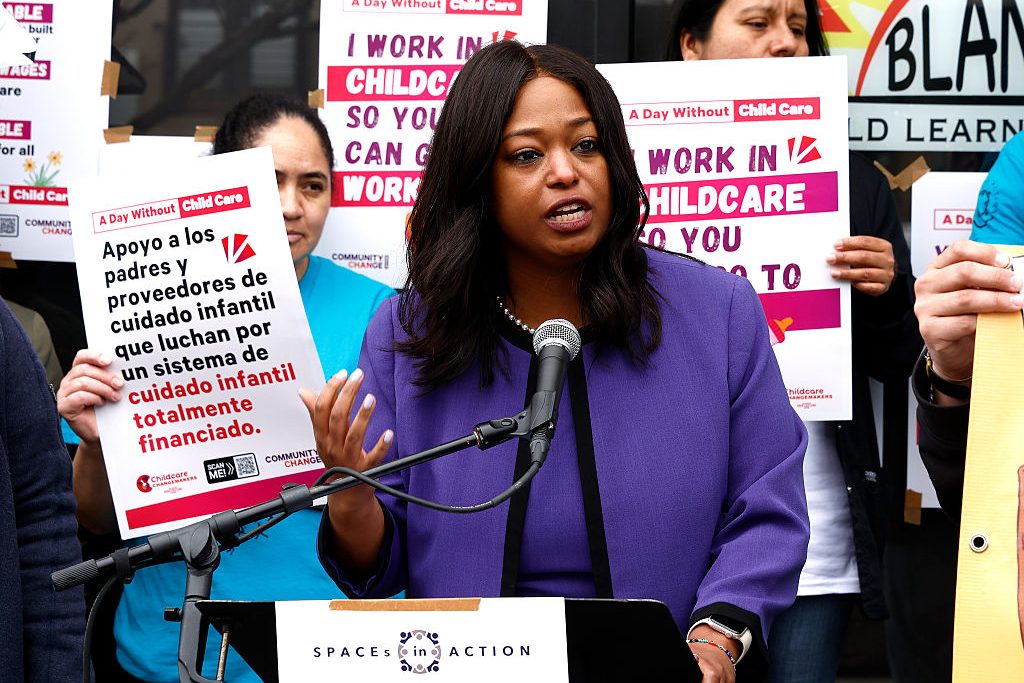
Eight months after New York handed City Hall to a democratic socialist, Washington, DC appears ready to follow suit. Janeese Lewis George, a former prosecutor, leads the field, preaching the same message of affordability that carried Zohran Mamdani to power.
DC residents head to the polls today to vote in the mayoral primary after Muriel Bowser decided not to stand for reelection. In the deepest of blue areas, the winner of the Democratic primary race is almost certain to be its next mayor.
The primary has become an ideological tug-of-war between the Democratic party’s socialist wing and its business-aligned establishment. Lewis George runs as the candidate of the progressive coalition. Kenyan McDuffie, who is backed by much of the city’s establishment, runs as the centrist alternative and self-styled fiscal realist. Gary Goodweather, a businessman and Army veteran with a Johns Hopkins finance degree, fills the outsider lane with sweeping ideas, providing what one voter called “comedic relief”.
Lewis George leads McDuffie by 11 points among likely primary voters, holding that double-digit edge even after ranked-choice second and third picks are counted. A quarter of voters remain undecided heading into primary day, though her supporters report firmer commitment and a stronger turnout record.
She is running the Mamdani playbook: cost of living, housing, rent and public schools. It leans on expanded government to deliver universal child care, an aggressive house building plan, free public transportation and from fresh revenue that she says can be drawn from closing business tax loopholes.
Her campaign embraces the comparison. “Mamdani’s win was because he seized the moment of the dissatisfaction and frustration people have, particularly young people. Janice and our slate are no different,” said a campaign insider. “There’s momentum and energy in this country to push for people who aren’t just going to do business as usual. We mobilize the youth, mobilize people of color, mobilize a progressive coalition, including labor, to take power in cities toward building a more progressive landscape”.
On paper, Washington should be an easy city to govern well with 700,000 residents, a budget the size of that of a small country and one of the most educated populations anywhere – nearly two-thirds of adults hold a college degree. Yet every fifth resident relies on food assistance, about 40 percent are on Medicaid and its unemployment and its crime leads the nation. The city spends more per student than almost any school system in the country, but its children still trail the national average in reading and math.
‘We are not going to get ICE off our streets by fearing this president’
The fix on offer from Lewis George and her Democratic comrades is more government and extracting more money from residents and businesses. They don’t question whether the system itself is the problem.
One of the central issues to the election has been a decision taken by local electricity company Pepco in January to raise its rates. Some households have seen their monthly charges double or triple. Cost of living is an acute concern for even DC’s white collar residents.
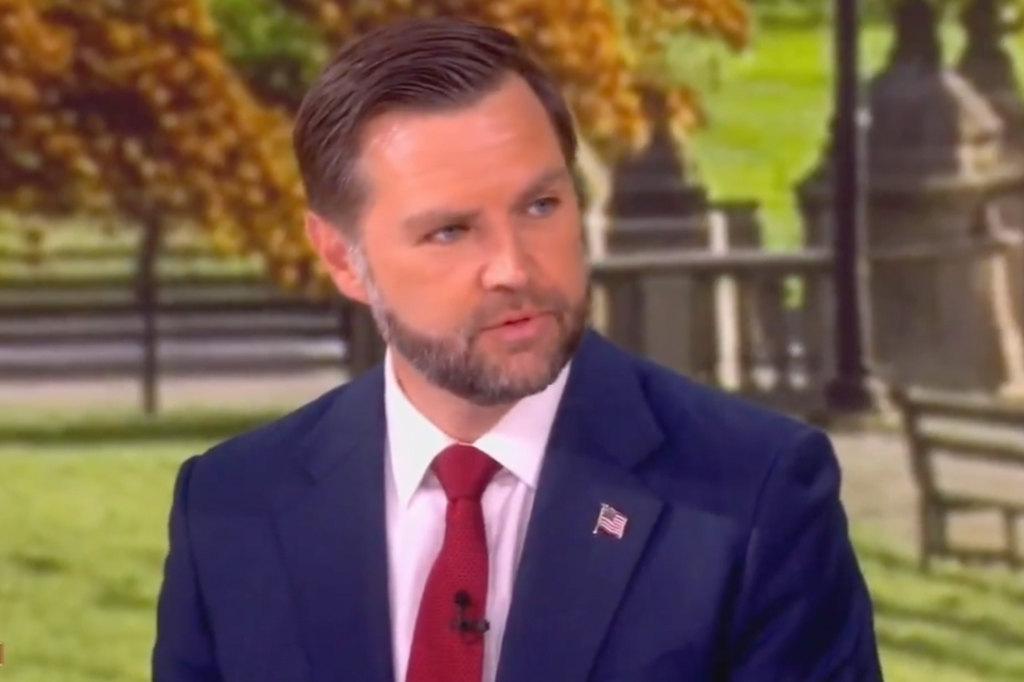
Elon Musk, or at least his cost-cutting creation Department of Government Efficiency, is also a central issue. The government accounts for about a quarter of all jobs in the city. But under Trump’s slashing of the federal workforce, the district shed 44,600 jobs. DC has entered a recession this year, with output contracting 1.9 percent. Restaurants have emptied and shops and downtown office towers sit vacant. Lewis George condemned the federal worker cuts as a “travesty” and vowed to pour money into reskilling the workforce.
Crime divides the race more than any issue. DC still ranks among the deadliest places in America despite a sharp fall in violence. After a string of teen brawls in nightlife districts, the city moved to impose a curfew on anyone under 18. Lewis George refused to endorse it, saying that it would be tough on black youngsters. She argued that enforcing curfews is risky due to the presence of federal and ICE agents who she says are not trained in de-escalation. Yet, the voters side with toughness: more than seven in ten back the curfew.
What unites the field is Trump. Each candidate stands against the National Guard and ICE deployment. As Washington votes, the soldiers are part of the scenery, roaming around in small clusters downtown and around the monuments in the swampy heat.
And Trump has signaled he will punish DC if they elect the wrong person by cutting off federal money which makes up a quarter of the district’s budget. He said last week he “wouldn’t like it” if Lewis George won. “Maybe we’d take back Washington, run it on the federal basis. We won’t put up with it. We’re not going to lose our businesses.”
But threatening a federal takeover is only putting the wind in the sails of Lewis George’s sprint to the finish. “We are not going to get ICE off our streets by fearing this president,” she said. “We are not going to protect our rights or Home Rule by obeying in advance. Threatening Home Rule because you do not like how residents vote is an attack on democracy itself.” Yet for all the defiance, how she would actually stand up to the president is vague.
Lewis George is likely to win the primary and then the full election. But her north star in New York, Mayor Mamdani, is discovering how easy it is to make campaign promises and how hard it is to follow through with them. His current tax plans raise a fraction of what he needs to pay for his flagship policies. What will happen in DC when Lewis George’s fine campaign promises also meet the math?



Comments