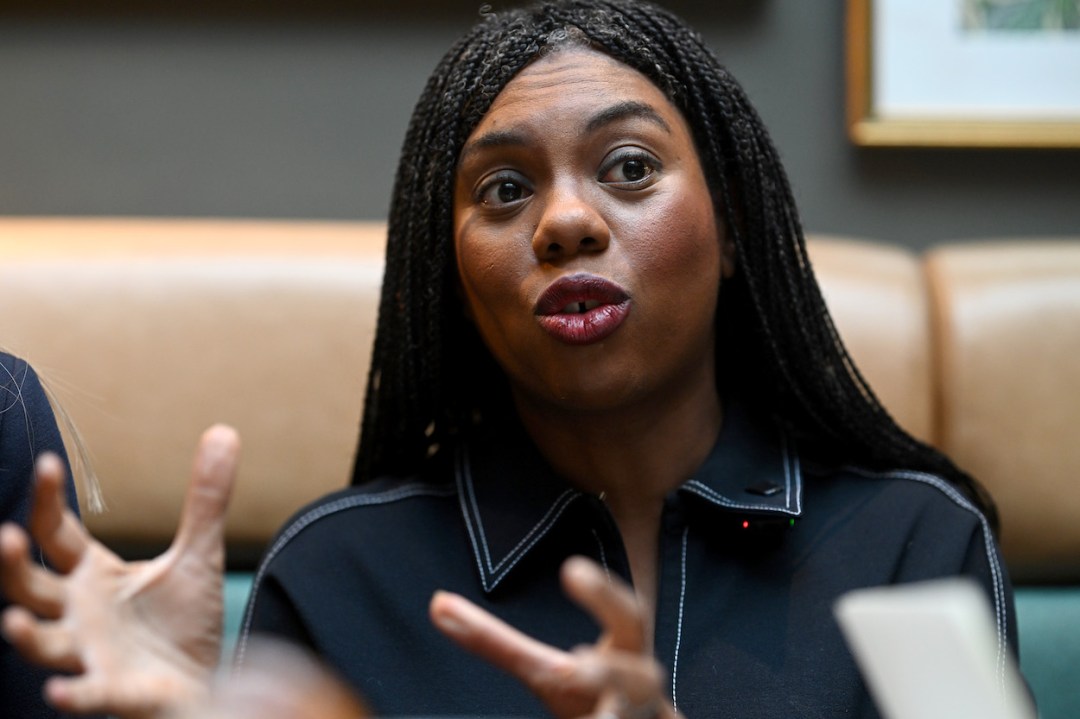
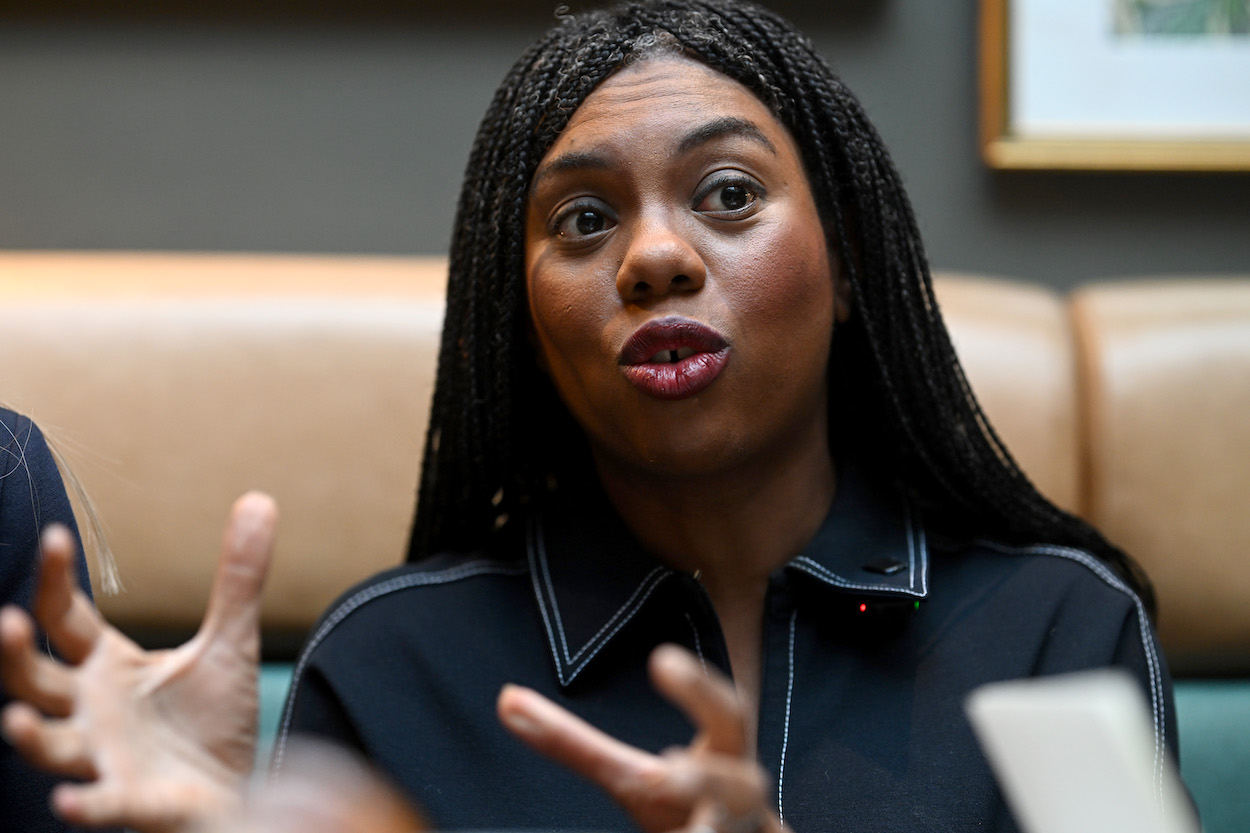
There is growing momentum behind a ban on social media for the under-16s. Last week, the Prime Minister hinted that legislation could be fast-tracked. This week, Kemi Badenoch, at a press conference with the parents of children whose deaths have been connected to social media, called for a digital ‘counter-revolution’ to protect kids. If Britain did ban social media for under-16s, it would be following in the footsteps of Australia, which enacted a ban in December. Denmark, France and Spain are signalling similar intentions.

The logic behind these bans is simple: social media’s harms have become too severe for children to navigate safely, and tech companies have repeatedly shown that they cannot be trusted to police themselves. This is particularly relevant in my field of research: terrorism. We see a clear trend of would-be terrorists becoming younger. Government statistics show the largest age group receiving Prevent support is 11-15, followed by 16-17. The vast majority of these young people are accessing extremist material on the internet and interacting with like-minded people.
If we enacted a ban for under-16s, I would not expect it to stem the tide of youth radicalisation. Online terrorist networks, though heavily disrupted over the past decade, are now highly resilient. They operate across decentralised platforms, end-to-end encrypted channels and terrorist-operated websites – many of which would fall outside the scope of an Australian-style ban. Would-be terrorists are technologically adaptive. They would find ways around these restrictions.
Research consistently shows that when networks are disrupted, they migrate to platforms offering greater operational security and are therefore harder to penetrate. In doing so, they often become more ideologically extreme: free from moderation, shielded by anonymity and reinforced by insular group dynamics. Many sit outside UK jurisdiction, hampering law enforcement’s ability to disrupt emerging plots. In short, a ban could push vulnerable teenagers into darker, more unregulated corners of the internet where authorities and security services are completely blind and have no authority to regulate.
A recent statement by a range of online safety organisations, including The Molly Rose Foundation and the NSPCC, argues that a ban would simply displace harmful content to less regulated corners of the internet.
Despite this, I remain broadly in favour of a ban on social media for children.
I recognise it may do little to prevent catastrophic outcomes such as radicalisation, suicide or ‘sextortion’. I am also uneasy about the ban as a matter of principle: it raises free speech concerns for children and privacy concerns for everyone, as age verification would require sharing personal information.
But as a parent, I have become increasingly persuaded by Jonathan Haidt and others about the broader, quieter harms affecting millions of children: the rewiring of developing brains, the erosion of play-based childhoods and the collapse of in-person interaction. Meta and YouTube are facing lawsuits in the United States over leaked documents alleging they deliberately designed addictive features that target children.
My support comes with one crucial caveat: it must actually work
An Australian colleague remarked to me that the ban was ideal: he could reduce his children’s screen time while at the same time blaming the government for it.
My support comes with one crucial caveat: it must actually work. In the UK, users already have to age-verify to access certain platforms, yet this is trivially bypassed with a VPN or by uploading an adult’s photograph. Most 14-year-olds could manage it. There are technical solutions here – layered systems combining biometrics, anti-VPN detection and mandatory ID verification –but they must be built into legislation from the outset, not bolted on as an afterthought.
The idea of banning an activity and curtailing parental autonomy does not sit entirely comfortably with me. We reserve such interventions for a narrow class of harms: compulsory education, tobacco and alcohol. I increasingly believe social media should belong in that category too.


Comments