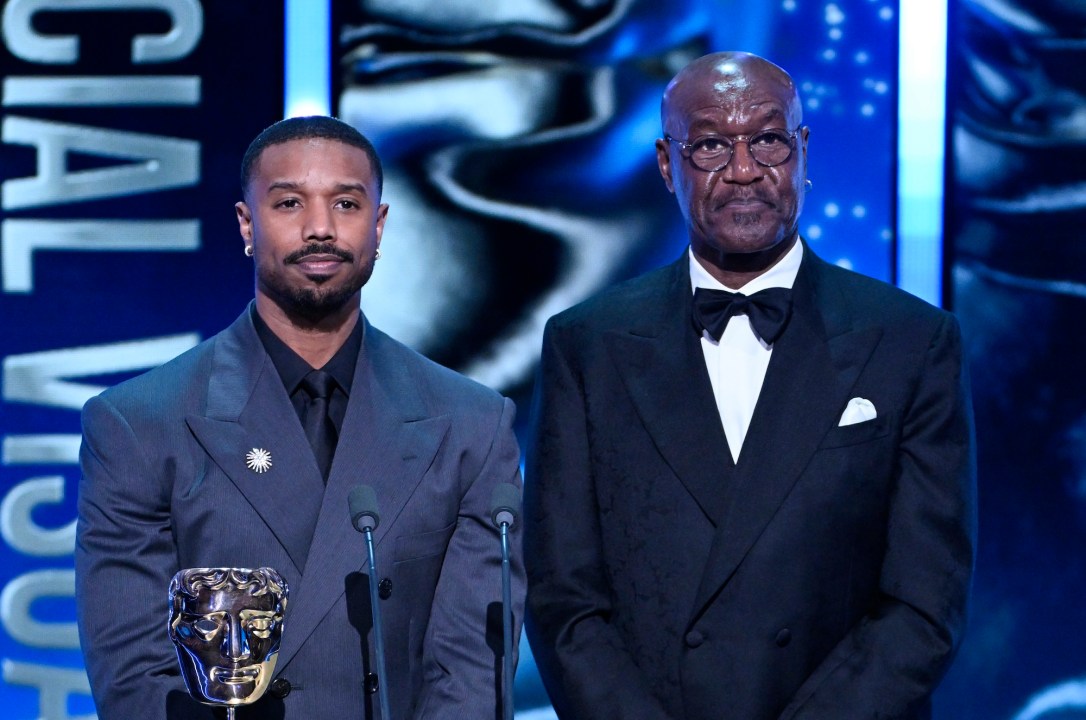
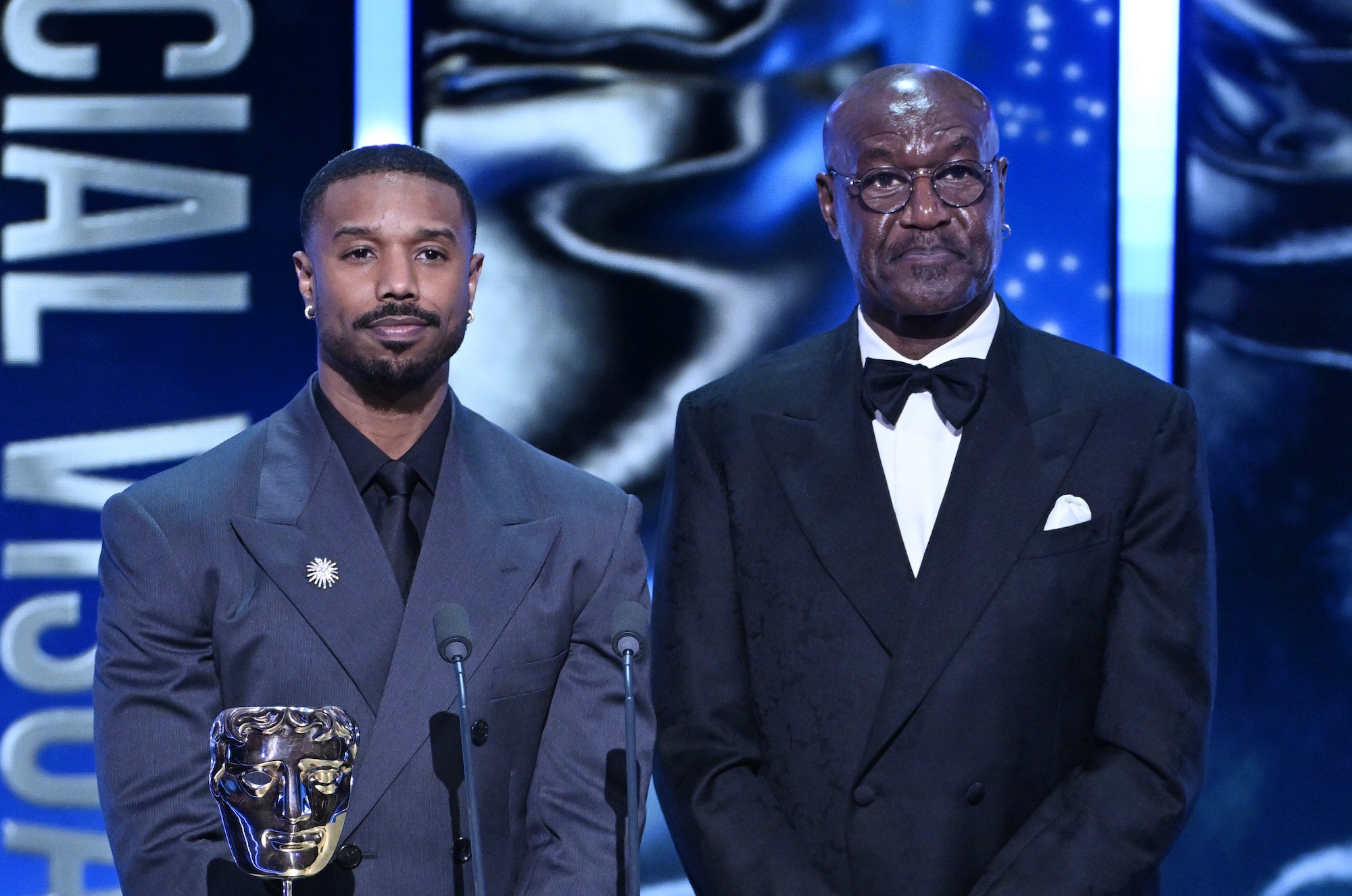
At the BAFTAs on Sunday night, John Davidson – whose story of living with Tourette’s syndrome is dramatized in the (very good) film I Swear – shouted out the N-word when black actors Delroy Lindo and Michael B. Jordan were on stage to present an award. You’d hope that by now people might understand the mechanics of Tourette’s symptoms – that the tics are totally involuntary, and consist of erupting with the worst possible things at the worst possible times; the imp of the perverse dialed up to 11. But no.
The cruel and ideological politics of identity still have a grip on the mediocrities of the creative industries
This was another one of the increasing number of events in this century that feel almost comically demonstrative. If you were concocting a drama to expose the raw nerves of the progressive milieu, you would reject the scenario – too on the nose, too silly to be credible.
It has everything – the pearl-clutching about words, the setting among a star-spangled shindig of the privileged pretending to be counter-cultural and the hamfistedness of the BBC. Incredibly, the BBC didn’t remove one of the shouts before transmission, and even uploaded it to their online streaming service. Now, we should all know by now that expecting the BBC to react swiftly to a crisis without months of inquiries, delay and obfuscation is a fool’s errand. I dealt with several such situations in my TV career and the eventual answer was always that there had been an error of “process” or a “systemic” failure. It was never anybody’s fault. But the BBC was grossly, spectacularly inept on this occasion. There is a two-hour time delay between the BAFTA ceremony and transmission, precisely so that they can edit out dull bits, gaffes and grandstanding political outbursts. They managed to cut most of that out on Sunday, including a cry of “Free Palestine” from Akinola Davies Jr. who won best debut.
Shouting, as Davidson did, “boring!” during the BAFTAs feels less like a disability than a superpower. Award jamborees are grindingly slow and tedious, and everybody there would love to erupt. A friend of mine once had to present a Best Band award and, after unsealing the hallowed envelope and reading that the winner was Radiohead, only just managed to curb the sudden urge to announce Showaddywaddy instead.
Davidson couldn’t have been clearer in his statement after the incident: “I can only add that I am, and always have been deeply mortified if anyone considers my involuntary tics to be intentional or to carry any meaning.”
But what a revealer some of the reaction has been – all the culture industry’s talk about neurodiversity, acceptance and access crashing into the hard and messy reality of disability. Actor Jamie Foxx rejected the apologies of both Davidson and host Alan Cumming, telling his Instagram followers that Davidson “meant that shit.” Actress Rachel True spluttered “Does Tourette’s make you unable to apologize tho?,” somehow managing to miss the profuse apologies. Sports journalist Jemele Hill chipped in: “I get that John Davidson has Tourette’s, but Alan Cumming’s apologizing to the audience and not MBJ and Delroy Lindo is problematic. His inclusion shouldn’t be prioritized over the well-being of the other guests.”
Yesterday, Hollywood rag Variety put quote marks around “involuntary” in its headline about the story. Maybe Variety has made a breakthrough in neuroscience? Let them share it, if so.
The reaction from British celebs has, thankfully, been better. Scottish actor Thierry Mabonga, who appears in I Swear as Davidson’s lawyer, said, “This is the condition, the disease of Tourette’s syndrome. John cannot control what he says. In fact, that’s the whole point of why we’re making this film, to educate people about Tourette’s syndrome… how can you say that he can’t be there at the awards? This is a film about his life… and it’s great that he was there.” Many others have pointed out that the late Queen was able to cope with Davidson shouting “fuck the Queen!” when he went to collect his MBE award.
But not everybody in Britain has been so accommodating. Jonte Richardson – no, me neither – has pulled out of his role as a Bafta judge, saying that the BAFTAs have “a long history of systemic racism.” Sorry, the BAFTAs? If Jonte thinks that bunch of progressive middle-class morons are racist, systemically or otherwise, he must have led a charmed life. Who knew? It’s made me rethink incidents in my own past. Perhaps the skinheads who chased me and my Bengali friend through High Wycombe in 1982 wanted a discussion about best screenplay?
The plain and simple fact is that disabilities and impairments can sometimes – in fact, they can often – be awkward, embarrassing and difficult. The entire point of the “access agenda” in the arts is, surely, allowing for that and incorporating it? I might go so far as to suggest that if you’re disturbed by the inclusion of a disabled person, it’s you, not them, who needs to be asked to leave. I want to say to Foxx, Hill and Richardson: “Educate yourself. Do better.”
What this sorry spectacle has inadvertently demonstrated is the grip that the cruel and ideological politics of identity still has on the mediocrities of the creative industries. Nobody truly talented clings to this rubbish in such circumstances; it is always the security blanket of incompetents and also-rans who would never have got a foot in the door without it, and who have sped the decline of popular culture in the West.
This could all have been sorted and settled amicably, with a shrug and a bit of basic, do-unto-others fellow feeling. To our credit, and notwithstanding the agonizing maladroitness of the BBC, this was the lion’s share of the British reaction.
But we have been culturally colonized by the American left, and – if I might – it’s time to kick them and their ideology out of our lives.

Comments