For more than 20 years, the United Nations has been trying to impose some form of colonial rule on Haiti, without success. The problem has never been a lack of resources, much less a lack of demand from the Haitian people. Rather, it has been a lack of political will and leadership from an organization scared to death of being accused of promoting “neo-colonialism.”
The recent action by El Salvador’s president Nayib Bukele to send 100 troops to rescue four compatriots serving as technical workers who were kidnapped by gangs is a welcome sign. It shows that a successful recolonization of Haiti would require governments to drop the pretense of Haitian sovereignty and to organize a proper colonial force for the country.
The half-hearted UN intervention from 2004-17 was the worst of both worlds
Bukele’s action serves as a reminder that getting the UN out of the way and a coalition of the willing into its place is the only way to get results. What is needed is a multi-national force that, echoing Bukele’s words, declares to the gangs and their “anti-colonial studies” enablers living abroad: “Release the Haitian people, because we are coming for you and we will wipe you out.”
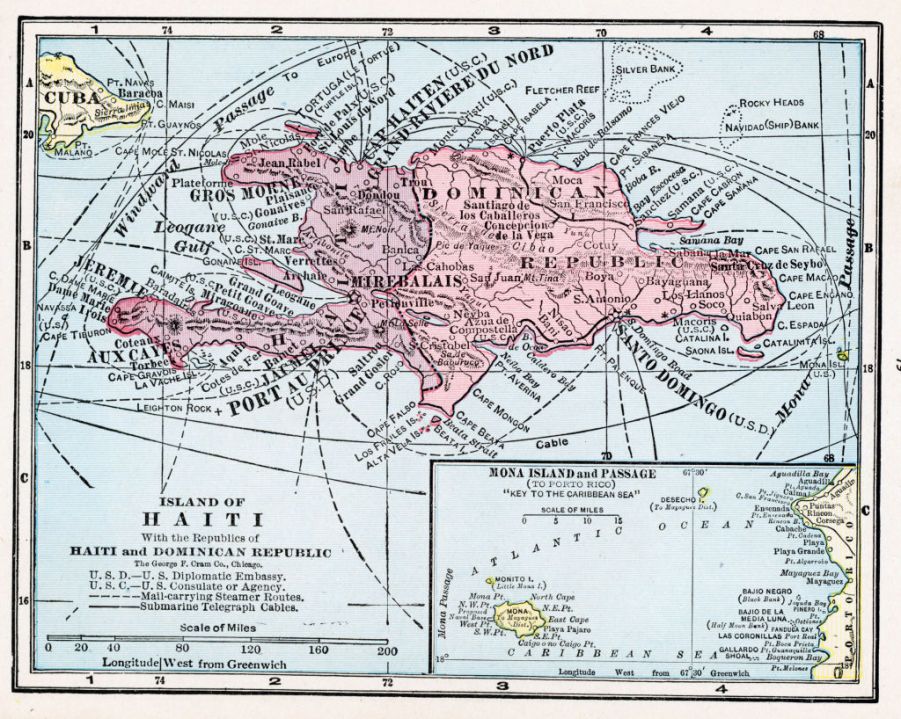
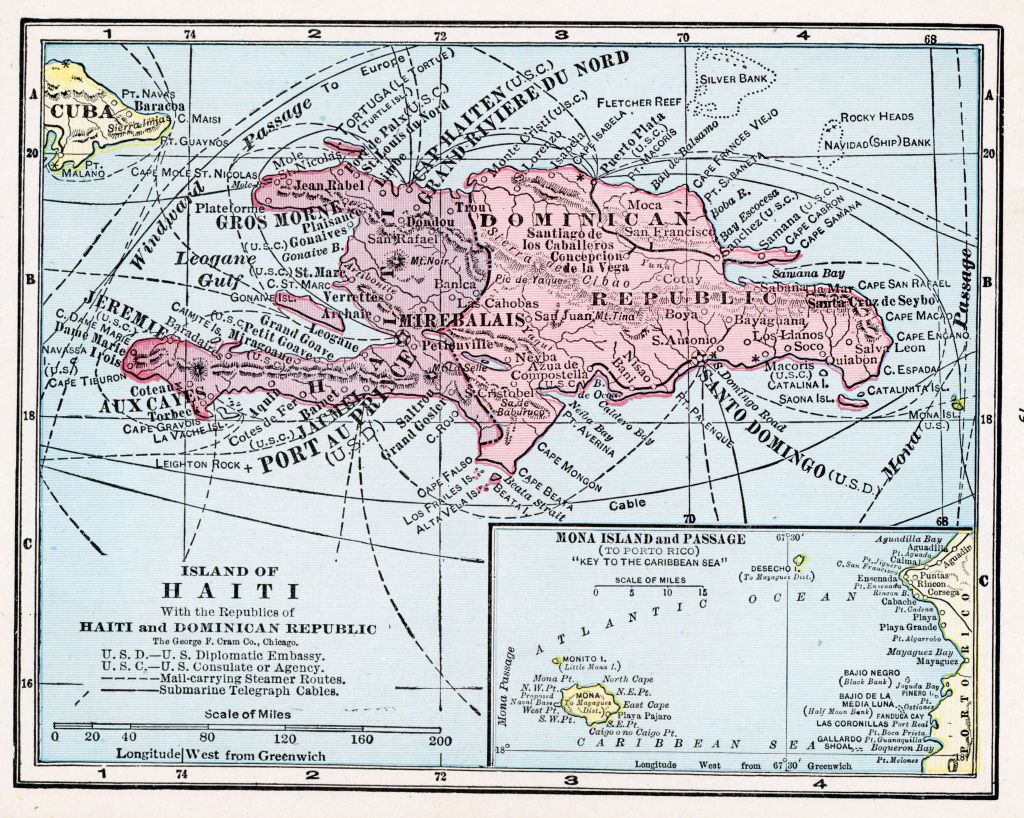
Haiti never had the good fortune to be colonized by the West, and that is its fundamental problem. The French settlement of Saint-Domingue on the western side of the island of Hispaniola was recognized by the Spanish controlling the eastern side in 1697. It had its first government in 1714. Slave plantations created prosperity. The main city Cap-Français was known as the “Paris of the Antilles” and travelers today still marvel at the remains of the colonial gardens, squares, and buildings. The harbor bustled with ships taking coffee , indigo, rum, cotton, and sugar out and bringing machinery and goods in.
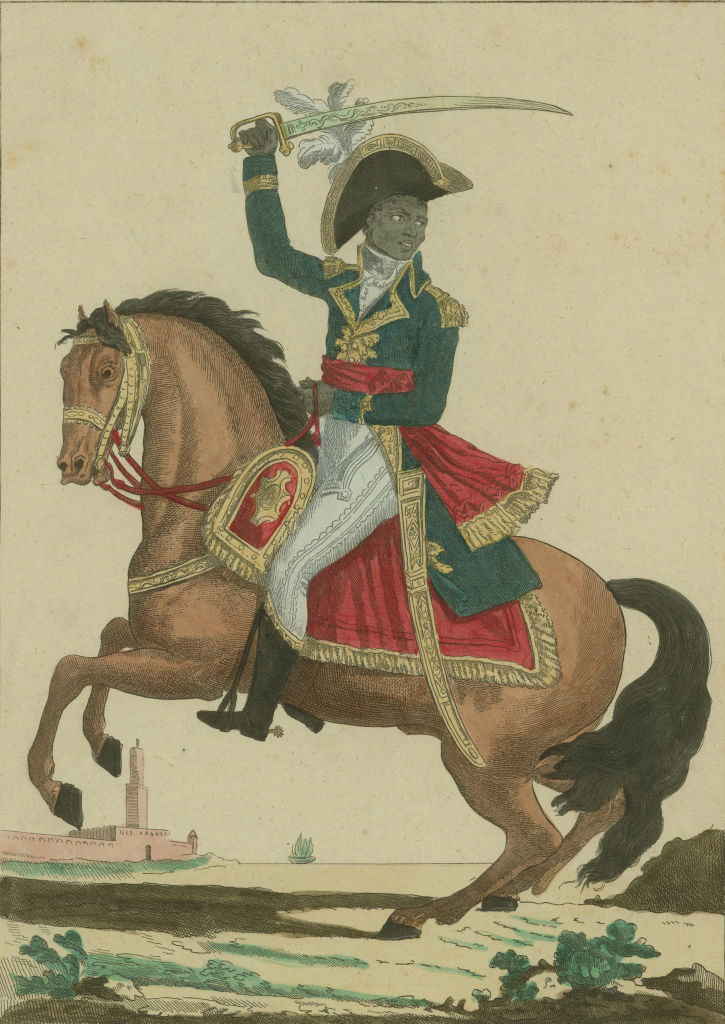
But unlike neighboring Jamaica, where the planter class and free blacks participated in a local assembly from the 1670s, there was no representative system in Saint-Domingue. Colonialism as a system of government barely existed leading up to the slave revolt of 1791, when thousands of whites were murdered and the new country plunged into centuries of misery. The “liberation” leader Toussaint Louverture proved to be even more of a slave-driver than the French, forcing all landless or otherwise unemployed laborers to return to their former plantations under military control.
If only the rebels had waited. The abolition of slavery within the French empire came in 1794. But by then, Haiti was already hurtling towards misery under its new rulers. The result was that the newly-independent country of Haiti formed in 1804 missed out on what was the most productive and beneficial stage of European colonialism, lasting roughly from 1820 to 1960. Nearby Jamaica, by contrast, remained a British colony until 1962. Today, its GDP per capita is five times that of Haiti, according to IMF estimates using comparable prices. Jamaica is also a stable democracy.
Haiti might have requested protectorate status from the United States, as the neighboring Dominican Republic did twice in the 19th century. But its anti-colonial mythology was passed down like a family heirloom. Of the 24 heads of state between 1804 and 1915, 16 were overthrown or assassinated while six clung to power until they died. Each new ruler claimed to be the heir of Toussaint Louverture, a kind of ironic self-parody given Louverture’s dictatorial and shambolic rule.
The United States, fearful of German intervention in World War I, occupied the country in 1915 after the seventh president in four years was assassinated. Roosevelt withdrew in 1934 because the United States had come to realize from the Puerto Rico example that these overseas territories would become permanent encumbrances, always rejecting offers of independence. He began giving aid to the country instead, a spigot of welfare that Haiti would later depend on.
Despite the catastrophic consequences of Haiti’s slave revolt for human welfare, Western intellectuals and the Haitian diaspora continue to lavish praise on the country’s history. They blame the country’s woes not on its original sin but on the wily actions of outsiders since 1791.
The result is that foreign attempts to save Haitian lives through UN intervention run into an intellectual brick wall of resistance, especially from black intellectuals living in comfort in the West for whom the revolution is an assertion of their self-esteem. “The Haitian revolution and Haitian sovereignty must be understood as Black liberation, supported unconditionally, and met with unwavering solidarity,” demanded Jemima Pierre, an anthropologist who took up residence in the United States in 1981 and who now works at the University of British Columbia.
In fact, the Haitian revolution and Haitian sovereignty have done nothing to liberate black people, but have instead enslaved them in the ongoing farce of self-rule. The arrested development of Haitian intellectuals like Pierre is in effect what is wrong with Haiti. It is a country whose founding mythology is based on a great lie.
One prominent chestnut, for example, asserts than an indemnity negotiated with France over revolutionary losses, which it paid off in full by 1883, fatally ruined the country’s economy. The estimated $560 million indemnity in today’s dollars, insisted the New York Times in a 2022 spread, “helped cement Haiti’s path into poverty and underdevelopment.” The indemnity “helped set off a cascade of privation, budgetary shortfalls and onerous foreign loans that shaped the country into the 20th century and beyond.” But for the indemnity, Haiti today would be richer than Jamaica. And so on.
No serious economist accepts those contentions. The main drain on the Haitian budget has always been military spending, this in a country threatened by no one. More important, the failure of the country to reconstitute the plantation economy based on free labor, as well as reckless borrowing long after the indemnity was paid off, were what killed development. It was the lack of incoming foreign exchange, not the modest outgoings on the indemnity, that mattered.
In 1875, when Haiti was still paying the indemnity, according to the French historian Alain Turnier, about 11 percent of coffee export earnings went to repayments, hardly a crushing burden. By 1896, long after the indemnity was paid, that figure was 40 percent as a result of new borrowing. “The indemnity was not the principal reason Haiti could not develop its economy in the nineteenth century,” concluded the long-time Haiti scholar Alex Dupuy of Wesleyan University in a 2023 paper. “Instead, the inability of the ruling class to recreate the plantation system of old and the constant internecine struggles by factions of the dominant classes to control the state as a source of enrichment, combined with borrowing more money unrelated to the indemnity they could not repay were far more consequential.”
The Haitian revolution and Haitian sovereignty have done nothing to liberate black people, but have instead enslaved them in the ongoing farce of self-rule
An even stronger argument can be made against the indemnity myth. The indemnity was the only thing that prevented Haiti from sliding into pure dysfunction in the 19th century. Thanks to the modest payments, it maintained access to international financial and goods markets – something known as “the empire effect.” In effect, it was like being under an IMF structural adjustment loan, required to get its house into order. The very modest cost of indemnity repayments was more than made up for by this access to capital and goods markets and the pressures to govern astutely. Not surprisingly, once the indemnity chains were removed, the now “totally free” Haiti slid into chaos.
I dwell on the indemnity issue because it is the great unspoken that prevents forceful action in Haiti today. The Times article was acting as propagandist for a growing Haiti reparations movement among the global wokerati demanding billions for the country as a result of both slavery and the indemnity. Former French president François Hollande has cited the “moral debt” of the indemnity. Last year, his successor Emmanuel Macron created a commission to report on the impact of the debt. The Marxist economist Thomas Piketty insists France pay $28 billion to the country. In fact the foreign aid and debt forgiveness poured into Haiti since World War II exceed this figure by at least a factor of two.
This matters because France is one of the principal countries whose foreign offices coordinate their Haiti policies, the so-called Core Group created by the UN Security Council in 2004. It also includes the United States, Brazil, Spain, and Germany as well as representatives of the European Union, United Nations, and Organization of American States.
But the high tide of colonial enthusiasm with respect to Haiti represented by the 2004 resolution has since waned considerably. In that year, France joined the US, Canada, and Chile in landing troops in the country after a rebellion threatened to unseat the sitting president, Jean-Bertrand Aristide, who was told to leave. This was an early assertion of the new doctrine of humanitarian intervention (the so-called “Right to Protect” or R2P) devised by the Canadians and formalized at the UN in 2005 in light of the Rwanda and Bosnia genocides of the 1990s.
But the UN backed intervention of 2004 did not go nearly far enough. There were calls from prominent politicians and scholars in Core Group countries for the formation of a UN trusteeship over the country. “The only way to save Haiti is to put it under UN control,” wrote Harvard’s Robert Rotberg at the time.
Instead of a trusteeship, Haiti was given only a UN peacekeeping mission that lasted until 2017 and achieved nothing. Key functions were left in local hands and predictably the situation unraveled.
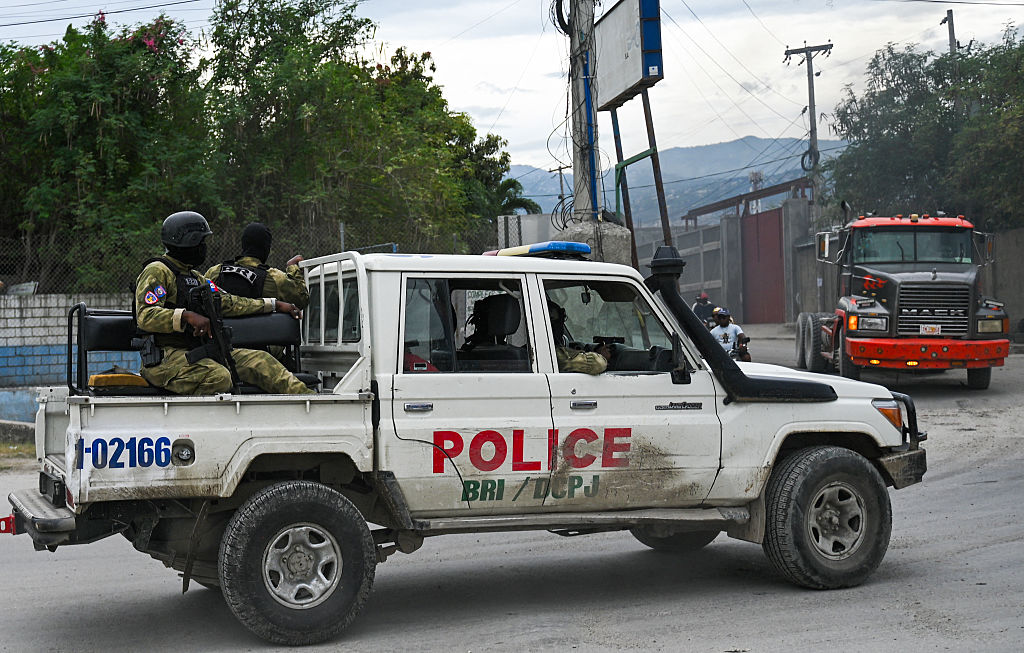
To be frank, the half-hearted intervention was the worst of both worlds: too colonial to abstain from all involvement and let the primitive forces of state formation take shape as politicians sought the support of local groups; but not colonial-enough to crack down on security and enforce government rules.
This hybrid approach continued under a new UN force created in 2019 that went beyond mere peacekeeping to include a pro-consular role “advising” the government on its actions. But like the half-hearted security intervention, the half-hearted governance intervention has achieved nothing. Gang violence skyrocketed, and government functions decayed. The economy has shrunk every year since it arrived.
While the UN “integrated office” in Haiti dutifully reports hundreds of murders and rapes every month (in a population of 13 million), it also conducts “human rights dialogues” and “rule of law seminars.” The World Bank, meanwhile, is working on “women in the construction sector.” But Haiti does not need dialogues, seminars, and gender assessments. It needs a Rambo.
The methods currently being used in Haiti break every single lesson of counterinsurgency and stabilization operations that have been learned painfully over the last four decades – the most important of which is that security comes first (in this case killing gangs), governance second (getting police, courts, schools, health, education systems running), development third (especially infrastructure and also foreign investment), and elections last.
The failed model eventually forced the UN Security Council to authorize a Gang Suppression Force in 2025, projected to reach 5,500 troops. It is a good first step, but it needs authority to act and staffing commitments are slow to arrive, now totaling only 1,500.
Far more consequential would be the authorization of a formal UN trusteeship over the country such as ruled Bosnia, Kosovo, East Timor, and Cambodia in the 1990s, perhaps by the R2P inventor Canada which has the language skills and legitimacy to intervene. Haiti “needs as a nation and as a people to be stabilized and then nurtured during a period (perhaps as long as ten years) when the UN or a Canadian mission deputized by the UN rebuilds governance and gradually transforms a UN trusteeship into a Haitian-run instrument of democratic governance,” Rotberg wrote, returning to his colonial theme in a 2023 blog post.
Don’t count on the Canadians, whose military is headed by a feckless and weepy grandmother. The French are out as well, consumed by indemnity guilt. But the United States and like-minded powers in the region including El Salvador and the long-suffering Dominican Republic can do worse than calling time on the UN’s role. Release the Haitian people, because we are coming for you and we will wipe you out.






Comments