A decade after the Brexit vote, YouGov has conducted a large-scale survey of the nation’s attitudes towards migration. Their work shows that the British people are significantly more negative about the subject than they were in 2016. On each occasion, people were asked ‘do you think the level of immigration over the past ten years has been good or bad for Britain?’ In 2016, a third of us thought it had been ‘mostly bad’, and 38 per cent said it was ‘both good and bad’. Now, 43 per cent of us said ‘mostly bad’, and just 29 per cent said ‘both good and bad’. Notably, the opinions of 2016 Remain voters have shifted the most: almost twice as many of them now say that migration has been bad for Britain.
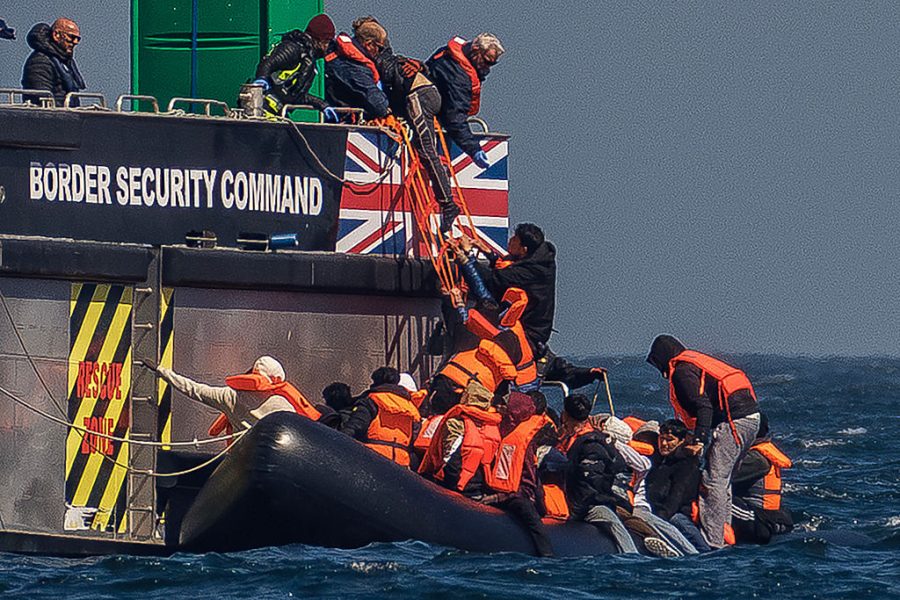
This shouldn’t surprise anyone, really. Not least because the migration Britain has received since 2016 was of a far greater scale and of far worse quality than between 2006 and 2016. In the last decade Brits have watched successive governments oversee what is functionally an illegal migration partnership between the UK, organised crime groups and migration extremist NGOs. Under this system, over 207,000 illegal migrants, almost all men or teenage boys, have sailed out into the Channel on ‘small boats’ before being met by British Border Force vessels and safely transported to English shores.
The worst of recent migration, the Boriswave, brought millions of people to this country
Those illegal arrivals have been distributed around the country, initially in hotels, and then increasingly on residential streets alongside British families. Some of those illegal migrants have committed horrific sexual and violent crimes, but reports suggest that even those who haven’t often behave in ways which make families feel very unsafe.
Legal migration has been just as bad. The wider fiscal case for mass migration has been demolished by the government’s Migration Advisory Committee. And the worst of recent migration, the Boriswave, brought millions of people to this country, very many of whom are low-skilled and will always be a drain on the taxpayer. Their looming right to ‘settle’ in the UK and then be granted British citizenship a year later will be a financial and societal disaster, and one which will inevitably have to be reversed by a future government of the right, even to the extent of cancelling acquired citizenships. All of this, of course, was exactly the opposite of what we were promised in 2016 and in the 2019 general election.
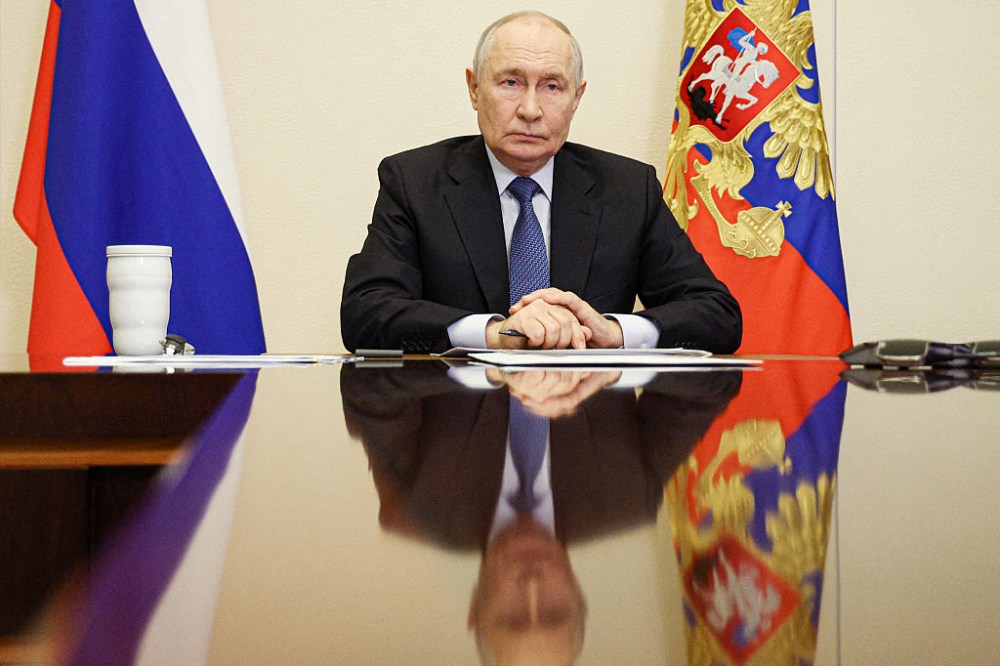
I spoke to Alp Mehmet, chair of Migration Watch. He told me that:
Public scepticism about immigration was high long before 2016 and polling consistently reflected this. In the years leading up to the Brexit vote, 60 to 70 per cent of the electorate thought it was too high and wanted it reduced. Concern appeared to dissipate post-Brexit, when we were given to believe the problem was solved. In fact, the new, absurdly loose system made matters worse, as Migration Watch forecast it would.
Given these catastrophic failures and betrayals, and longstanding scepticism about migration, it’s entirely predictable that the British people would have realised that migration has been ‘mostly bad’ for our country. The only shocking detail in the polling is that just over a fifth of us still insist that migration has been ‘mostly good’ – almost exactly the same proportion as in 2016.
Given all the evidence of the harms of migration, how is this possible? Either deep confusion or wilful blindness seems likely.
There are those who dismissively claim that a large contributing factor to the Boriswave was arrivals from Ukraine and Hong Kong. They are apparently unfamiliar with the actual data, which shows that only 6.3 per cent of total immigration between 2021 and 2025 came from those countries. Outdated assumptions about settlement rates are also often wheeled out – 67 per cent is often quoted – despite recent Migration Advisory Committee (MAC) work showing that many cohorts stay longer, with 74 per cent of 2014 arrivals remaining in the UK five years after arrival, as have 85 per cent of those who arrived in 2019.
Five years is significant, of course, because this is the point at which migrants can claim indefinite leave to remain. Further, the MAC has also found that lower-skilled migrants from poorer countries are more likely to remain in the UK, while the best-paid migrants have ‘lower stay rates than average’.
Home Secretary Shabana Mahmood shockingly revealed in November last year that ‘an attempt to fill between 6,000 and 40,000 jobs saw the arrival of 616,000 individuals from 2022 to 2024’. Over half of them, she said, ‘were not even arriving to work in [the health and care] sector but were instead dependants of those who were’. At the time, the Home Secretary also told us that ‘fraud… was rife’.
Workers in the health and care sector only make a positive contribution to the economy because they include high-earning doctors and dentists – care workers on minimum wage will, of course, never be fiscal contributors. Indeed, we know from the Migration Advisory Committee’s report from December last year that care worker main applicants will cost us about £36,000 each, for a total of £2 billion across their lifetimes, their adult dependants will cost about £67,000 each, for a total cost of £3.3 billion across their lifetimes, and their child dependants will cost a total of £2 billion. The whole visa route is marginally positive (at an estimated £200 million contribution) only because those high-earning medical professionals subsidise it.
It’s all a lot of effort to try (and fail) to debunk something which we all know happened and which Labour’s Home Secretary described nine months ago. Why do it? I suppose that for some it’s easier to pretend everything is fine than to face the reality that the policies you’ve favoured for decades have been an utter disaster for Britain. But reality has a way of winning out.






Comments