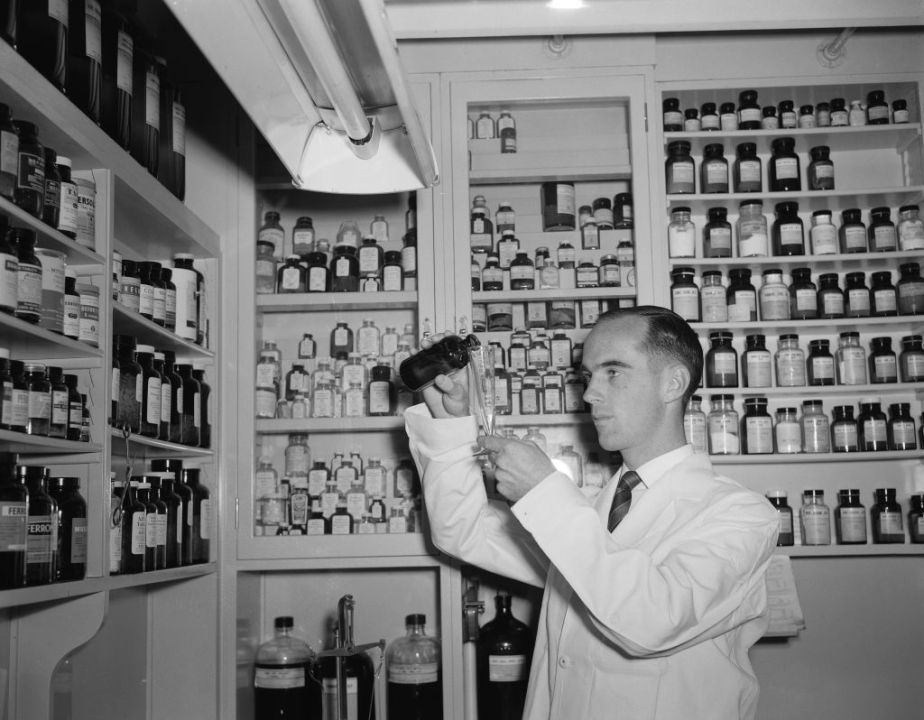
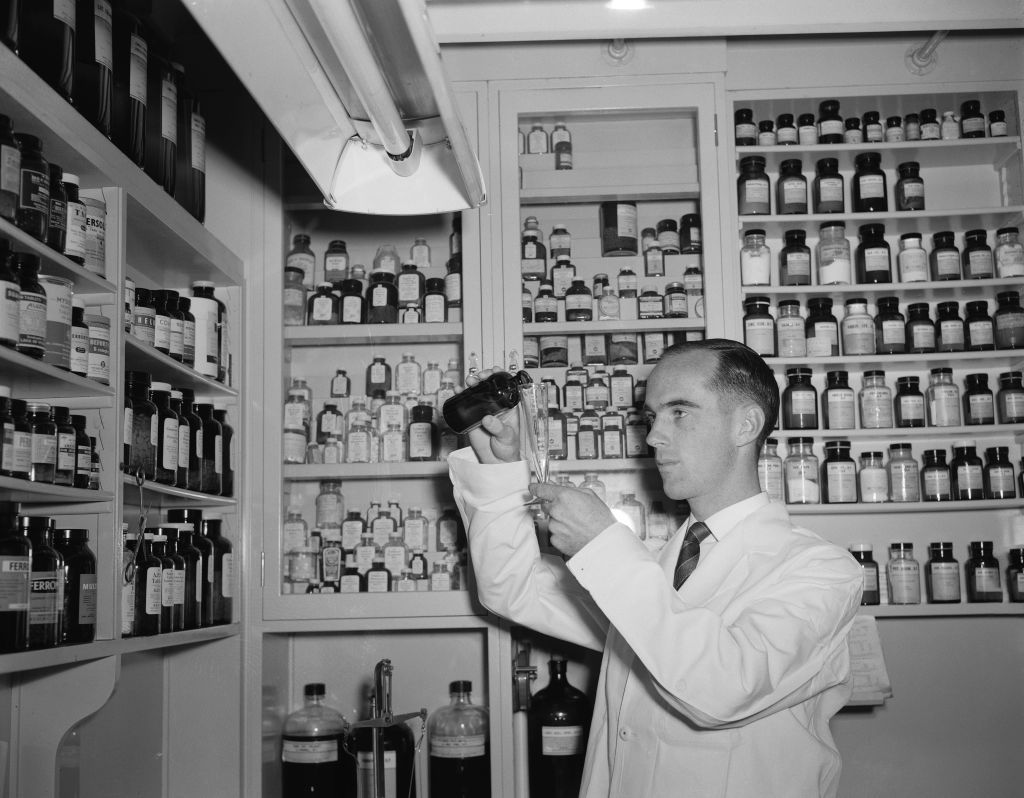
Only in France have I ever looked forward to attending a pharmacy. Napoleonic Paris, in response to the fatal incompetence of its citizens at foraging, mandated that pharmacies should come to their aid in identifying mushrooms. Across France they still do. I have wandered into many, clutching samples of my haul. Back in Britain I just eat them, but in France I get a second opinion. Firstly, I’m more adventurous there, knowing I have an expert safety net near at hand, and secondly the mushrooms are slightly different. There is the added appeal, though, of showing off. An indrawn breath and an impressed nod greeted one particularly fine bolete, and it tasted all the finer as a result.
Queuing for pills is not quite the same, and few of us are left with a lingering fondness for pharmacies. But we need them, and – if the National Pharmacy Association are to be believed – they are under threat. Almost half of the pharmacies it surveyed said they were considering closing down, and more than half were contemplating a move to a new location to try to save money. The Association says the culprit is the recent increase in business rates.
A trade organisation’s business is to make us worried for the survival of its members. If they don’t have us feeling we should put our hands in our pockets, they’re not doing their job. But they point out that 44 pharmacies have already closed down this year, with the number remaining at a 20-year low, so they may have a point.
Pharmacies can leave you thinking fondly of the efficiency of queues at a Post Office. And it truly is a mystery why it takes half an hour to be handed a box of simvastatin. But despite the growth of online dispensing, without pharmacies many of us would be stuck.

Historically GP surgeries have been encouraged to become ‘dispensing practices’ when there was no pharmacy nearby, with financial rewards for the GP partners. You might expect then pharmacy closures to produce more dispensing practices. Instead, their number has fallen too.
To be a partner in a dispensing practice was once highly desirable. Higher costs have meant a good third of them now operate at a loss, and no new ones have opened for many years. Similarly, commercial pharmacies have discovered that Reeves’s business-rates reforms have had the effect their critics predicted, functioning rather efficiently as rates that prevent business.
‘Pharmacies are not like a pub, restaurant, vape shop or off licence,’ says Olivier Picard, chair of the National Pharmacy Association. ‘They cannot flex their prices to meet increasing costs.’ With Andy Burnham on a tour of the nation’s high streets, Picard wants him to notice pharmacies have been overlooked. Pubs and live music venues are getting special relief; Picard thinks pharmacies deserve the even better deal offered to GPs and dentists that concentrate on NHS work, whose rates can be reimbursed entirely.
The government says it’s long been doing its part. ‘Pharmacies already benefit from our wider business rates reforms, including permanently lower multipliers and our £4.3 billion package to support ratepayers,’ said a spokesman, ‘and the government has increased funding for the sector by £340 million this year as part of our shift to bring care closer to home.’ Those figures are real, but they demonstrate the problem: the government imposes costs, then a set of subsidies to soften them a little, and when we complain they point at the latter.
Perhaps Henry Thoreau never visited Boots. Certainly he never had a pleasant squabble with a pharmacist in Chamonix over whether wood blewits were worth the trouble of eating (pleasant because I was right; they most definitely are). But when he accepted the motto ‘that government is best which governs least’ he may nevertheless have been onto something.
Burnham is continuing the modern tradition of bringing in a vast number of specific exceptions to ameliorate the effect of bad regulation, ill-thought-out laws and repressive taxes. We increasingly govern by imposing a general burden and then constructing an elaborate system of exemptions for those whose suffering attracts enough attention; we get dosed en masse, then made to queue for partial antidotes, the most virtuous and favoured groups at the front.
The alternative would be to stop taxing everyone so heavily and then having to devise intricate relief schemes to help businesses survive. An aphorism from a famous novel of hospital life, The House of God, holds that the delivery of good medical care is to do as much nothing as possible. What it means is that medics should be parsimonious, and intrude on people’s lives as little as possible. My prescription for government is the same.





Comments