
Ukraine and Russia are exhausted. Neither side is close to defeat and yet discontent is growing on both sides. In Russia, open criticism of the regime is spreading. Social media influencers have, bizarrely, led the charge. In Ukraine, fury is directed at press gangs who hunt down young men and force them, often violently, into the army. Today, the chances of some kind of political crisis in either Kyiv or Moscow seem more likely than a great breakthrough on the battlefield.
In Russia, there was a rare example of the Kremlin responding to criticism earlier this month when influencer Viktoria Bonya posted an Instagram video addressing Vladimir Putin. “The people are afraid of you, artists are afraid, governors are afraid,” she said. “There is a big wall between you and the people.” It’s been watched more than 24 million times. Bonya is the former star of Russian Big Brother, famous mostly for being famous, and she lives in Monaco with the son of an Irish billionaire. Yet Putin spokesman Dimtri Peskov said her video touched on “very resonant topics.” It’s a sign that Russia’s political managers have noticed a sudden change in mood.
Other influencers such as Katya Gordon, who lives in Moscow, has posted videos attacking pro-Kremlin TV propagandists and warning of rising social discontent. Pro-Kremlin actor Ivan Okhlobystin, who once described the invasion of Ukraine as a “holy war,” joined in the appeals to the Kremlin leader, calling the clampdown on foreign social media platforms “a huge mistake… If they want to bring us back to the USSR, then a time machine would need to be built first. Without that, it simply won’t work.”
Putin justified the shutdowns this week as an “anti-terrorist measure.” The real reason is increasingly accurate long-range attacks by Ukrainian drones deep inside Russia that are guided by mobile phone geolocation. According to Tatiana Stanovaya, a senior fellow at the Carnegie Russia Eurasia Center, even the Kremlin authorities are divided over the wisdom of internet shutdowns. “But the performative opposition to those restrictions is causing even deeper fractures,” says Stayanova. “This is what a snowball effect looks like.”
Nikolai Bondarenko, a former member of parliament and now one of Russia’s best-known bloggers, also posted a highly unusual rant, also watched by million. “What did we have to do to take this incredibly rich country full of oil and gas and all kinds of resources to the edge of bankruptcy… There’s nothing left to take from the people. Maybe we should take a look in the pockets of bureaucrats?” And Yevgeny Golman, a once patriotic blogger, has started predicting defeat and disaster, saying the Ukrainians “are surpassing us, attacking 2,000 kilometers into our country, we’ve fucked everything up… By the end of the year, we’re going to be completely fucked – we’ll crash hard.”
One cause of this sudden upswell of discontent in Russia is rising inflation, businesses folding because of debt and a slowdown of the economy. But by far the biggest factor has been the rolling internet shutdowns, which have irritated a section of Russian urban middle classes hitherto largely isolated from the war. Putin has so far shied away from the politically combustible option of compulsory mobilization. Russia relies instead on volunteers – including from Africa and North Korea – lured by the promise of generous signing bonuses.
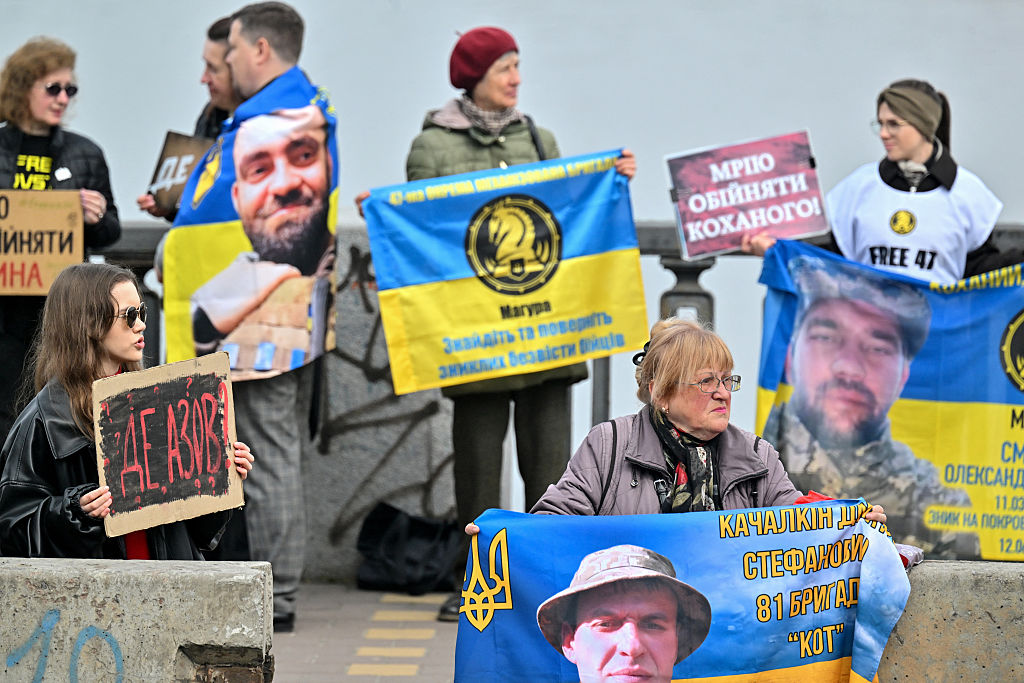
Meanwhile, Ukraine has suffered near-total war, with missiles and drones falling on every part of the country, nationwide electricity blackouts and universal mobilization. Even though the draft age was recently expanded to every man between 25 to 60, the Ukrainian army faces a desperate shortage of manpower – exacerbated by mass desertion. There are more than 300,000 official cases of absence without leave, representing a third of the total Ukrainian military. The widespread practice of “busification,” the tactic of hauling unwilling conscripts into buses by force, has become a key focus point of popular anger. Just 20 percent of Ukrainians say they would vote for Zelensky in the next elections, according to the Kyiv School of Economics, such is the level of unhappiness.
Today, the chances of some kind of political crisis in either Kyiv or Moscow seem more likely than a great breakthrough on the battlefield
There are daily videos of recruiters knocking men off bicycles with vans, dragging them from cars, pepper spraying them at pop concerts, in shopping malls and in restaurant kitchens. Passers-by often intervene to rescue the men and beat up recruiters. Last year, 341 recruiters were seriously assaulted, triple the number from two years before. Over the past six months, three recruiters have been killed by their would-be targets, including a former Ukrainian Olympic champion who had his throat cut this month in Lviv.
More than half a million men have fled the country. The Ukrainian human rights ombudsman recently found that some centres have been used as detention camps, where men could only leave if they paid bribes. In a rare move, the head of the Odesa and Peresyp conscription office was fired following 3,500 complaints. “For years these officers have treated people like meat and cash machines while living in luxury,” says Iuliia Mendel, Zelensky’s former press secretary, now an outspoken critic. “Is this the start of real accountability or just one exception?”
Ukraine is, nominally at least, a democratic country – though some prominent critics of the Zelensky regime have fled the country, been sanctioned or even imprisoned on charges of acting in Russia’s interests. There is an increasingly vocal number of politicians who are calling for an end to the war. “Ukraine is exhausted and tired,” says member of parliament Oleksiy Honcharenko. “Ukraine is on the edge, we need to end this war and not allow everything to go to ashes.” Since the invasion, Zelensky has ruled without elections under martial law. But a series of defections means he may soon lose his super-majority. One MP reportedly fled to Canada last month. Should another leave, Zelensky will lose much of his power and may eventually be forced to enter coalition.
The risk of a political crisis, on the other hand, is rising. “Hundreds of thousands of young Ukrainian men have been killed or maimed, families are exhausted, the economy is in ruins, and the next winter can again come with blackouts and empty shelves,” says Mendel, the former press secretary. “Many no longer believe the war will end on the terms we were promised two years ago. The status quo is not neutral. It is a slow-motion catastrophe dressed up as moral virtue. I am not asking for surrender. I am asking for honesty … Ukrainians deserve leaders who tell them the truth instead of yesterday’s slogans.”
Both sides may be reaching exhaustion, but the stakes are very different. The Kremlin is fighting an aggressive war of choice without clearly defined goals. Ukraine is fighting to hold on to its territory and maintain its independent existence. Discontent on the home front may, in the end, be a more important driver of peace than anything that happens on the stalemated battlefield.


Comments