Jawad Iqbal

Jawad Iqbal

Jawad Iqbal is a broadcaster and ex-television news executive. Jawad is a former Visiting Senior Fellow in the Institute of Global Affairs at the LSE

Why is the Labour party so bad at coups?

From our UK edition

The Labour party is pretty useless when it comes to getting rid of its leaders. That’s the only reason Keir Starmer is still squatting in Downing Street after an extraordinary 48 hours of resignations and plots. The PM is badly wounded, his premiership hanging by a thread, but there appears to be no one yet capable of delivering the fatal blow.Part of the problem in trying to get shot of Starmer is that his would-be assassins know all too well the party’s chequered history of failed and aborted coups. It gives them cause to pause. The Labour party has never successfully mounted an official challenge against a serving prime minister. It is a point that Starmer, ‘Mr Rules’, knows all too well.

Starmer’s big speech can’t save him

From our UK edition

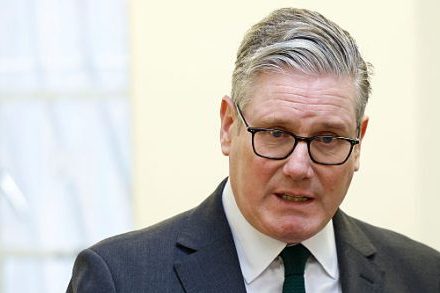
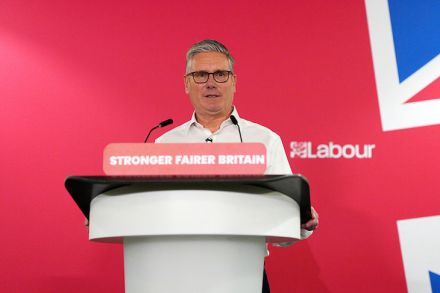
Even those who dislike Keir Starmer might feel a smidgen of pity – on a human level – for his plight as he tries to cling on in Downing Street. The Prime Minister is being assailed from every direction of his divided government and party with blunt advice about what he needs to do in order to survive following Labour's disastrous performance in last week's local elections. Starmer won’t quit. Every Prime Minister has to be dragged kicking and screaming from office Starmer, to use Norman Lamont’s withering political putdown of John Major, is in office but not in power. His future and that of his ailing administration now rests apparently on the speech he will deliver later today. Get it wrong and his political assassins are ready to strike him down.

The special relationship between Muslims and Labour is over

From our UK edition

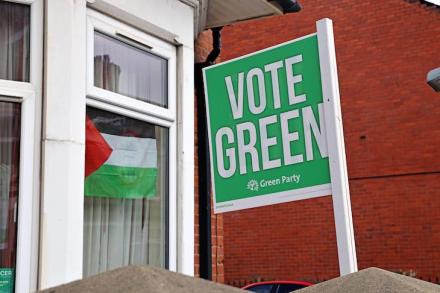
Labour is facing a collapse in support among British Muslim voters in this week’s local elections. The votes of many Muslims are instead likely to go to pro-Gaza independents and the Green Party. The bad news doesn’t end there for Labour: if there was a general election tomorrow, only a third of Muslim voters would support the party, according to a poll released ahead of today's local elections. If there was a general election tomorrow, only a third of Muslim voters would support Labour The scale of disaffection with Labour on the part of many British Muslims is laid out in research undertaken by JL Partners for the Policy Exchange think tank.

Is the Iran ceasefire crumbling?

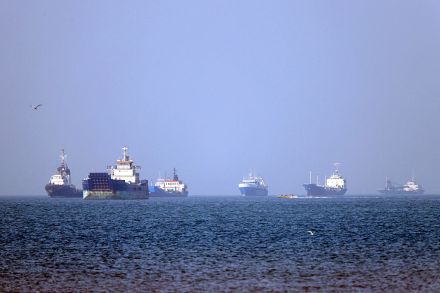
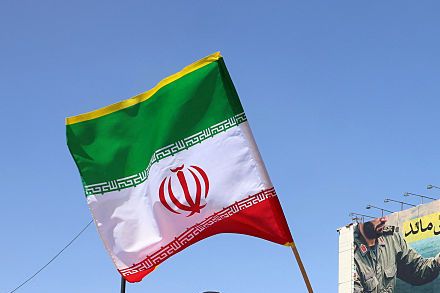
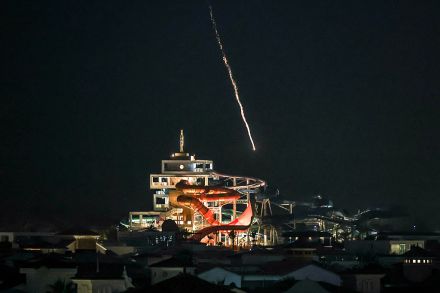
Is the fragile Iran war ceasefire over? It would appear so, with American and Iranian forces exchanging fire in the Strait of Hormuz. The renewed clashes follow US President Donald Trump’s launch of ‘Operation Freedom’, which aims to use the US military to escort stranded ships out of the critical waterway. Trump said American forces had hit seven Iranian small boats, with the US military claiming to have intercepted cruise missiles and drones launched by Tehran. Trump earlier warned that Iranian forces would be ‘blown off the face of the Earth’ if they targeted US ships in the strait or the Persian Gulf. Tehran says it fired ‘warning shots’ at US warships, and said it would attack any foreign force that tried to enter the strait.

Why does Mamdani want the King to return the Koh-i-Noor?

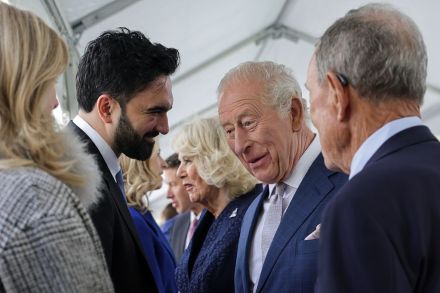
Even those who don’t think much of New York city mayor Zohran Mamdani’s politics might grudgingly concede he has a knack for jumping on causes that resonate with his achingly progressive voter base. The idea of righting the wrongs of imperial history – anywhere, even thousands of miles away – is high on the tick list. Hence Mamdani’s call for King Charles to return the Koh-i-Noor diamond, one of the world’s largest and most controversial jewels, to India. The 105-carat diamond, part of the Crown Jewels, is the subject of a fierce historical dispute, with India claiming that it was stolen during British colonial rule. Leaving aside Mamdani’s political opportunism, what is it about the fate of the Koh-i-Noor diamond that seems to agitate so many Indians?

The UAE’s Opec exit is about much more than oil

From our UK edition

The decision by the United Arab Emirates (UAE) to quit Opec, the Organisation of Petroleum Exporting Countries, is a seismic blow to the oil cartel. Opec is already reeling from the energy shock of the Iran war and Tehran’s closure of the vital supply line through the Strait of Hormuz. There will be worries now that other member countries could depart, triggering chaos in the oil bloc. There is one winner in all this: Donald Trump, who has accused Opec of “ripping off the rest of the world” by inflating oil prices. The US President will be pleased that Opec has been weakened and hope that this leads to a drop in prices in the longer term.

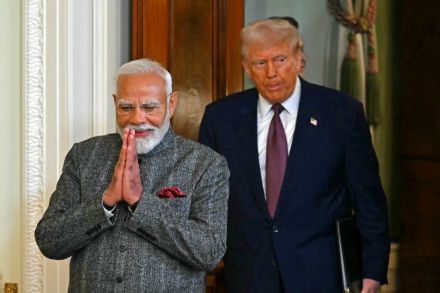
Why has Trump turned on India?

President Donald Trump, not someone to let a good insult go to waste, has caused outrage in India after sharing a social media post describing the country as a “hellhole.” Trump did not make the disparaging remarks himself, merely reposting the statement (without comment) on his Truth Social account. The words actually came from the conservative podcast host Michael Savage, as part of an attack on birthright citizenship. “A baby born here becomes an instant citizen, and then they bring the entire family in from China or India or some other hellhole on the planet,” the Savage said. He accused Indian immigrants in the tech industry of not hiring white native-born Americans, and also said that they lack proficiency in English.

India

The targeting of Trump tells its own tale

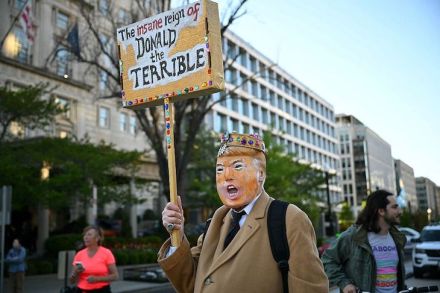
“I can’t imagine that there’s any profession that is more dangerous,” Donald Trump told reporters just hours after the shooting incident at the annual White House Correspondents’ Association Dinner in Washington DC. This is true enough. Violence against US presidents is, unfortunately, nothing new. Everyone knows this long and bloody history all too well. It includes the killing of John F Kennedy in Dallas in 1963; the two assassination attempts within days of each other on President Gerald Ford in 1975; and the attempt on Ronald Reagan’s life, when he was shot and seriously wounded at the Washington Hilton hotel – the same venue at which Saturday’s attempted shooting took place – in 1981.

Who is really leading Iran?

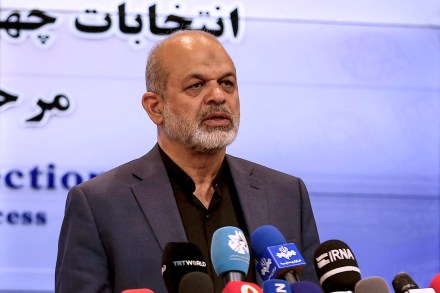
In declaring an extension to the ceasefire in the Iran war, President Trump signalled clearly enough that he would prefer to strike a peace deal with Tehran. J.D. Vance, the vice-president, has been kicking his heels, waiting to return to the Pakistani capital Islamabad for another go at achieving a breakthrough. The Iranians keep blowing hot and cold on whether they are ready to play their part. Trump suggested in a social media post earlier this week that he believes this is because Iran’s government is ‘seriously fractured’. His ceasefire extension is aimed at allowing the regime time to deliver a new proposal. Trump may want to hammer everything out in Islamabad, but he is not dealing with an ordinary government operating under a straightforward power structure.

iran

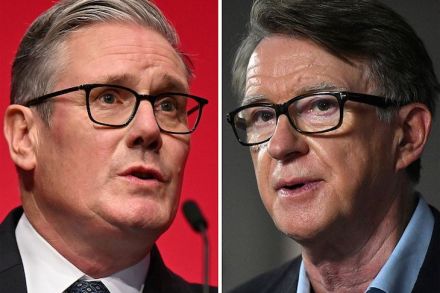
How the Mandelson scandal could prove fatal for Keir Starmer

From our UK edition

It is judgment day in the Commons for the Prime Minister, Keir Starmer, over what he knew, and when, about the process that led to Peter Mandelson being appointed as ambassador to Washington. Starmer has promised to “set out all relevant facts in true transparency” to MPs this afternoon. It is a tall order. Starmer has to make a convincing case of his version of events – which basically comes down to saying he did not know until a few days ago that Mandelson had failed his security vetting – to a sceptical audience of MPs from all parties.

Who will take responsibility for Southport?

From our UK edition

The official report into the Southport attacks — in which 17-year old Axel Rudakubana murdered three girls at a Taylor Swift themed dance class in July 2024 — paints a damning picture of multiple serious failings by government agencies. Sir Adrian Fulford, the high court judge overseeing the public inquiry, said the attack could have been prevented if officials had not dismissed Rudakubana’s increasingly erratic and violent behaviour as symptoms of his autism. Officials used his autism diagnosis to excuse his behaviour and failed to recognise that this condition heightened, rather than lessened, the risk he posed.

What will happen to Iran now?

What now after the collapse in peace talks between America and Iran in Pakistan? The gap between the two sides on the two critical issues – Iran’s nuclear programme and the Strait of Hormuz – proved too big in the end. Is it back to war? What does the failure to reach a deal mean for the fragile, two-week ceasefire the two sides agreed? Whose fault is it that the discussions, which lasted for a marathon 21 hours, broke down? So far, there is little in the way of concrete facts about what exactly happened in Islamabad but the blame game is already under way. First out of the blocks was J.D. Vance, who led the American side. He said the US had given the Iranian regime its ‘final and best offer’ but to no avail.

What can we expect from the Iran negotiations?

The eyes of the world are on Pakistan’s capital Islamabad as it plays host to this weekend’s make or break negotiations between the United States and Iran. The Pakistanis, whose mediation efforts pushed the two warring countries to agree a fragile two-week ceasefire, are taking no chances. Security has been stepped up, with thousands of police officers and security forces patrolling the streets of the capital. Hope and trepidation are the order of the day when it comes to ending a Middle East war that has already cost thousands of lives and plunged the world into economic crisis. Any peace agreement will require a degree of conciliation and compromise – alien concepts to the hardliners of Tehran The American delegation is being led by J.D. Vance, the US vice-president.

Why Pakistan is brokering peace in Iran

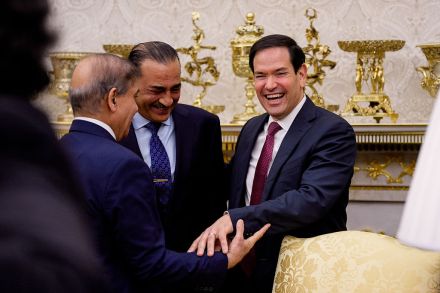
Pakistan, the world’s only Muslim nuclear power, has traditionally been an international sideshow. No longer. The country has reportedly been passing messages between Washington and Tehran in efforts to bring an end to the Iran war. It is has a five-point plan aimed at restoring “peace and stability” across the region. How have the Pakistanis pulled off this remarkable diplomatic makeover? The answer starts with some critical decisions the Pakistanis took last year. After the four-day armed conflict between Pakistan and India in May 2025, both sides claimed “victory”. But crucially Islamabad publicly acknowledged Washington’s role in achieving a ceasefire (something India refused to do). Pakistan later nominated President Donald Trump for the Nobel Peace Prize.

Pakistan

Suella Braverman’s ludicrous football intervention

From our UK edition

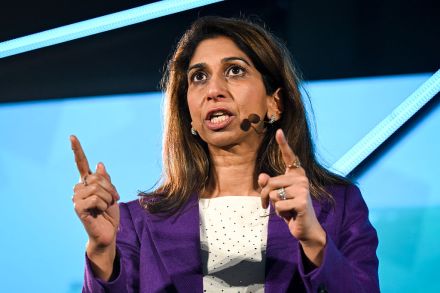
Talking nonsense about football is a lucrative and growing business, hence the explosion in podcasts in which former players exchange inanities about the game. A surprising new entrant to this festival of footballing gibberish – a right winger fresh from the subs’ bench, so to speak – is Suella Braverman. The former Conservative home secretary, who joined Reform UK in January, has called on the Football Association to scrap its ‘woke’ diversity and inclusion policies. She wrote to the FA’s chief executive, Mark Bullingham, this week claiming its strategy was ‘fundamentally flawed, inherently racist and bad for the game’ because ‘the best coaches should get the job, not because of their skin colour, but because they are the best person for the job.

The Foremans can’t blame the UK for their imprisonment in Iran

From our UK edition

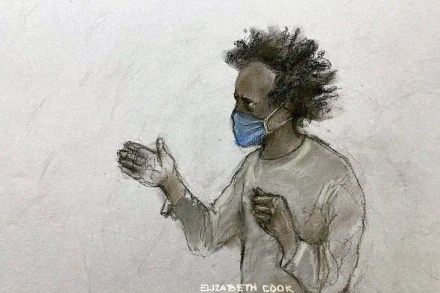
Lindsay and Craig Foreman, the British couple imprisoned in Iran on spying charges, have issued a desperate plea for help, saying they feel abandoned by the UK. The pair want the Prime Minister, Sir Keir Starmer, to ‘step up’, describing how they feel ‘let down, alone and completely frustrated’. It was reckless, and simply asking for trouble, to enter a country with a longstanding reputation for randomly imprisoning westerners (Nazanin Zaghari-Ratcliffe, anyone?) on trumped-up charges Speaking in a recorded phone message from Evin prison in Tehran, Craig described life in a war zone. ‘We have gone from a challenging situation to a life-threatening situation… There is a serious lack of commitment for our safety.’It is heart-wrenching stuff.

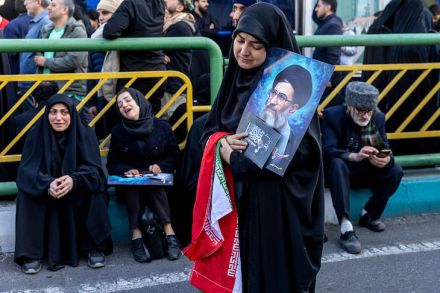
Decapitating Iran’s leadership might not topple the mullahs

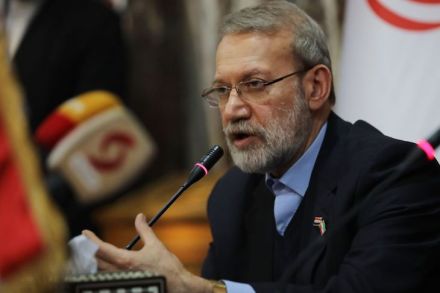
Iran’s most powerful leaders are being picked off one by one by Israeli and American military strikes. The latest scalp claimed by Israel is Ali Larjani, Iran’s security chief, and widely believed to be the most powerful figure in the present Iranian leadership. The reported killing comes just days after Larjani went on a public walkabout in Tehran, all defiance and bombast as he greeted members of the public during the Quds Day rally last Friday in the capital. Larjani also spoke to state media during the march, claiming that the Americans and Israelis were “running out of steam”. Well, not quite in his case, it turns out. Few will mourn the demise of Larjani.

Is Keir Starmer really, truly sorry about Peter Mandelson?

Sir Keir Starmer wants everyone to know how sorry, really sorry, he is for giving Lord Mandelson the job of Ambassador to the United States. On a visit to Belfast yesterday, the Prime Minister issued his latest and perhaps most abject mea culpa so far. It came just hours after the publication of embarrassing government documents detailing the process (or more accurately, the lack of one) that existed when it came to appointing the now disgraced peer to the plum diplomatic role in Washington. Sir Keir told reporters:   The release of the information shows what was known. That led to further questions being asked…But that doesn’t take away from the fact that it was me that made a mistake, and it’s me that makes the apology to the victims of Epstein, and I do that.

The Gulf states have a big decision to make about Iran

Iran threatened harsh retaliation in the wake of the American-Israeli attacks that killed the country’s supreme leader and many of its senior commanders. Its response consisted of a barrage of missiles aimed at Israel. So far, so predictable. Yet, at the same time, Tehran chose to direct its firepower at neighbouring Gulf states, countries that have been encouraging diplomacy and warning against war. Iran’s actions are an object lesson in how to alienate your friends and neighbours. So far, they have continued to employ the rhetoric of de-escalation. But that’s untenable if Iran continues to target their territory The Iranians targeted Saudi Arabia, the United Arab Emirates (UAE), Qatar, Bahrain, Kuwait, Oman and Jordan. Explosions rocked the Saudi Arabian capital Riyadh.

An Iranian uprising remains unlikely

From our UK edition

President Donald Trump was crystal clear at the start of the military action against Iran that it was all about regime change. The United States, in co-ordination with Israel, would do its bit by targeting Iran’s leadership and command structure – but it was up to ordinary Iranians to rise up and finish the job. “The hour of your freedom is at hand, “he declared as US and Israeli warplanes bombed Iran, targeting the country’s supreme leader Ayatollah Ali Khamenei and his inner circle. “When we are finished, take over your government. It will be yours to take…”. There is no figurehead or leader to galvanise the masses, nor is there any common platform beyond a hatred of the mullahs So, how will Iranians respond?