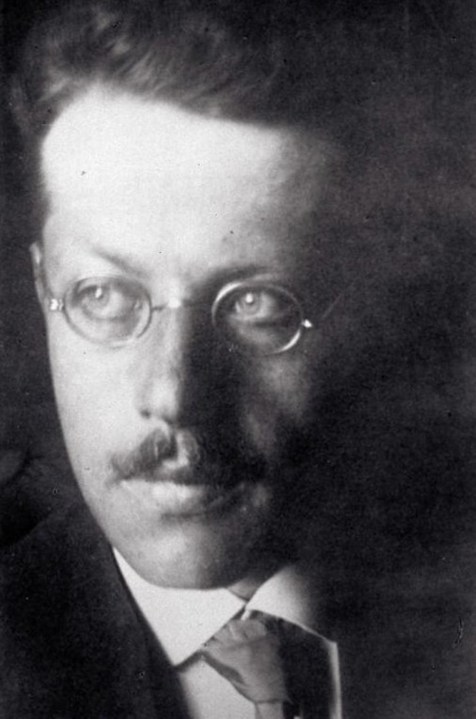

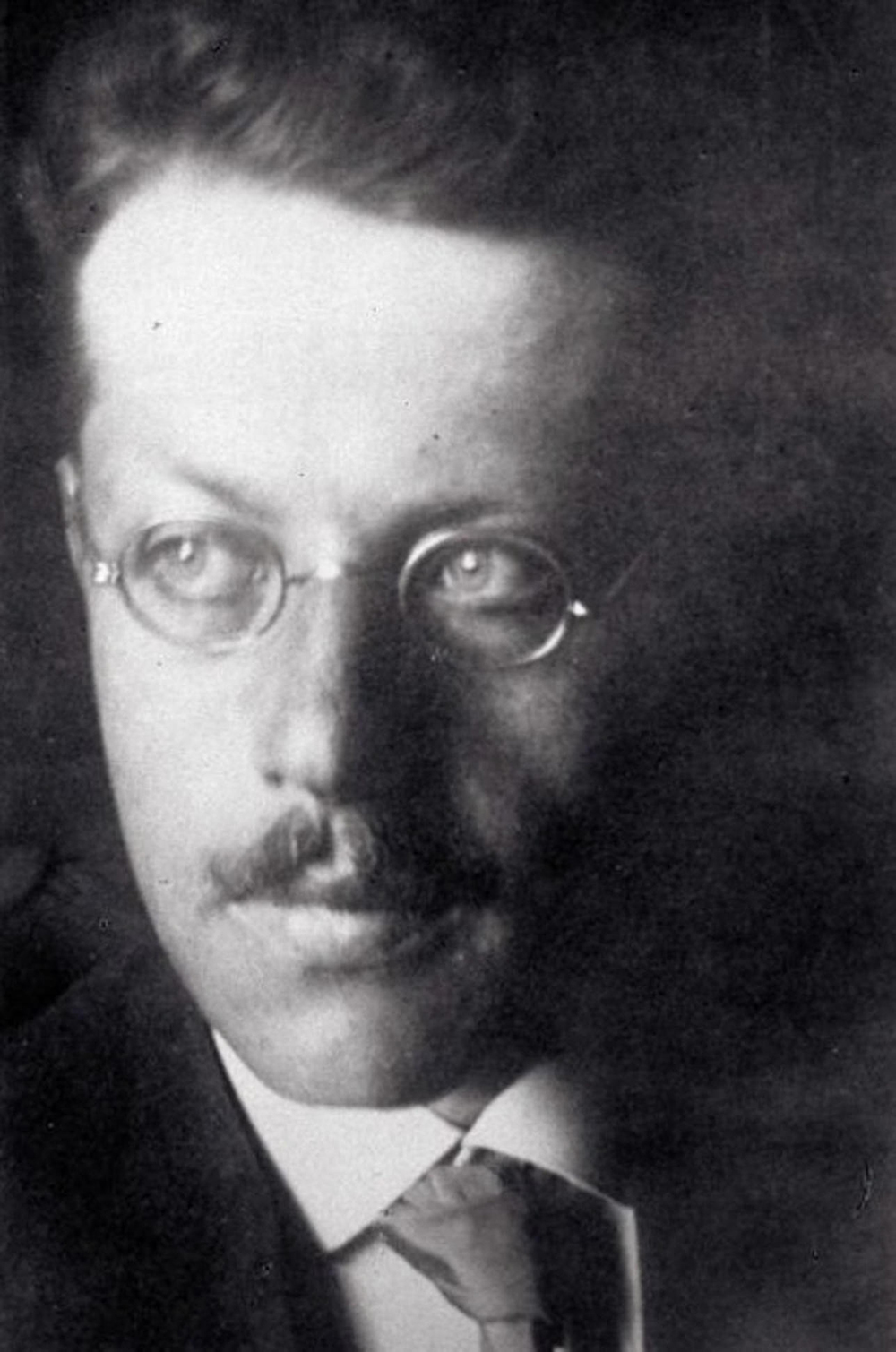
In the early years of the 20th century, a young philosopher named Franz Rosenzweig (1886-1929) set himself the task of revitalising German Jewry – of bringing German Jews in from what he saw as the periphery of assimilation to the centre of a living faith. He thus became one of the pioneers of a Renaissance in German Jewry that occurred during the turbulent years of the Weimar Republic (1919-33). This short, dense biography by Paul Mendes-Flohr, an expert on 19th- and 20th-century Jewish thinkers, who died in 2024, aged 83, also highlights Rosenzweig’s existentialism (which saw him break from the western philosophical tradition by elevating subjective experience over abstract theorising) and his influence as an educator.
Rosenzweig asked what it meant to be German and Jewish at a time when many European Jews had become, as Mendes-Flohr puts it, ‘deracinated denizens of a world of bourgeois ambition and culture’. Raised in a minimally observant Jewish household, he committed to Judaism at 27, after briefly considering conversion to Christianity. In this, as in many other matters of spiritual and intellectual importance, Rosenzweig was influenced by his close friend Eugen Rosenstock-Huessy, who had joined the Lutheran Protestant Church at the age of 17. The two friends’ wartime correspondence, in which they discussed their commitment to their respective faiths, was first published in 1969 (in English) as Judaism Despite Christianity.

Connecting German Jews with faith and tradition was also the central mission of Frankfurt’s Free House of Jewish Learning, of which Rosenzweig was appointed the first director in 1920. The following year he recruited the distinguished Austrian-Israeli theologian Martin Buber (1878-1965) onto the faculty, drawing him out of a reclusive existence in a village near Frankfurt. Together they began a new translation of the Hebrew Bible, intended to improve on Martin Luther’s classic 1534 version by conveying in German the ‘distinctive acoustical and semantic texture’ of the original (with rather strange results). They produced ten volumes before Rosenzweig died, after which Buber carried on alone, finally completing this epic task in 1961.
Rosenzweig was a powerful thinker –Mendes-Flohr even rates him as a genius – and an effective educator, but not a great writer. His dense prose requires determination and generosity from the reader. Unfortunately, Mendes-Flohr adds to this difficulty rather than clearing it away. He writes in long, ungainly sentences laden with jargon and unfamiliar words (‘apodictically’, ‘syncretistic’, ‘proleptically’). Key philosophical and theological concepts are left unexplained, as are near-incomprehensible quotations from Rosenzweig’s major work of existentialist theology, The Star of Redemption (1921). Like many academics, Mendes-Flohr struggles to write for a general audience.
Rosenzweig’s day-to-day life – the quotidian texture that completes a biographical portrait – is rarely documented. Bizarrely, the narrative begins when Rosenzweig is already almost 19, so there’s no account of his upbringing in Kassel, in central Germany. The few occasions on which he comes alive reveal very different sides of his personality. He appears selfish and insensitive in his affair with his friend Eugen Rosenstock-Huessy’s Swiss wife Margrit, known as Gritli, with whom he fell in love in early 1918. Both he and Gritli saw this complicated threesome as deepening their respective bonds with Eugen, a perspective the latter seems not to have shared. Rosenzweig’s relationship with Gritli continued after his marriage to Edith Hahn in March 1920, which Mendes-Flohr claims was a loveless union, sought by Rosenzweig mainly to produce children (though it seems he eventually came to love her, especially during his protracted illness).
Though only able to twitch his right thumb, Rosenzweig continued to work on the biblical project
In a sad irony, the other sections in which Rosenzweig appears as a human being deal with his final years. In December 1921, just over a year after taking up his post in Frankfurt, he was diagnosed with ALS, a neurodegenerative disease that leads to total paralysis. Edith had recently become pregnant with their son, Rafael, but the doctor warned Rosenzweig that he might not live to see the birth. Yet, despite losing all control over his bodily movements except the ability to slightly twitch his right thumb, he survived for another eight years, dying in 1929 aged just 42.
The productivity of this period is inspirational. With the aid of a special typewriter and Edith’s selfless support, Rosenzweig wrote hundreds of letters, translated, with commentary, 92 hymns by the medieval Spanish-Jewish poet and philosopher Yehuda Halevi and worked on the biblical project with Buber. A vivid picture is painted of Rosenzweig receiving visitors in silence, ‘endowed with a saintly charisma’ that made a tremendous impact on many who came to see him. These are the book’s most absorbing pages – but they are outnumbered by passages that would be more at home in an academic journal than a book for the general reader.



Comments