Translation

How the paralysed Franz Rosenzweig continued to translate the Bible

From our UK edition

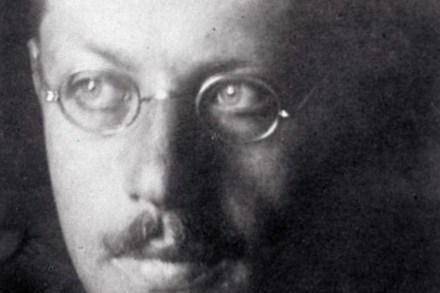
In the early years of the 20th century, a young philosopher named Franz Rosenzweig (1886-1929) set himself the task of revitalising German Jewry – of bringing German Jews in from what he saw as the periphery of assimilation to the centre of a living faith. He thus became one of the pioneers of a Renaissance in German Jewry that occurred during the turbulent years of the Weimar Republic (1919-33). This short, dense biography by Paul Mendes-Flohr, an expert on 19th- and 20th-century Jewish thinkers, who died in 2024, aged 83, also highlights Rosenzweig’s existentialism (which saw him break from the western philosophical tradition by elevating subjective experience over abstract theorising) and his influence as an educator.

Live-translation AirPods are the future

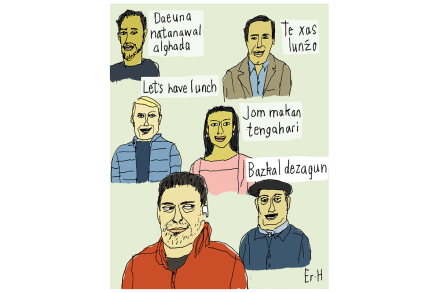
I have arrived in Naples, Italy, after an arduous flight from a chaotic London Gatwick Airport. I’m settled in a glamorous top floor apartment in the Quartieri Spagnoli – the romantic old “Spanish Quarter” – where Vespas fizz over cobbles and laundry hangs across alleys like flags of endless surrender. Most importantly, I’m clutching my Apple AirPods3 in their shiny new capsule. Because I’ve come here to do a grand, futuristic experiment using their much-heralded “live translate” function. Does it really work as smoothly as Apple says? Can I actually slot them in my ears and have them translate the Italian speaker in front of me, in real time? Is it really like the sci-fi Babel Fish from The Hitchhiker’s Guide to the Galaxy?

The wry humour of Franz Kafka

From our UK edition

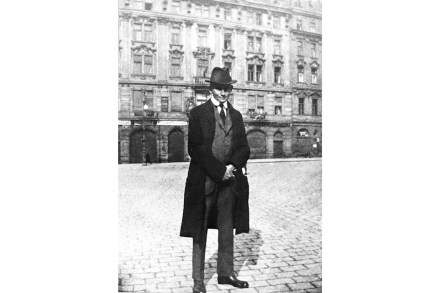
How do you see Franz Kafka? That is, how do you picture him in your mind’s eye? If you are Nicolas Mahler, the writer and illustrator of a short but engaging graphic biography of the man, you’d see him as a sort of blob of hair and eyebrows on a stick. The illustrations of Completely Kafka may look rudimentary, but they work. In fact they’re similar in style to the doodles Kafka himself would make in his notebooks. If you were Kafka, you’d see yourself as a spindly man, head on desk, leaning on your hands, arms bent, in a posture of defeat and exhaustion. That image is chosen for the cover of a translation by Mark Harman of Selected Stories.

A web of rivalries: The Extinction of Irena Rey, by Jennifer Croft, reviewed

From our UK edition

Jennifer Croft is a translator of uncommon energy. In 2018 she won the International Booker Prize for her rendering of Flights by Olga Tokarczuk. In 2021, she took on Tokarczuk’s The Books of Jacob, a great big historical epic. Now she’s written a satirical page-turner set over what one character calls ‘seven toxic, harrowing, oddly arousing, extremely fruitful weeks’. Like members of some ancient mystery cult, eight translators fetch up in a house near a primeval forest in Poland on the Belarus border. The year is 2017. ‘Bedraggled and ecstatic’, they’ve come to translate Szara eminencja (Grey Eminence), a novel about art and mass extinction, by the Stockholm-worthy woman of letters Irena Rey – their host, their author, their Athena.

The marvelous Montalbano

I visited Sicily in May 2005, when the airlines were still requiring all checked luggage to be left unlocked. After the flight from Paris touched down at Palermo, my wife and I went to collect our luggage at an apparently quiet and unrushed airport to discover my suitcase opened partway and an expensive dressing gown missing. Eighteen years ago, il Commissario Salvatore Montalbano was quite unknown to me. Otherwise, I should have immediately thought of the Sinagra family at the eastern end of the island, though the word “mafia” did come to mind as I rezipped the bag.

Montalbano

Two excellent books that offer new insight into The Iliad

The Iliad, Homer’s extraordinary epic poem, begins with Apollo, the god of light, zooming down from heaven “like night,” bringing plague to the Greek camp before Troy. Many days later, after the Trojan Hector’s funeral rites, the poem ends, at dawn. The light god brings darkness; dawn brings the doom of Troy. Such are the ironies that underpin the epic, revealing it as a work of supreme artistry, probably composed by one hand alone. For decades, I have lived in the light and shadow of The Iliad, reading it at first piecemeal in Greek, then in various translations, then all the way through in Greek (an experience both taxing and exhilarating). My Loeb edition, its prim English translation opposite the raw Greek, is never far from my side.

iliad

A translator’s responsibilities are as formidable as a transplant surgeon’s

From our UK edition

When asked what it is we do, translators often resort to metaphors. We liken the act of translation to performing a piece of music, taking on a role in a play, kissing a bride through a veil or building bridges between cultures. But as the peerless Norwegian translator Damion Searls has said, when we sit down to work ‘there’s no metaphor at all really. The metaphors are just for interviews, or for talking with people about what translators do’. In this series of passionate, thoughtful essays, Jhumpa Lahiri uses metaphors, and more especially Ovid’s Metamorphoses, to explore the nebulous, almost ineffable nature of living between languages.

Lost in translation

Picture the scene: a twenty-something college student, desperately trying to impress a girl he’s met for a date. He's early, but that isn’t a problem as it gives him a chance to sit nonchalantly with his ever-so-artfully-battered paperback. It’s Rimbaud’s Collected Poems: intellectual, sensual, rebellious — everything he wants to be perceived as. He props the book up so that the poet’s name is visible and waits for his delicate intellectualism to be applauded. The only thing missing from this tableau is the name of the poems’ translator, assuming that the student isn’t pretentious enough to be carrying around the original French. A smaller name on the fragile paperback, the translator is generally unmentioned, forgotten, and obscured.

translation

Dangerous liaisons: Bad Eminence, by James Greer, reviewed

From our UK edition

Vanessa Salomon is an internationally successful translator. Clever, beautiful, privileged – ‘born in a trilingual household: French, English and money’ – she can indulge herself professionally with obscure, neglected books. About to embark on a forgotten nouveau roman by Alain Robbe-Grillet, she’s offered an irresistible assignment. A bestselling French novelist who is definitely not Michel Houellebecq wants to pay her an extravagant fee to translate his next book – before he’s written it. Vanessa accepts, and her life free-falls into a nightmare of dangerous, sadistic games, involving two possible Not-Houellebecqs, but which is the imposter? She herself is a very unreliable narrator.

Aleksandr Solzhenitsyn’s masterpiece is finally appearing

In the mid-1970s, exiled from the Soviet Union for exposing its vast crimes against humanity, and having won the Nobel Prize in Literature for that endeavor, Aleksandr Solzhenitsyn turned his back on the lionization that awaited him in New York and other cultural capitals of the West and instead settled with his family in the woods of Vermont. Avoiding visitors for the better part of the next two decades, he churned out half a dozen or so books, averaging roughly 750 pages each, that together tell the story of the Russian Revolution and its antecedents. This act of sheer energy, self-discipline and renunciation of the conventional worldly pleasures bestowed by the literary elite was in the spirit of Russia’s own eastern monasticism.

Solzhenitsyn