In the aftermath of the bitterly contested 2000 US presidential election, Bill Clinton famously commented: “the American people have spoken; but it’s going to take a little while to determine exactly what they said.” That election ultimately took over a month plus a Supreme Court decision to finalize and remains hotly debated to this day.
Pity the poor Danes, then, who now face a similar period of extreme uncertainty. The snap Danish general election produced a polarized and atomized result for its smorgasbord of 12 political parties, with no party gaining more than 22 percent of the vote, and no overall majority in Denmark’s 179-seat parliament.
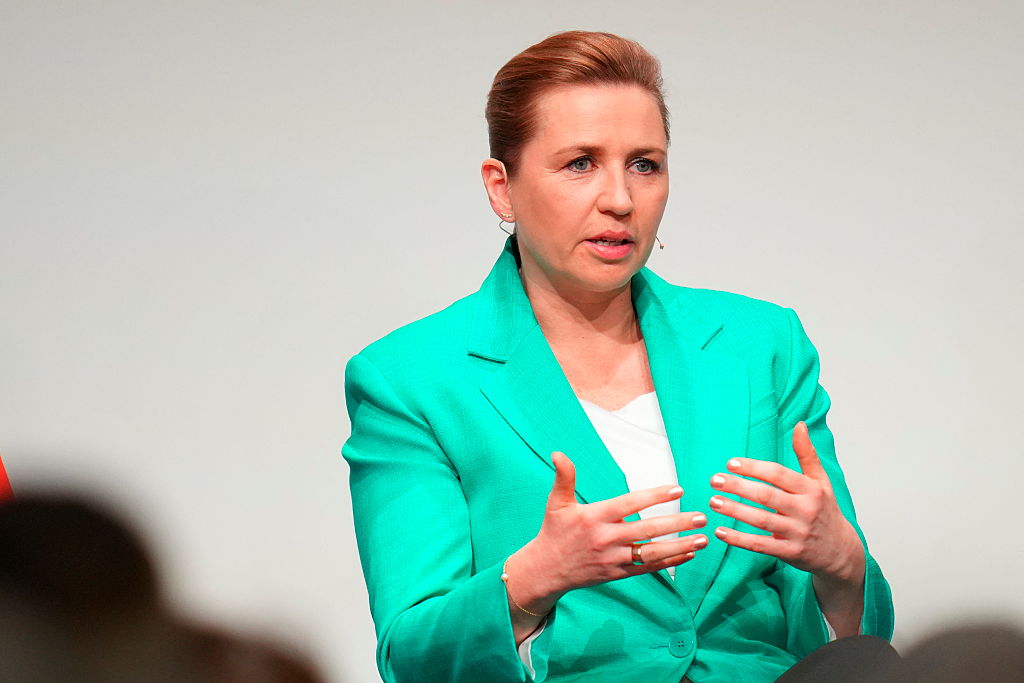
On the left are a “red bloc” of parties, including Prime Minister Mette Frederiksen’s Social Democrats, with a total of 84 seats; while the right wing “blue bloc,” including the Liberal Venstre party, has 77.
Some 90 seats are required to form a majority government. And so the 14 seats of the unaffiliated centrist Moderate party, led by the pipe-smoking foreign minister, Lars Løkke Rasmussen, will allow it to act as kingmaker.
The election results were a near-disaster for the incumbents. Frederiksen’s previous success had been based upon stealing the anti-immigration political clothes of the far-right. But her migration policies, though highly controversial, clearly did not go far enough for a sizable minority of Danes: this election saw a major resurgence of the main nationalist party, the DPP, which more than trebled its vote share to 9.1 percent. Meanwhile a new, even more right-wing party, the Citizens party (BP), which supports the forced repatriation of immigrants, crossed the 2 percent threshold required to admit a new party to parliament – an achievement which grants it a share of the state funding all Danish political parties receive; and which in turn may ensure its survival.

Paradoxically, Frederiksen might have been better off playing to her traditional left-wing base instead: for she also bled support to the Green Left (SF) party, which grew its vote share by 40 percent and wound up as the second largest party, at 11.6 percent.
A long period of negotiations in smoke-filled rooms – with Løkke Rasmussen’s pipe providing the smoke – now appears likely. Løkke Rasmussen is a “power animal” survivor of Danish politics who has already served two terms as prime minister; he may now spy an opportunity to serve a third term, and at a minimum the continuation of his role as foreign minister. Being castigated by the Trump administration at the White House in January over the Greenland scandal helped cement his reputation among Danes, and brought his party back from near-oblivion.
Frederiksen called this snap election to take advantage of the popular support for her role in the Greenland crisis. But that crisis is far from resolved, and many Danes will now say Frederiksen was irresponsible to call an election during a continuing national crisis. How much respect will Trump have for Frederiksen if she must negotiate with him as a caretaker prime minister with no political mandate?
This was a snap election campaign in which politicians ignored the elephants in the room (defense, foreign policy, Greenland) in favor of spurious debates about clean water (“who doesn’t want clean water?” groans a friend), pig welfare, school class sizes, and dog-whistle potential wealth taxes (in one of the world’s most highly taxed countries). It ultimately produced a plague on the houses of the leader who called the election; the traditional opposition parties; and, by creating a period of possibly lengthy uncertainty during an international crisis, the electorate. Danes agreed on little, but they might well agree not to have an election like this again.





Comments