Roll up, there’s a new old master in town. Or a new old mistress, if you prefer. Michaelina Wautier (1614-89) is revealed here as a painter who excelled within the genres of her time: flower painting, portraiture, emblematic tronies, and, if the scholars are right, classical epic, too. The new Royal Academy show cracks open the received idea of what a Flemish woman operating in the decades immediately after Rubens and Van Dyck could achieve.
Her c.1650 self-portrait at the easel is a confident statement. She is enthroned under a mantel of lusciously painted black velvet, which looks restrictive, but emerging from it comes her agile, three-dimensional painting hand. Her beauty is incidental, an aspect of her concentration and skill. We feel she has already achieved a lot, secure in her position.

I was hers after seeing this – though I’ll admit to being thrown when I later discovered that it had been believed for 80 years or so to depict Artemisia Gentileschi, then was thought to be the philosopher and artist Anna Maria van Schurman. But the present attribution is made with the full force of the academy – and I’d prefer to believe it – so why doubt it?
I like the way she verifies that she designed as well as executed ‘The Mystic Marriage of St Catherine’ in her signature: ‘Michaelina Wautier invenit et fecit 1649’. A subject tackled by all the greats, but she makes it her own. There is a personal resonance as Wautier, like St Catherine, never took a husband; both were married to their calling. Baby Jesus is charming, but the splintered spokes of the wheel are already threatening the fabric of Catherine’s dress.
Other golden-age female painters had specialisms: Judith Leyster’s roistering cavaliers, Clara Peeters’s mouthwatering still lifes, Rachel Ruysch’s frothing flowers. But Wautier had the rare advantage of sharing a studio – and presumably life models – with her brother, the artist Charles Wautier, which allowed her to go boldly where no other women went, into big, religious history painting. In her ‘Annunciation’ (1659) the expression on Mary’s face is very far from humble surprise – closer to intelligent resignation. Wautier’s signature, just visible, was previously painted over, as her name was thought to devalue a painting; now the opposite is true.
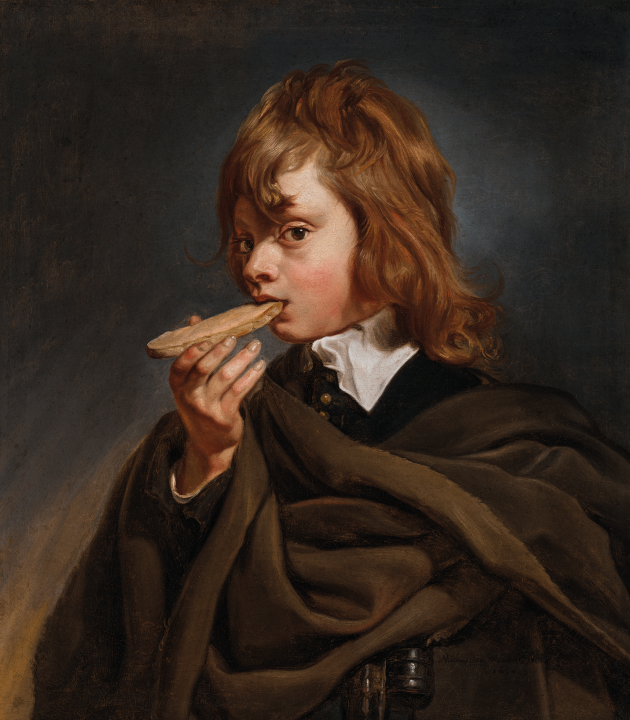
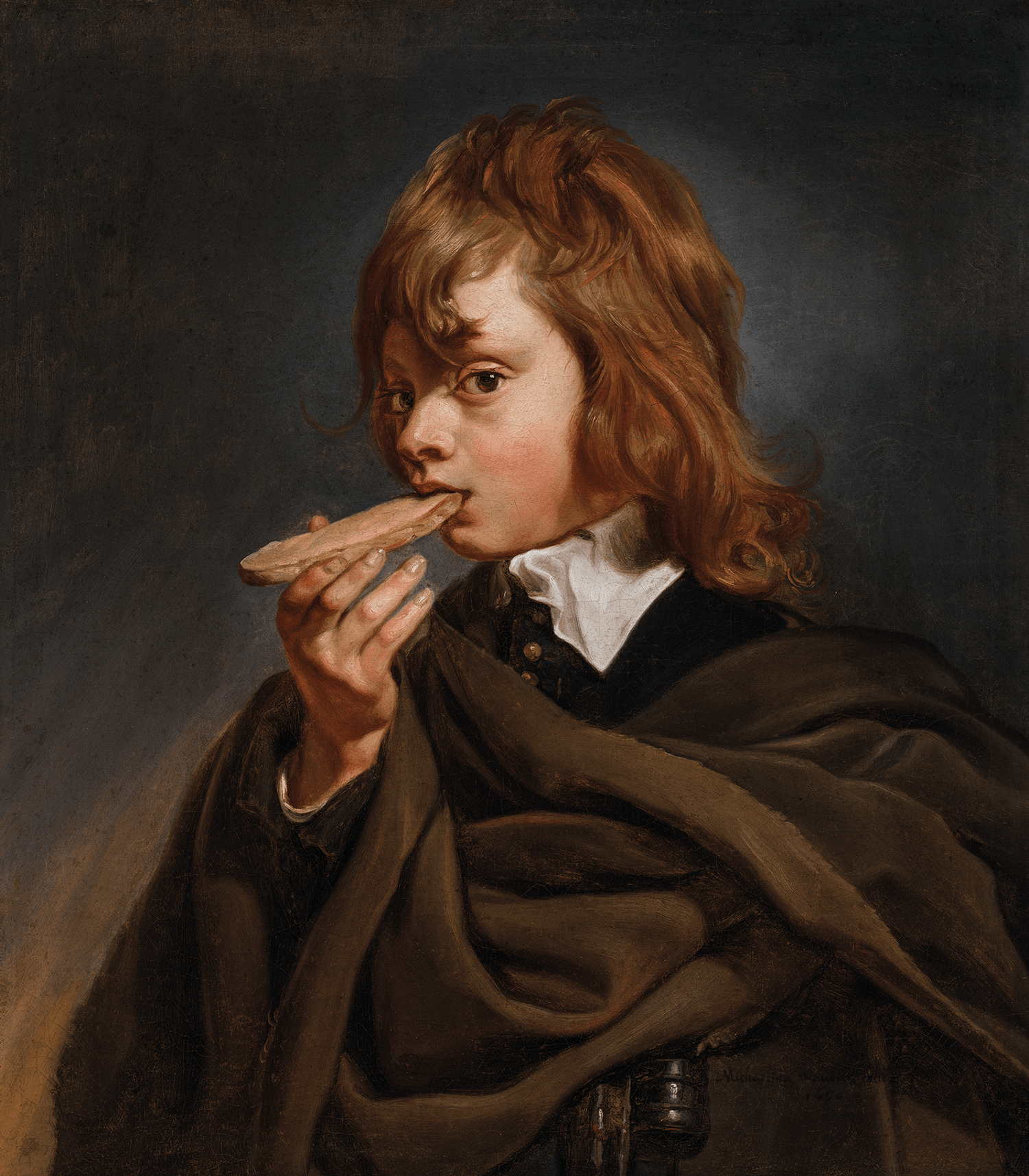
When Michaelina: Baroque’s Leading Lady opened in Antwerp in 2018, word spread and people looked again at their storerooms. Her missing ‘Five Senses’ came to light at auction in 2019. It shows a lad nibbling a crust, a child holding their nose at a rotten egg, etc. It is not an original scheme but her take on each sense is original, light and fun. And yet to my eye they are all slightly rebarbative – the clogged eyelashes, the cute and cheeky chappies painted to a photorealistic standard and then some. It’s shudderingly unfashionable, precisely because the style was fashionable for our grandmothers’ biscuit tins; I guess Millais’ ‘Bubbles’ must also take some blame.
In 1654 she painted the Jesuit missionary to China Martino Martini. A former pupil of Athanasius Kircher, Martini had witnessed the end of the Ming dynasty, and when she met him he was on his way to report back to Rome. Wautier displays him in Chinese dress, with Mandarin characters down the side of the portrait, his eyes avoidant, far-seeing. A great scoop.
The show concludes with the ‘Triumph of Bacchus’ (c.1655-59). This covers a whole wall. It is a fantasy in the spirit of Titian or Poussin, where the drunken sensuality is both glorious and frightening, appealing and revolting. It was deemed by previous generations to be ‘too coarse’ for a female artist. It is not signed and the keeper of the Archduke’s paintings set it down as by ‘N. Woutiers’, which caused approximately 300 years of confusion.
Now curators say it is ‘undoubtedly’ Michaelina’s self-portrait that we can see looking out at us from among the throng of revellers. ‘She “signed” the “Triumph of Bacchus” not with her name but by painting herself as a bacchante,’ they write. It is indeed a convention for an artist to feature themselves in a crowd in a painting, and as the only person making eye-contact with the viewer. But I had to ask the curator Julien Domercq why this bacchante looked so unlike the self-portrait we saw at the beginning of the show? Younger, fitter, with different eye colour… Oh, and blonde. He told me that Wautier had disguised herself for reasons of modesty. I submit to the academy’s judgment.



Comments