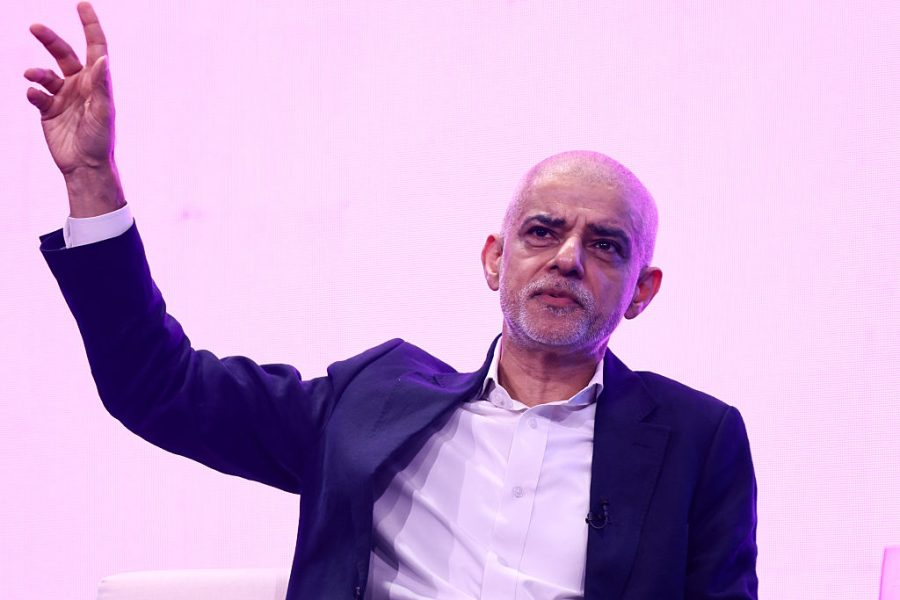
The Mayor of London, Sadiq Khan, has announced plans for a taxpayer-funded campaign to combat online ‘disinformation’ about the capital. The initiative, due to launch in September, will target audiences across Europe, North America and Asia in an effort to showcase London’s culture, innovation and economic strengths.
The justification is straightforward enough. AI-generated videos depicting dystopian scenes in Croydon have gone viral. False or exaggerated claims about crime, migration and ‘Islamic governance’ circulate widely online. The Greater London Authority says hostile narratives about London have increased dramatically over the past two years.
Khan isn’t imagining things. Artificial intelligence has lowered the cost of producing highly deceptive falsehoods to virtually zero – all you need is a smartphone and internet connection. Social media platforms reward outrage over accuracy, leading to a need to be cautious when seeing posts online.
But this doesn’t mean that it is the job of City Hall to spend millions of pounds policing perceptions. Londoners elect a mayor to run transport, improve policing, oversee housing and drive economic growth. They do not elect a mayor to manage the city’s reputation. And if Khan were doing those things well, one wonders how much reputation management he’d actually have to do.
Improving London’s reputation ultimately requires visible improvements to everyday life
Increasingly, governments of all stripes appear more interested in managing the criticism they receive than addressing its causes. Keir Starmer’s Labour government has spent £350,000 since 2024 hiring 215 influencers in an attempt to reach younger people on platforms such as TikTok for example. Criticism is now being dismissed as a narrative to be challenged, and this is particularly risky because London’s reputation is shaped by far more than just AI-generated videos.
Phone theft, for instance, has become one of the defining experiences of modern life in the capital. Last year, the Metropolitan Police recorded more than 70,000 phone thefts – more than 200 devices stolen every day, or one every seven minutes. Senior officers estimate that London accounts for up to three-quarters of all mobile phone thefts in England and Wales. The problem has become so severe that the Met Commissioner Mark Rowley is now calling on smartphone manufacturers to make stolen devices effectively unusable.
Most popular
Steven Edginton
Invented claims of lynchings and racist violence are irresponsible — and dangerous

To acknowledge this reality is not to spread disinformation. It is to describe what Londoners and commuters see in their daily lives.
The online narratives that concern City Hall are not solely about violent crime. They draw on a broader sense of urban decline, rising visible disorder, antisocial behaviour, overcrowded housing, litter, graffiti on the tube, retail theft and anxieties about integration and social cohesion in rapidly changing communities.
Much of this is folded into the online language of ‘Yookayification’, ‘Londonistan’ and claims that the capital is becoming ungovernable. Descriptions are frequently exaggerated, often politically motivated and sometimes outright false. But they gain traction because they distort concerns that residents habitually recognise.
And yet, it has to be said that critics frequently overstate London’s problems: the picture is considerably more nuanced than viral posts would suggest. Homicides in the capital fell to their lowest level since modern records began last year: they now stand at a rate of 1.1 per 100,000 people, lower than any other British city and below global cities such as New York (2.8), Berlin (3.2) or Milan (1.6).
Phone thefts, while still unacceptably high, have started to decline following targeted police operations. But they remain too high and the reputational damage will take years to reverse.
London remains one of the world’s greatest cities, which is precisely why the Mayor’s latest initiative appears so unnecessary. If social media narratives are genuinely causing economic harm, where is the evidence?
Despite endless claims that London has become a lawless ‘hellhole’ – including by the President of the United States, Donald Trump – tourism continues to boom. The capital welcomed about 21 million international visitors in 2024. Overseas tourists spent more than £17 billion in London that year alone, while total visitor numbers exceeded pre-pandemic levels.
Although some (mainly Americans) are currently put off by social media, most tourists remain perfectly capable of distinguishing between a fabricated TikTok video and the reality of a city that attracts millions of visitors every year.
The burden of proof should therefore rest with City Hall. Before spending £7 million of Londoners’ hard-earned cash, Khan and his cadre of deputy mayors should demonstrate just how this ‘disinformation’ is causing measurable damage which cannot be addressed through existing channels.
Londoners are being asked to fund a communications campaign at a time when the Mayor’s share of council tax bills continues to rise. The GLA precept for a Band D property has seen a 4.1 per cent increase from £490.38 in 2025-26 to £510.51 in 2026-27. The stated reason for the increase was to help fund policing and crime prevention. One wonders whether the £7 million for rebutting tweets could have gone in a similar direction.
If City Hall is genuinely concerned about misinformation, a better place to start would be with improved transparency. Misinformation thrives when there is an absence of trusted information. When official crime statistics are difficult to access, published disjointedly or disputed by campaigners and journalists through Freedom of Information requests, it becomes much easier for misleading anecdotes to gain traction.
This ought to extend beyond the publication of statistics. The recent cancellation of the Met’s £50 million contract with Palantir is a travesty given the foregone benefits of the company’s data-harnessing powers for policing and the lost opportunity to produce data proving that London is not as bad as its critics make out.
Yet improving London’s reputation ultimately requires visible improvements to everyday life. That means a renewed focus on tackling the low-level disorder that shapes Londoners’ perceptions of safety and civic pride. Rather than rely on reactive responses after incidents occur, the Met should pivot towards more proactive neighbourhood policing and consistent enforcement of basic standards. People judge a city less by its homicide rate than by what they encounter on their morning commute or weekend stroll.
If the Mayor wants to improve London’s reputation, the solution is straightforward: make London safer, cleaner and more affordable. The city’s image will take care of itself.





Comments