Matthew Bowles

Matthew Bowles is a Senior Policy Researcher at the Prosperity Institute 

What’s wrong with supermarkets making money?

From our UK edition

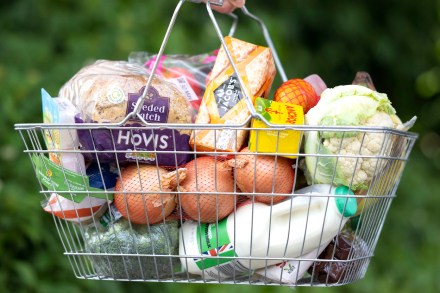
The British public struggles to distinguish between large numbers and large margins. On Wednesday, amid swirling debates about the government’s nudging of supermarkets to implement price caps, I made the apparently controversial observation on X that supermarkets tend to operate on very small margins, and so should not be vilified. Tesco, for instance, makes somewhere in the region of about 4 per cent. In most sectors, this would not exactly qualify as gangster capitalism.  The response was telling.  Those that disagreed did not really dispute the margins themselves. Instead, the objections were to the fact that I had mentioned them at all rather than the actual numbers.

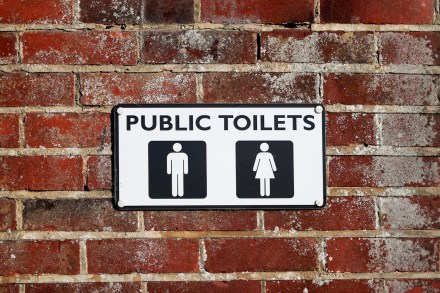
The curious case of the £10 toilet

From our UK edition

In May’s local elections, most of the attention will fall on the larger contests: the devolved elections in Scotland and Wales and the major local authorities. Less noticed, however, will be the smallest units of local government, parish councils, whose elections rarely attract much scrutiny, and their decisions even less. They generally operate outside of urban areas, with about 40 per cent of the population of England living within their domains – a substantial minority of the country. Parish councils are funded by their own tax, a precept, which is collected alongside regular council tax by the larger council of the area. It is here, in these quieter corners of the system, that some of the more curious examples of public spending can be found.

The French lesson that could save Rachel Reeves – and Britain’s economy

From our UK edition

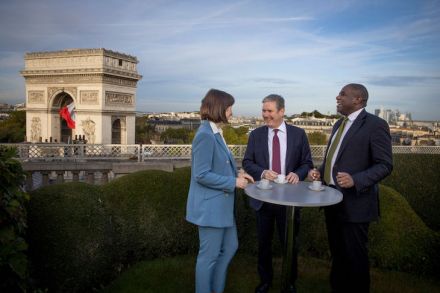
Rachel Reeves faces a strikingly similar predicament to that faced by Pierre Moscovici, who became France’s finance minister under François Hollande in 2012. Moscovici – and Reeves – both inherited the classic problem of the modern centre left: expensive promises and no obvious way to pay for them. The economy was sluggish; unemployment was climbing above ten per cent and public debt was rising. Every proposal to raise revenue further provoked consternation from voters and business alike. Reeves may find that signalling prudence isn’t enough and that a radical move away from socialist political orthodoxy is the only way In France, the Socialist Party, elected on promises of redistribution and public investment, looked on any attempt at restraint as a betrayal of principle.

What do London’s overpaid deputy mayors actually do?

From our UK edition

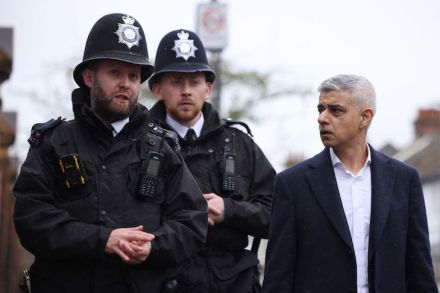
Walk through central London with your phone out, and it might not be yours for much longer. Theft in the capital has surged in recent years. So has shoplifting, with almost 90,000 incidents recorded in London last year, up roughly 54 per cent from the previous period. Meanwhile, fare dodging on London’s transport network has soared. The joke is on law-abiding Londoners who bother to buy a ticket. Over 2,200 TfL employees earn more than £100,000 The sums of money lost to crime in London are far from trivial: the £190 million cost of fare dodging would pay the annual salaries of 3,000 frontline police officers. But it’s not just phone snatchers and those who refuse to buy a train ticket that are costing Londoners a packet: City Hall is doing so too.

A Green Christmas would be more awful than you could imagine

From our UK edition

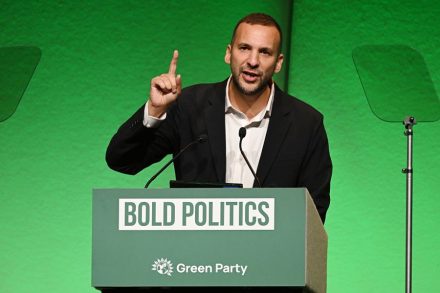
It is remarkable how a country can adjust to diminished expectations. Think of Japan post-Fukushima, or even post-war Britain under rationing. By December 2029, Britain, governed by the Green-Your Party coalition under prime minister Zack Polanski, will have quickly learned how to make do with very little. Let's wind forward four years. Four years from now, Polanski's new government has spent its initial months in power congratulating itself on an historic decision to decommission all North Sea oil and gas sites and accelerate the phase-out of nuclear power. 'A Christmas gift to the planet,' ministers call it as they do the rounds on Good Morning Britain, Newsnight and PoliticsJOE. Yet, energy, it turned out, had been rather useful.

Rachel Reeves should focus on cutting welfare

From our UK edition

Rachel Reeves is reportedly considering a 2p increase in income tax, taking the basic rate from 20 to 22 per cent. That might seem modest by historic standards, yet it would be a clear breach of Labour’s manifesto promise, made just over a year ago, not to raise any of the big three taxes. More importantly, it underscores the scale of the structural pressures facing Britain’s public finances – pressures that cannot be addressed by minor tax tweaks alone. If Reeves truly wants to strengthen Britain’s economic foundations, she should turn her attention to welfare reform – not as a matter of cruelty but of common sense.

Polanski is talking nonsense about wealth taxes

From our UK edition

On Question Time last week, Zack Polanski, the Green Party leader and erstwhile boob-whisperer, declared that there is no evidence that the wealthy leave Britain because of wealth taxes. A bold claim, and a wrong one. It’s also revealing, symptomatic of a growing belief on the populist left that Britain’s problems could be solved if only we shook the ultra-rich's pockets a little harder. Polanski assured the audience that a wealth tax would only fall on those with more than £10 million in assets – as if this made it both morally tidy and economically painless. Unfortunately, history and basic arithmetic disagree. France tried almost exactly that, with a rate charged on individuals ranging from 0.5 per cent to 1.5 per cent on assets over €10 million (£8.7 million).

London must break its temporary housing cycle

From our UK edition

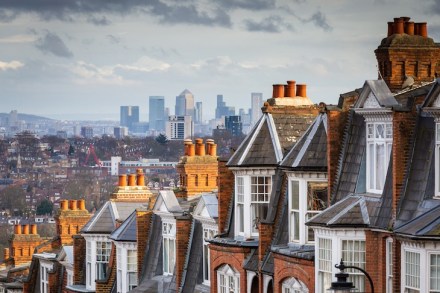
London is often held up as the jewel in Britain’s crown. Yet beneath the city’s gleaming skyline lies a less celebrated reality: ‘temporary housing’ that is anything but. Across the capital, families in need are housed by local councils in hotels, hostels and B&Bs at extraordinary expense. What is meant to be a short-term emergency fix has calcified into a way of life for tens of thousands, sometimes for years. It is expensive, unsuitable and corrosive, to both family life and the public purse. Councils across England spent £2.29 billion on temporary housing last year, up nearly 30 per cent in only twelve months.

Britain is ready for a Reagan

From our UK edition

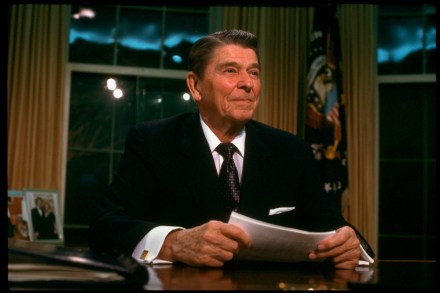
History doesn’t repeat itself. But it does echo. The United States of the 1970s and Britain of the mid-2020s share more in common than we might first admit: economic drift, institutional distrust, foreign policy muddles, and a political class that’s treading water. The question now is whether the UK, like America in 1980, is approaching a political inflexion point, one that could shape the next decade. In 1968, Richard Nixon won the presidency by forging a coalition of traditional Republicans and culturally conservative working-class voters, the so-called 'silent majority'. He spoke to those unsettled by the cultural turbulence of the 1960s, offering a firm alternative. His presidency ended in scandal, but the political realignment he triggered proved enduring.