
One day during my first job as an aspiring journalist at a serious newspaper, the editor told me how much he liked my writing. Flushing with pride, I asked which particular piece I’d penned. “No!” he interrupted abruptly, before I’d even finished my question. “I mean your handwriting.” It was the note I’d scrawled rather than any article I’d labored over that had caught his eye. Curiously, ever since I was calligraphy-shamed by a teacher for blotty, illegible cursive writing at a young age and attempted to recreate the italic script a friend had learned, handwriting has played a significant role in my life.
There was the person I’d sent a written message requesting information for a story, who wanted to meet me because he admired my handwriting. We ended up good friends, and he later introduced me to the man who became my husband. A write of passage, if you will. Then there was the interview with the celebrated design director of Ferrari, who politely answered the questions I’d jotted down in my notebook. Leaning over to peek he told me I had beautiful handwriting and I should copyright it, perhaps turn it into a font. (The design chief of Ferrari! Knows a thing or two about graphic style!) Our conversation turned from prancing horse to pen nib as we shared our passion for penmanship and the importance of using a good writing instrument.
Now that we just type and rarely scribble, any time you do write it seems important to be equipped with a distinctive pen. One that feels good in your hand, is nicely weighted, and is crafted with care. Something you engage with, carry with pride, enjoy using. A functional keepsake with character.
There’s a massive movement starting, to encourage us to move away from screens and think about writing’
“I’m hearing if you send a handwritten business note it gets you noticed much more than an email,” agrees Giles English, co-custodian with his brother Nick of the quaintly named writing instruments company Yard-O-Led. The English siblings, as the original co-founders of Bremont watches, understand what it takes to build a successful company. But while they started Bremont from scratch with a big vision and bags of hard graft, they’ve taken on Yard-O-Led as an established international company producing pens and pencils in one of the UK’s historic craft workshops with more than 200 years of history under its belt.
“The original Yard-O-Led was founded in 1934 by Ludwig Brenner, who had patented propelling pencils which contained 12 three-inch leads, literally a yard [three feet] – which is where the name comes from – and they made fountain pens and mechanical pencils in silver. Based in London’s Hatton Garden, it was bombed during World War Two and the business relocated to Birmingham’s Jewelry Quarter, having merged with the company Sampson Mordan whose founder patented the first mechanical pencil in 1822,” says English. He and his brother bought Yard-O-Led in 2024 after they stepped down from Bremont, attracted by the brand’s traditional heritage and craft.
One of the most well known of its clients was Noel Coward, who would only write his scripts in pencil, and only used Yard-O-Led’s instruments. It’s also rumored they were a favorite of the late Queen Elizabeth. And English says he adores the fact that Sampson Mordan’s mechanical pencils were on show at the Great Exhibition in 1851.
“When we bought the company, we didn’t realize how significant it had been. Birmingham was making 75 percent of the world’s pen nibs. Plus, there were originally 129 pen-making companies in the city’s Jewelry Quarter and now we’re the only surviving one. I totally fell in love with the business and we’ve been doing a lot of investing to grow it.” They are also seeing pens from a century ago come in for repair. “We’ve found that people recognize the name but had no idea the company is still going,” English adds.
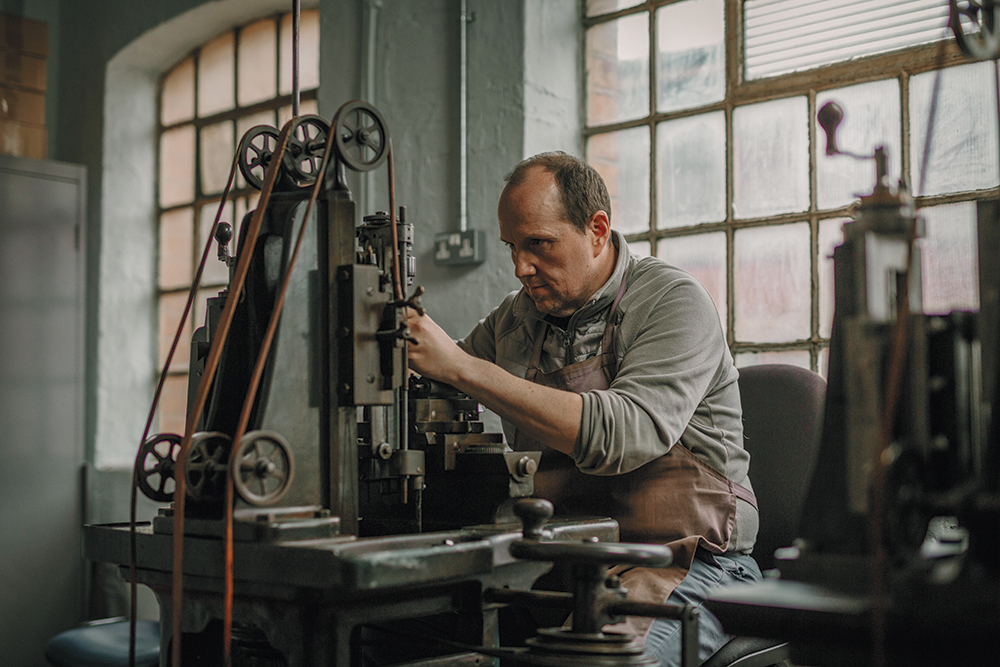
Their ambition is to help the British pen industry flourish again, similar to how they felt when they started out in the watch industry some 20 years before. “The pen market reminds me of the watch market decades ago. There’s a very similar collector ethos, but more immature. We’re really ambitious for YOL. There is so much potential in the business, and so much talent there, with 11 craftsmen in the workshop and an apprenticeship scheme about to start to pass skills to a new generation of artisans.”
What also appealed to the Englishes, exciting their passion for engineering and love of preserving British industry, was the workshop itself. “It was great that the original machinery survived. Our craftsmen – many of whom have been there for 50 years – use engine turning machines over 100 years old, like ones involved in making watch dials, used for engraving. If we didn’t have them, it would be impossible to do what we do in silver.” Turns out there are only 12 of these machines left in the UK and he is proud that they own three of them, in use every day.
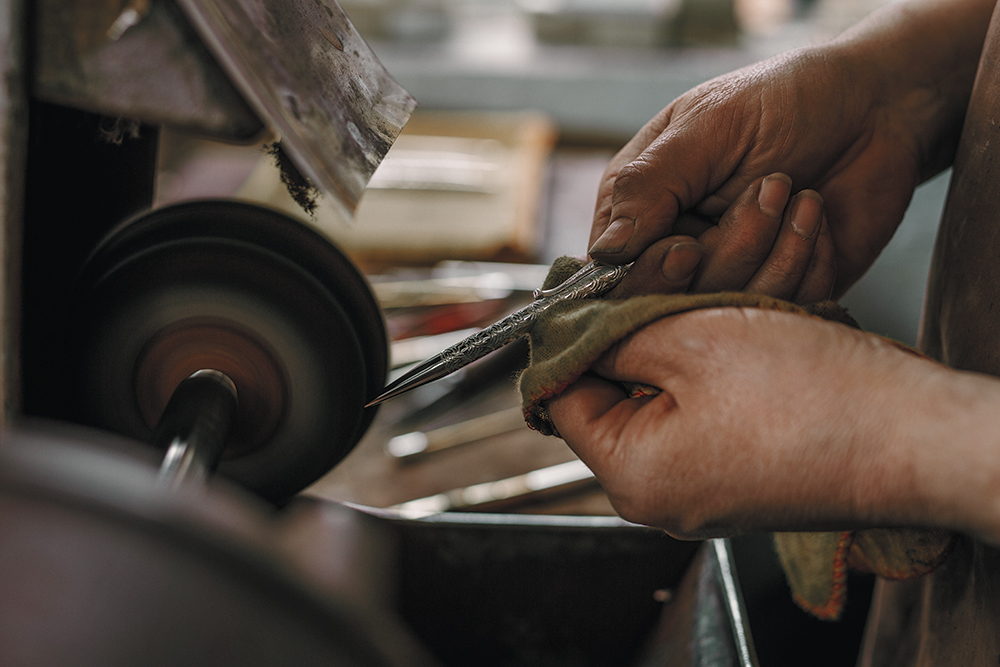
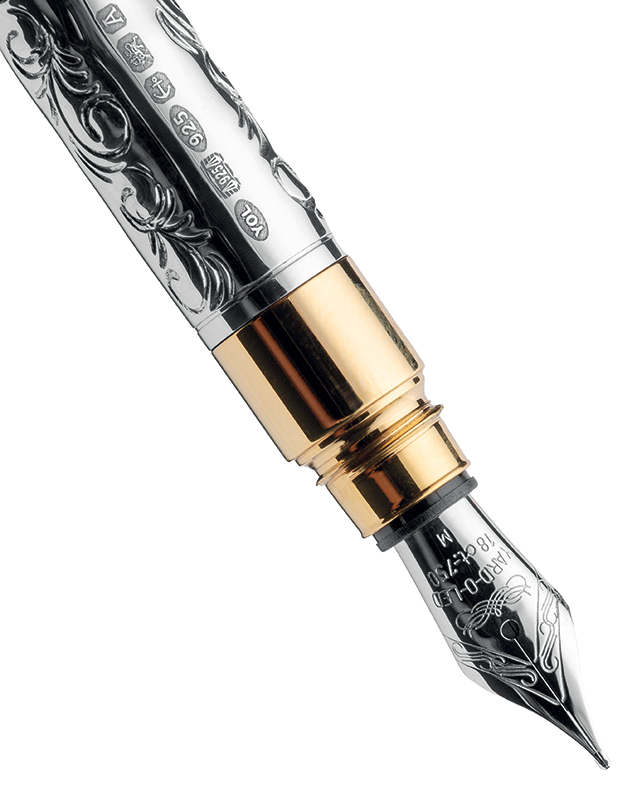
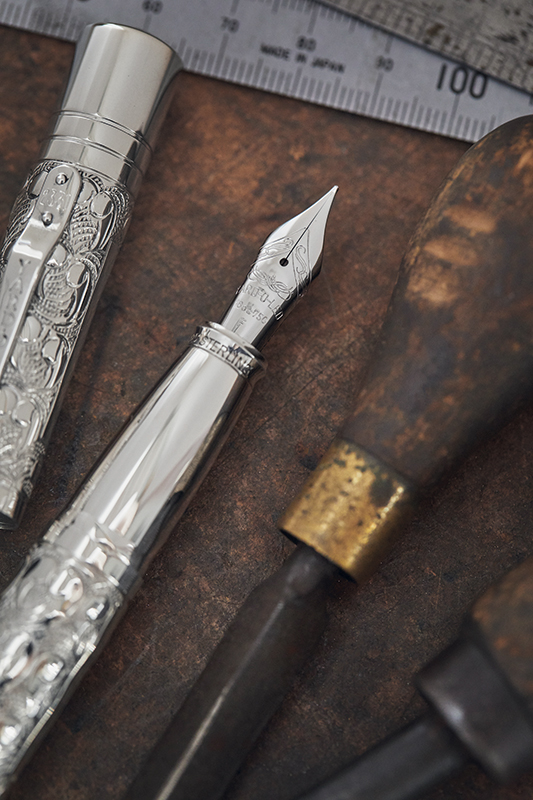
All products are manufactured from premium 925 sterling silver and are all handmade. It takes roughly half a day to work on a pen, using hand-chasing and hand-hammering to create traditional Victorian designs, using engraving techniques passed down through the centuries to create fountain pens and pencils in their own distinctive styles. These include “Barley,” a fine mesh pattern that is aesthetically pleasing and also provides good grip, while the “Victorian” finish comprises a delicate, complicated floral motif. Bespoke designs can also be made, and special limited editions are created occasionally. Each item is stamped with a hallmark by the British Assay Office, which authenticates origin.
A new challenge has been the huge rise in silver prices over the last year, “from around $20 an ounce to $90 today,” English notes. But that’s not putting them off. Nick is very involved in the design element, as he was in the watch business, and there’s such a skill set in the neighboring Jewelry Quarter, Giles enthuses, he is excited to explore what they can do together with other local workshops, using goldsmithing, gem setting expertise, and more.
The US is their second-biggest market and there are plans to extend the international network. Last fall saw the opening of a boutique in London’s historic Piccadilly Arcade. “We wanted to have a base in London, but importantly have somewhere our customers can come and touch and feel the product. There’s a little bar upstairs and we welcome people in to spread the word.” There’s also the opportunity to attend calligraphy classes there.
Handwriting is barely on the educational agenda these days. Our digital world has evolved so that in the US cursive writing is no longer a mandatory part of “Common Core Curriculum Standards,” the foundation shared by all states. Since 2013 students have been required to learn typing skills and print writing but don’t need to know how to join the letters together. While it’s hyperbole to insist this is a cultural tragedy, it is a shame. Handwriting has a place in our connected lives and is even a trend on social media. “There’s a massive movement starting, to encourage us to move away from screens and think about writing,” English concurs. “More than 9bn plastic pens are thrown away each year. If nothing else, let’s put a halt to that and look to a more meaningful alternative, that picksup on the romance of writing by hand, as a characterful, personal expression, in beautiful form, that lasts a lifetime and beyond.” Write on.




Comments