

A little while back I came across a copy of Ted Hughes’s Laureate poems which had an inscription to some friends. Inside was an unpublished squib by the late poet laureate which read: “The Royalist/ Is afraid/ The Queen’s a pin/ In a hand-grenade.” If I understand the poet’s meaning correctly then I count myself such a royalist.
I dislike criticism of the royal family, especially of the monarch. When it happens it feels too much like people hammering at something fundamental – far more fundamental than the critic appreciates. If criticism is to be made it seems to me that it should be done privately, so as not to disturb the fragile equilibrium of the rather magical arrangement we have on these islands.
I suspect Meghan has no idea how obsessed we are here as to whether or not a child is going to turn out ginger
Obviously not everyone agrees with this view. A while back I got into a row with an American producer over a play depicting a member of the royal family. I told him how disgraceful I thought it was. He observed that I had strong views about a play I hadn’t even seen. I had to explain that I have strong views about all sorts and whether I have seen a thing or not is neither here nor there. After a certain amount of back and forth I put forward my foundational belief that I think it quite wrong to portray members of the royal family on stage. My interlocutor dismissed this as a ridiculously anachronistic view – a point he thought was a winner until he noticed how flattered I looked.
I say all this only because something must be said about the case of the Sussexes.
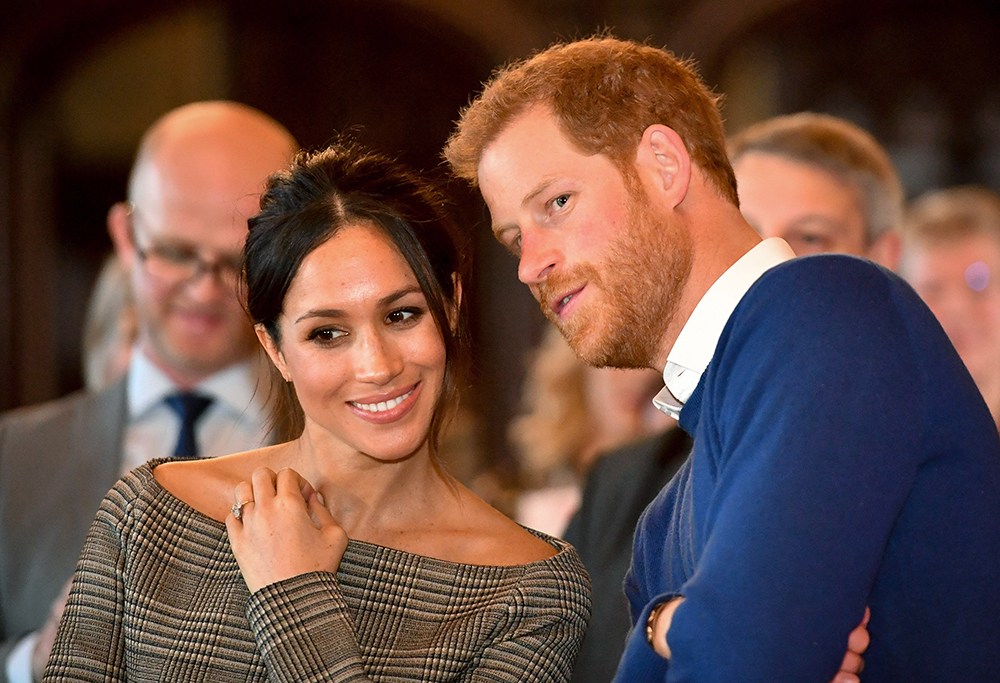
Obviously Prince Harry’s bean-spilling is hard to forgive. Clearly the bomb that his wife tried to throw about a nonexistent act of racism in the royal family was even harder to forgive – though I tend to put that down to a cultural barrier. I suspect that Meghan has no idea how obsessed we are in Britain as to whether or not a child is going to turn out ginger. But I digress.
The point is that the return of the Sussexes is the sort of thing I’d normally do anything to swerve. Yet there is something important that needs noting.
I loathe the rewriting of history, let alone the rewriting of very recent history. Most of us are old enough to remember the royal wedding at Windsor in 2018. I don’t know the happy couple so was unmiffed when I didn’t receive an invitation, though when I discovered how many people had received an invitation who also didn’t know the couple, some hurt did register. In any case, like most of the rest of the nation I watched the ceremony on television with a sense of quiet pride and joy.
If the monarchy was to adapt, as it always has, here was a very happy adaptation. With no fuss and widespread joy two things had happened. First a prince who had clearly been lost at times in his youth had turned his life around. Prince Harry’s stint in the army had transformed him from a slightly errant spare into someone the nation could admire and feel proud of. On top of the existing goodwill, he had provided a pretty exemplary demonstration of how young men in particular, who find themselves lost at some point early in their lives, can reset and change their path. Second, by falling in love with the woman he did, and with her being accepted so fulsomely by his family and country, a choppy set of waters that the whole country had been charting looked as if it might be shown an example of how to settle.
Then the inevitable happened. The Sussexes swiftly decided to racialize any criticism – as though the only explanation for not loving Meghan and Harry unquestioningly must be racism. So it was the nation, not the couple, which found itself misrepresented. Lest anyone forgets just how deranged that period became, the actor Laurence Fox lost his career because he said on national television something that was manifestly true: that Britain is not a racist country.
How the racist “anti-racists” hated that. So the Sussexes upped and left, and even poor Prince Harry popped up throughout the ensuing years making statements about implicit bias and similar 2020 hogwash.
The couple then proceeded to make as much money as they could, largely by telling various media companies that they would have “ideas” which could be turned into “content”. Alas the realm of ideas turned out not to be the couple’s specialism.
What they had were the same half-baked presumptions that almost every other celebrity was emitting around the same time. Around these matters the couple talked about the amount of good they wanted to do in the world and the amount of “change” they wanted to bring about.
Here is where the actual lesson about the Sussexes comes along: which is that “change” and “influence” are not things you talk about but rather something you do. Had the couple stayed in the UK, they would have been able to do more good in a day than they could do on a thousand podcasts.
They could have set about the usual, generally tedious, royal routine of opening school sports halls and village fêtes but done so to a genuinely excited public. They might have set up a charity to help other young people turn their lives around. By just getting on and doing such things, they might have actually changed the lives of people – especially young people – and done an amount of good impossible to put a price on. Instead they decided to put a price on everything – and charge the highest price imaginable.
Now even California has seen through them and they are returning to the UK. For the sake of the monarchy, the country and themselves, I hope they will recognize the wrong turn they took and turn their lives around again. Some silence will be required of them, of course. But a degree of grace will also be required of the commentating class. Having made which observation, I will now return to my anachronistic and monkish silence on the matter.




Comments