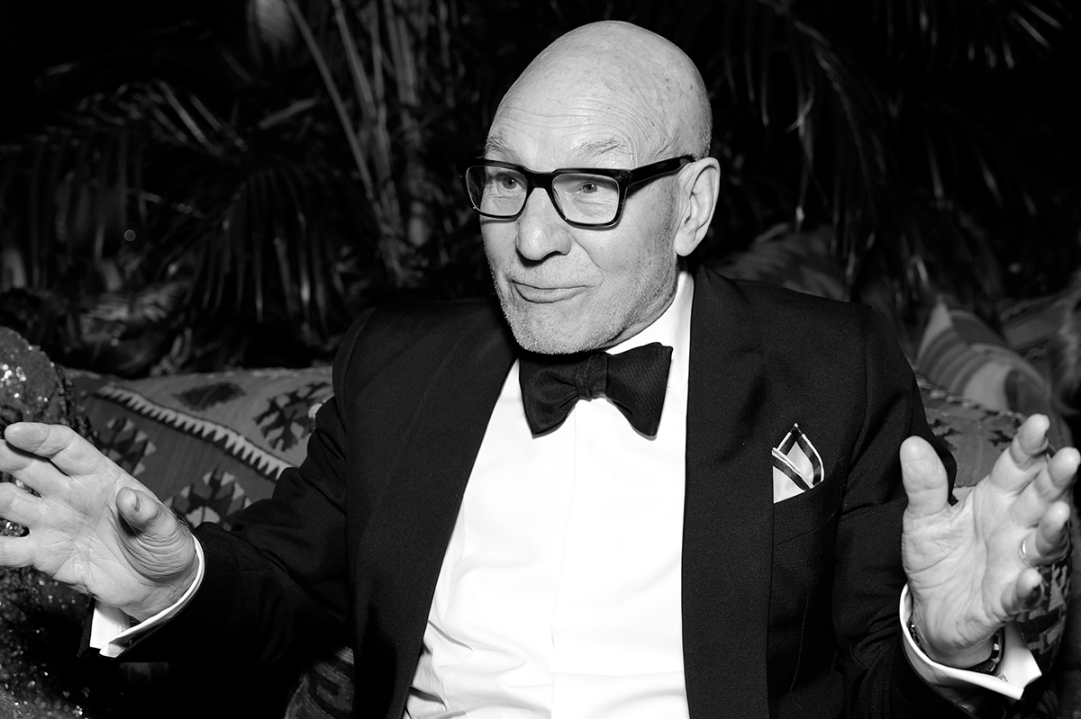
It says a lot for the late, great Sir Patrick Stewart, who has died aged 86, that two wholly disparate contingents of his fanbase are mourning his death. The first, of course, are those who followed his distinguished theatrical career, which spanned several decades and saw him attempt most of the major Shakespearean roles – all of which he played with his customary brio and charisma. The second are those who followed him to infinity and beyond as Captain Jean-Luc Picard, Star Trek star and inspiration to millions with his award-winning portrayal of quiet, steadfast decency. Forget the womanizing and self-regard of William Shatner’s Kirk; Picard was, for another generation, the captain of the starship Enterprise.
Stewart was, in his own modest estimation, a bald, working-class Yorkshireman who got phenomenally lucky, but this is untrue. He managed a successful Hollywood career for decades – in addition to Picard, he was also Professor Xavier in the X-Men films, and will be making what is sadly his swansong appearance in Avengers: Doomsday this Christmas – and combined this with critically acclaimed work on stage for the RSC and in America. But what he was so good at was an effortless versatility that meant that he could come across as charming, threatening, Machiavellian or humble – sometimes all at once – which meant that producers, directors and writers knew that to cast him in their projects was to be given a wonderful gift. He was not an easy man, as he was happy to admit, and both his personal and professional lives were not free of conflict. But when he was on song, which he was often, there were few actors of his generation who could touch him.

Star Trek made him rich and famous, of course, and he dealt with the respect and adulation that his best-known role brought him with the good humor and self-effacement that many veteran actors who become successful late in life display. Even for those who were not natural sci-fi fans, his Picard – authoritative and charismatic, yes, but also winningly human – was a fine reason to watch the show, and Stewart, who reprised the role as recently as 2023, relished the opportunity to play an intergalactic version of Horatio Hornblower, and approached the part with swashbuckling zeal. It is hard to think of any actor who played a role of such longevity with such conviction and talent, and his enormous popularity at fan conventions was testament to how beloved he was.
But he never turned his back on his first love, the stage, and continued to perform well after his enviable bank balance would have led less committed actors to take it easier. I was fortunate enough to see him perform many of the great Shakespearean roles – Claudius, Prospero, Antony, Shylock – and would have loved to have seen his legendary performance as Macbeth. He was electrifying whenever he stood in a theater, being possessed both of a rare degree of presence and a self-taught intelligence that meant that he could portray virtually any classical part with a deep understanding that never curdled over into milking it for cheap sympathy.
He performed several times with his X-Men co-star Ian McKellen, most notably in Pinter’s No Man’s Land and Beckett’s Waiting for Godot, and the two became associated with one another in the public imagination. Yet unlike the privately educated Cambridge graduate McKellen, Stewart’s humble background – he used to recall reading the complete works of Shakespeare in the outdoor bathroom of his childhood home – meant that his extraordinary achievements, both as an actor and as a man, were all the more incredible.
I had my own brief brush with Stewart, too, which was infinitely more rewarding than any interview could ever have been. A few years ago, he was kind enough to say that he was reading and enjoying my book The Windsors at War in an interview, which led my publisher and I to send him an advance copy of its successor, Power and Glory, in the hope that he would offer it an endorsement. Not only did he happily do this – offering the wonderful quote, “if you want to better understand England and the English people, read this book” – but he had the generosity to send me an inscribed copy of his memoir, Making It So, at his own expense. He did not have to do this, as countless other people of his fame would not have bothered, but it was typical of his decency and, yes, greatness that he was prepared to do so.
Hollywood, Britain and everywhere that Stewart graced with his presence and talent have lost a true knight, and he will be mourned. But at least we were fortunate enough to be graced by a great actor for decades, and, for that, we should remain grateful.




Comments