William Shakespeare

The folly of Hamnet

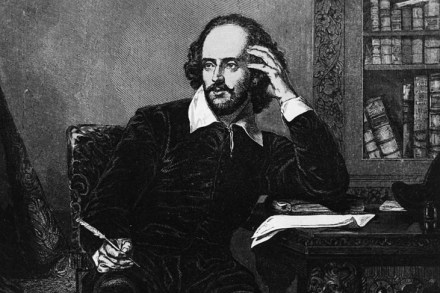
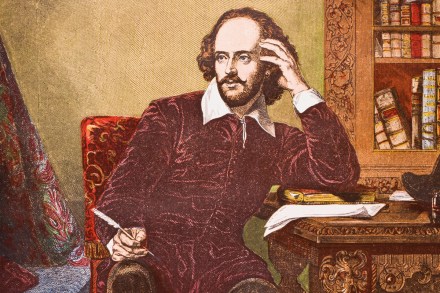
Democracy has not been kind to William Shakespeare. His works may be read and performed more widely than ever, but readers and audiences understand less and less of what they see. Egalitarianism encourages narcissism, and narcissism interprets all art as autobiography. Shakespeare could only write about his own life, and if, in fact, he wrote about royal courts and noblemen, then Shakespeare must not have been Shakespeare, the actor from Stratford-upon-Avon. He must have been Edward de Vere, the earl of Oxford, or somebody like that. He could not have possessed the intelligence and imagination to transcend his personal identity, for none of us can do that. It would be superhuman. That’s one foolish contention arising from the idea that writing must always be memoir.
Why Shakespeare remains the great playwright

William Shakespeare’s tragedies stand apart. Their impact is profound and lasting, in cultural, artistic, emotional and psychological terms. Who could forget the ghost’s first appearance in Hamlet, or Lear bearing the dead Cordelia? No other dramatist has achieved what Shakespeare did: in subject matter, emotional heft, innovative usage of source material, character development and startling deployment of language Shakespeare is (and there is no other word for it) extraordinary. He surpasses both his predecessors (sorry, Thomas Kyd!) and those that came after him. He built on the foundations the classical playwrights established, and then, almost casually, bettered them, too.

Shakespeare

& Juliet and Titanique: two newly minted cult classics

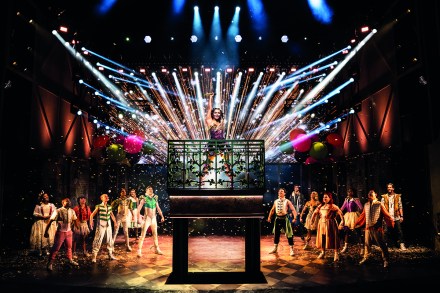
Fears that the new pop-parody musical & Juliet would be a vehicle for steamrolling Shakespeare are understandable but unfounded. It’s true that, on Broadway as in the rest of the arts, holding dead white males up for flagellation is now almost a cherished ritual — a recent example being last season’s Six, a glitzy feminist paean danced on the grave of Henry VIII. There’s a healthy dose of girl power in & Juliet, too, and I don’t doubt that a few heedless theatergoers came with tomatoes in hand, hoping to find the Bard pilloried. Let me tell you a secret: the theater world still adores Shakespeare, even in 2023. To renounce him is to swear off your mother’s milk.

Juliet

Robert Icke’s smart pairing

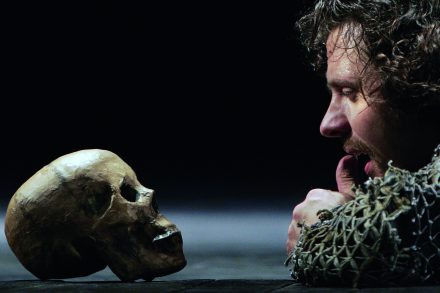
On a Saturday in August, stuck in Manhattan  and growing less enamored of the thought, I holed up at the Park Avenue Armory to catch English director Robert Icke’s Hamlet (2015) and Oresteia (2017), playing in repertory. Icke is a darling young thing on the British theater scene, “acclaimed,” as the program informs us, “for his intelligent and accessible productions” of classic texts. Hamlet runs for three hours and forty minutes, Oresteia for three fifteen, which gives you some idea of what is meant (or not) by “accessible.” These are big, bold productions. But for what it’s worth, the cavernous Wade Thompson Drill Hall proved accessible to a packed crowd.

hamlet

Shakespeare is getting trigger warnings

Hark, groundlings: Shakespeare, after decades of being found to be Problematic, is now being reclaimed as the wokemeister-in-chief. New York’s Shakespeare in the Park company returned to Central Park this summer with a staging of The Merry Wives of Windsor, adapted by the Ghanaian-American playwright Jocelyn Bioh. The action, traditionally located in the white-supremacist purlieus of 17th-century Windsor, is now transposed to 116th Street in Harlem. The cast is mostly black, the script has been updated to contain references to Black Lives Matter and the Bronx, and Jacob Ming-Trent portrays the portly knight-about-town Falstaff as a wannabe gangsta. The critics love the production.

shakespeare

A summer solstice on Long Island Sound

Where I live on Long Island Sound, something noteworthy is scheduled to happen today at about 12:30 post meridian. The sun will reach its northernmost point of the year, pause briefly, and then begin the (at first) slow movement to the south, bringing with it shorter days and (eventually) colder temperatures. Today, for the summer solstice (‘solstitium’, Latin for ‘sun-stopping’) in these parts, we’ll have 15 hours and five minutes of daylight. By the time the winter solstice rolls around near Christmas, we’ll be down to nine hours and eight or nine minutes. Brrr! And, turn on the light! We celebrated the solstice last night by attending a performance of A Midsummer Night’s Dream out of doors on the banks of Five Mile River right off the Sound.

solstice

A leaf from Verdi’s book

Radicchio, radicchio, wherefore art thou radicchio? A red-leafed chicory by any other name would doubtless taste as bitter — but it certainly wouldn’t sound as pedigreed. Consider the following bit of dialogue: ‘Would you like a chicory salad?’ The natural response is a hasty, ‘Not just at the moment, thank you,’ the very name of chicory summoning up painful memories of undercooked chickpeas and bowls of foliage into which well-meaning persons have seemingly shaken the broken fragments at the bottom of the cereal box. Compare and contrast with the following overture: ‘Would you care for some grilled Chioggia radicchio embellished with small cubes of buffalo mozzarella and drizzled with a reduction of Balsamico di Modena?

radicchio

Young Hamlet

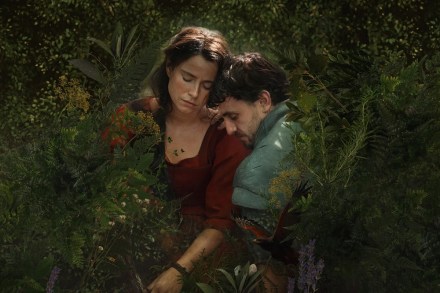
Maggie O’Farrell is much possessed by death. Her first novel, After You’d Gone (2000), chronicled the inner life of a young woman who finds herself comatose following a near-fatal car accident. And a recent piece of non-fiction, I Am, I Am, I Am (2017), gave an account of O’Farrell’s own numerous brushes with mortality. Her latest novel returns to this preoccupation with the ‘undiscovered country. from whose bourn/ No traveler returns’. In it she sets out to tell the imagined story of the life and death of Shakespeare’s only son, Hamnet, who perished at the age of 11, four years before his father wrote the play that would share his dead son’s name — in Elizabethan England, the spellings Hamnet and Hamlet were interchangeable.

hamnet

Was Shakespeare a woman?

‘Was Shakespeare a Woman?’ Elizabeth Winkler asks in the new issue of The Atlantic. Of course he was. If you believe that Shakespeare was not Shakespeare, but Francis Bacon, or Walter Raleigh, or the Earl of Oxford, or Christopher Marlowe, or even Emilia Bassano Lanier, then you have succumbed to a conspiracy theory. A pity that, given the public’s increasing willingness to believe anything, and some people’s increasing willingness to publish anything, that this conspiracy theory should be promulgated in The Atlantic, a magazine with a long, albeit lately abandoned, tradition of intelligent writing on literature.

william shakespeare

The Bard and Bollywood

Hindi cinema has a deep and abiding love affair with Romeo and Juliet. Shakespeare’s tragedy of star-crossed lovers has been adapted in at least six Bollywood films in the last seven years, from 2012’s Love Rebels (Ishaqzaade) to 2018’s Heartbeat (Dhadak).  And audiences like them: A Play of Bullets: Ram-Leela (Goliyon Ki Rasleela Ram-Leela) was India’s fifth highest-grossing film of 2013, and Wild in Love (Sairat) is still the highest-grossing film ever produced in the Marathi language. What has the Bard to do with Bollywood? And why the much ado about Romeo and Juliet?

bollywood bard

How much did Churchill owe to Shakespeare?

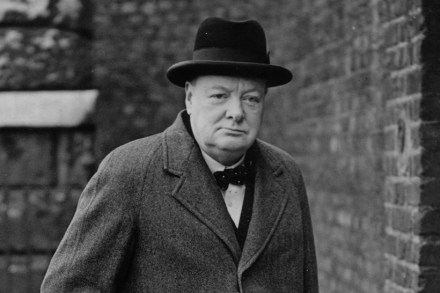
Did Shakespeare win the war? He was certainly Churchill’s greatest literary ally in 1940 when he sent the English language into battle. In fact it comes as a surprise to realize — at a fascinating exhibition in Washington D.C.’s magnificent Folger library  — just how much Churchill saw England and its history through the eyes of Shakespeare. For a period in 1940 he became the lion-hearted Henry V — albeit Henry V with a cigar and dressed in a velvet onesie. Shakespeare and the theatre runs through Churchill’s life. He bought a Webb’s toy cut-out theatre as a little boy. He studied hard for (but twice just missed getting) the Shakespeare Prize at Harrow.

winston churchill