Olivia Laing has had a productive couple of years. The Silver Book arrives hot on the heels of The Garden Against Time, a memoir-cum-environmentalist treatise published in 2024. It is a novel of stunning imaginative power that was apparently written in just three months.
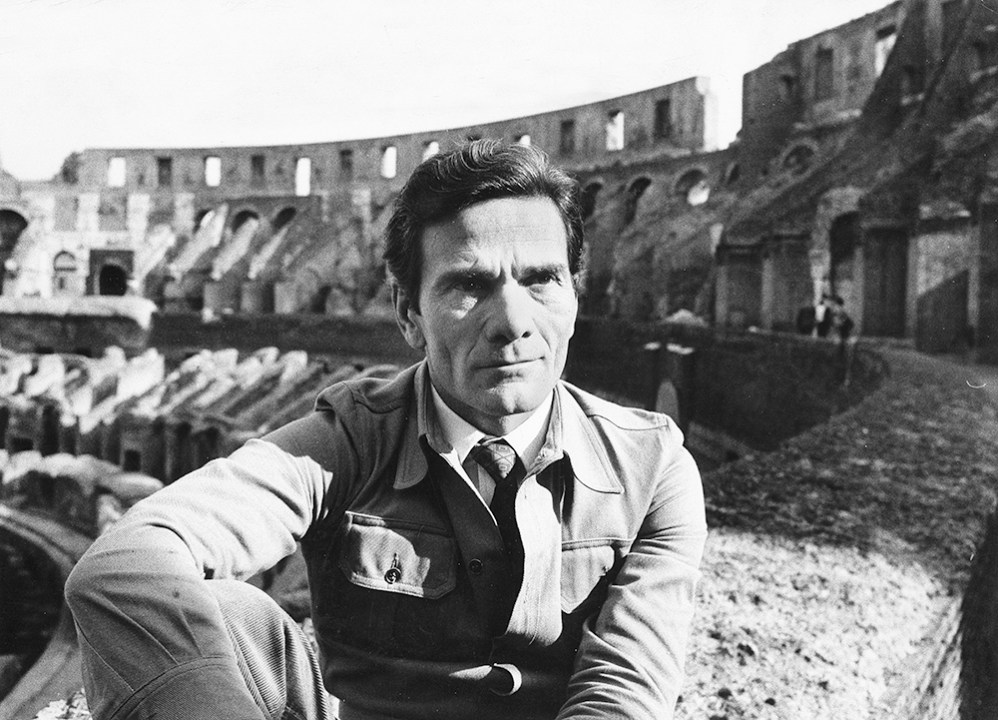
Set in 1975, during the making of two great works of Italian cinema, Federico Fellini’s Casanova and Pier Paolo Pasolini’s Salò, it is suffused with the glamour and intrigue of these filmmakers’ worlds. It offers a fictional retelling of the events that led up to Pasolini’s murder – a crime that remains unsolved – on 2 November. But at heart the book is a love story that follows the relationship between Danilo Donati – the costume and production designer responsible for realising Fellini’s and Pasolini’s visions – and a young English boy called Nicholas.
This is an ambitious set-up, but Laing (who uses gender-neutral pronouns) is more than up to the task. The Silver Book exhibits her characteristic flair for responding to different art forms; a fascination with individuals who are at odds with the status quo; and her fierce political sensibility. The subject matter is indeed overtly political: Salò is a nightmarish allegory of fascism, and the themes of artifice and sexual abandonment in Casanova echo Nicholas’s plight as a homosexual in 1970s Italy. His identity comes with the ‘emotional burden of self-invention’. Wearying of the strain, Nicholas longs, through romantic connection, ‘to be gutted, to be relieved of his personality and his face, to dance on the hook like an exhausted fish’.
Laing makes us realise the effort involved in sustaining illusions both in life and art. When Nicholas asks Donati why Casanova is being filmed in Rome rather than Venice, where the action of the plot takes place, he is told: ‘Because the film is not set in Venice. It is set in Fellini’s Venice, and that has to be made from scratch.’ These are film-makers intent on fashioning a reality that fits the precise contours of their imagination. The resourceful Donati makes a ‘mosaic out of boiled sweets’; he uses chocolate to resemble excrement; he becomes ‘a magpie for materials that might transcend themselves, given the right lighting’. He and his circle are in the business, as he puts it, of creating ‘authentic illusions’. In this rigorously researched yet highly inventive novel that delights in mingling fact and fiction, Laing is, too.



Comments