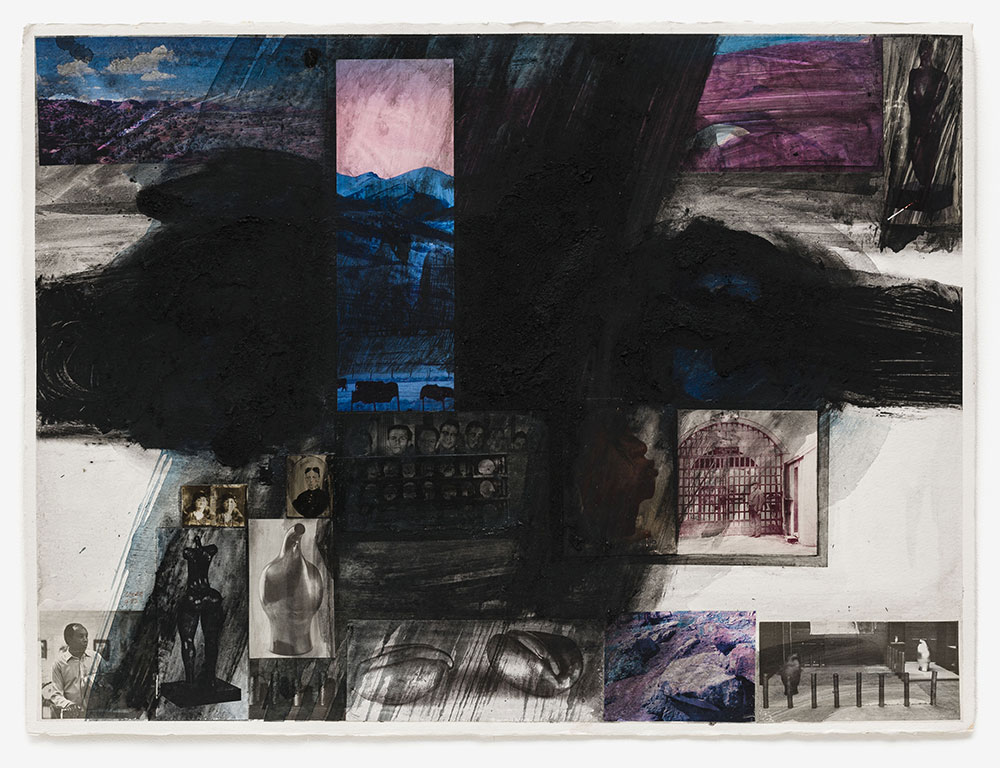
A month ago in Hampstead, a work of art stopped me in my tracks. The piece was a vast rectangular painting on board, 7ft tall and 5ft wide, almost entirely covered in a thick layer of black acrylic save for three rectangular apertures cut through the board: windows onto something yet darker. At the composition’s fringes, where black faded to grey, it was just possible to make out the collaged vestiges of the images lying below: monochrome grids of old passport photos and shots of grand plantation mansions.
Below the anger lies a depth of artistic soul-searching
What looked like a long metal soap rack protruded from the surface, its bars encasing an image of a sculpture of a headless female figure. If you hadn’t already identified where the artist was going with all this, two bull whips had somehow been affixed to the surface, coiled as if suspended mid-stroke. To their immediate left, the black paint had been scraped away in diagonal scars to reveal a blood-red undercoat.
The piece in question was a 1995 assemblage by the Guyana-born Donald Locke, entitled ‘The Mark of Brer Nancy’. It was just one of many highlights of a superlative overview of his work at the peerless Camden Art Centre. Locke (1930-2010) lived a peripatetic life, moving between Georgetown, London, Arizona and, finally, Atlanta. His work, like that of his countryman Frank Bowling, probed the idea that black people on both sides of the Atlantic might share a distinct culture, informed by the suffering that had taken them from one coast to the other.

But where Bowling tended towards subtlety, Locke struggled to contain his rage at historical injustice. You could, broadly, say that he took the modernist canon and subverted it into a body of work that expressed a distinctly black subjectivity. There are nods to Rauschenberg, to Meret Oppenheim, to Brancusi – but all are conscious references. There are vast (black) paintings incorporating all manner of pertinent printed matter; cuboid sculptures of (black) steel and (black) fake fur; canvases – black ones, naturally – stretched over metal grilles, eye-like holes cut from them so as to resemble prison windows.
This may all sound like identity political art avant la lettre, and I guess it is. But below the anger lies a depth of artistic soul-searching: it’s not so much a disquisition as an interrogation. When it came to ‘blackness’, Locke’s art demanded, was grievance alone enough to forge an identity?
Tate Modern’s excellent Ana Mendieta retrospective is a proper, grown-up career overview of the sort it used to do so well. Mendieta was born in Cuba in 1948 and escaped to the USA shortly after Castro’s revolution. She was a prodigious talent and a bit of an earth mother. She had some distinctly hippyish beliefs, largely concerning mankind’s primal connection to nature and the supposed wisdom of shamanic ritual.
This may sound daft, if not actively annoying – though sometimes it is – but she articulated her vision with deliberation and charm, building up a pictorial language of signs and symbols that consciously recalled prehistoric cave art and primitive spiritual symbols from around the globe. She made all this seem utterly sui generis.
Her choice of materials encompassed the fundamentals: mud, blood, rock, sand, fire and water. Even her own hair, which in a series of photos that she created as a student she coated with shampoo, sculpting it into a spooky mask that envelops her face. Films and photographs see her trace out forms based on her own silhouette in the dirt around the banks of the Iowa River, in the grass of Central Park, on a beach as the tide comes in. Sometimes she fills them with gunpowder and sets them ablaze, sometimes she allows the elements to do their thing, washing the traces away or filling them in with foliage.
She had some distinctly hippyish beliefs about the supposed wisdom of shamanic ritual
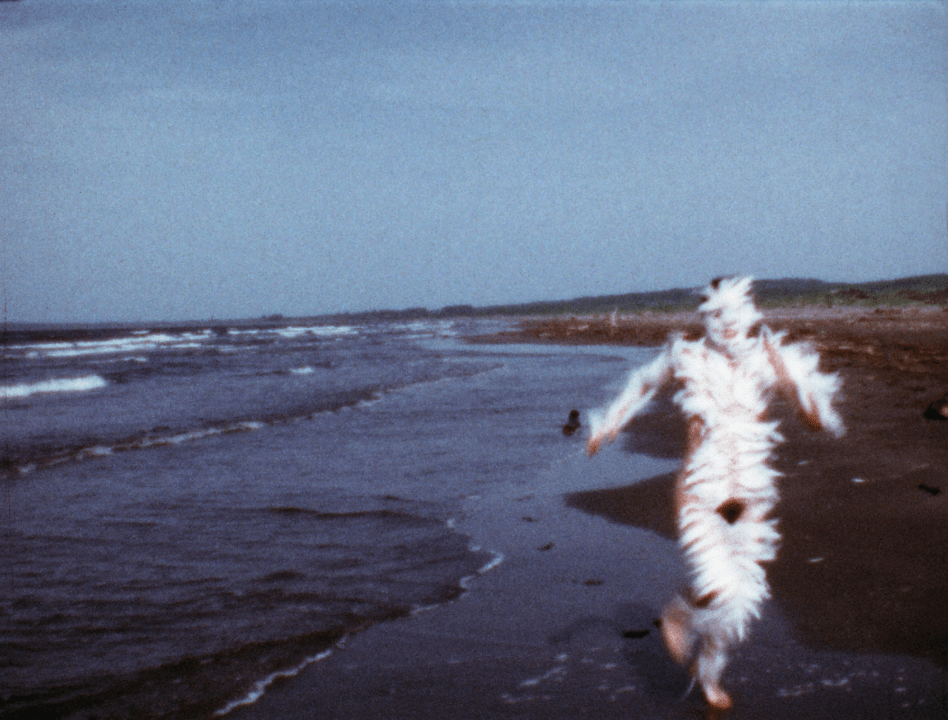
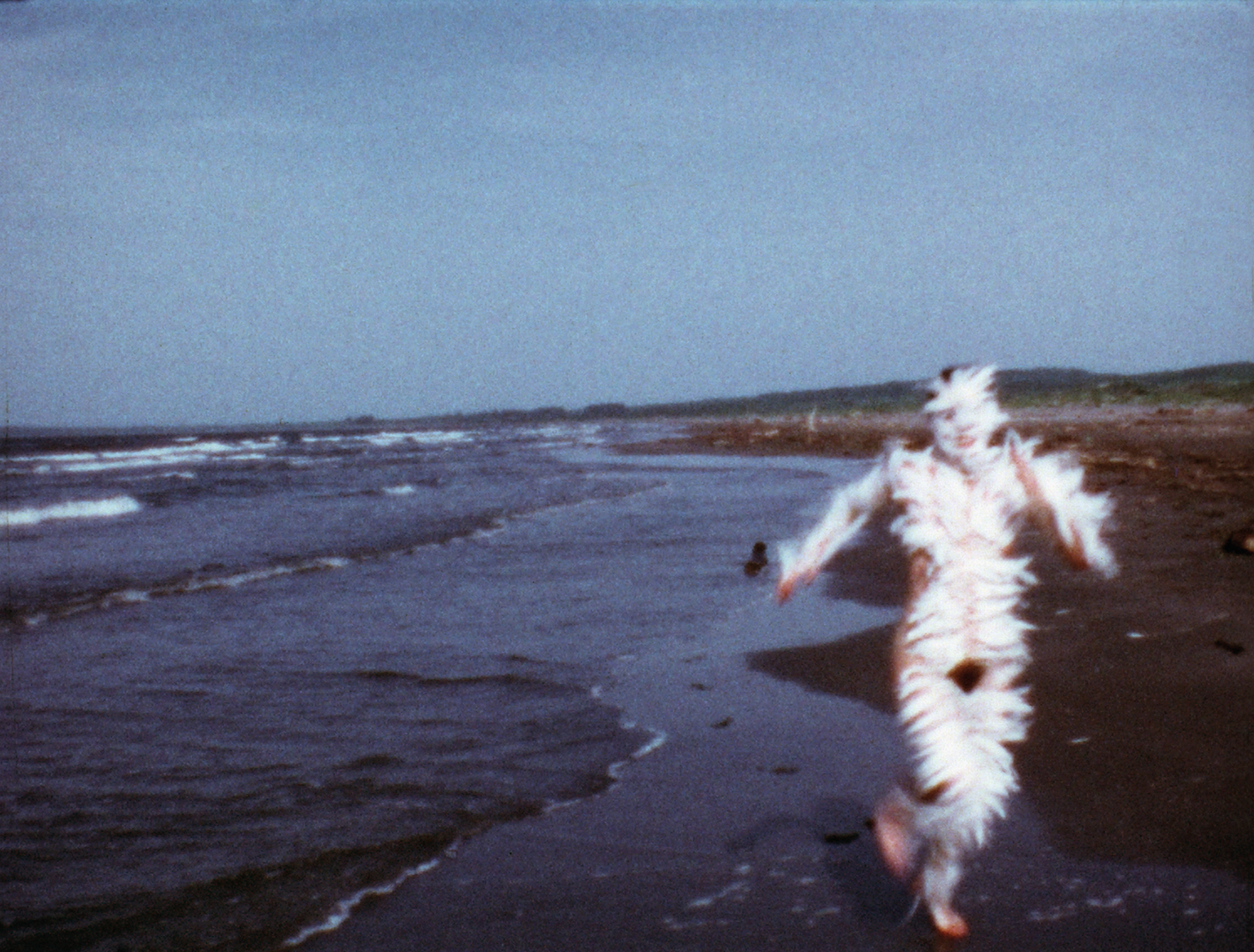
She loved the idea of transformation: at one point, we see her running across a beach, covered in chicken feathers. As I say, daft. But there’s something to these images that gets under the skin; much as Mendieta did when she donned the hide of a dead Mexican sheepdog and posed on all fours for a photo.
She was just threatening to become a major voice in contemporary art when she took a 34-storey fall from her Manhattan apartment. Her husband, the sculptor Carl Andre, was tried for murder and – controversially – acquitted. I’m not sure I saw any reference to this in the Tate retrospective, and just as well: the murky circumstances surrounding Mendieta’s death have long overshadowed her artistic output. Finally, here’s a show to do it justice.




Comments