

How do you explain to a child what ‘sharps disposal’ means and why a ‘sharps disposal unit’ for the binning of used needles is needed in a toilet next to the playground in our local park?
It’s a nice park, actually, with tennis courts and trees, and the playground’s recently been redone. There are climbing frames, nets, a wooden castle and middle-class mothers repeating: ‘Good job, Oscar!’ every time their child takes a step.
Opioids make good business sense: more addictive and the highs are short so the customer’s always calling
The toilets are all right too, clean with a surprising lack of smears, and there are little signs in Braille beside each feature: tap, soap, loo roll. Even the ‘sharps disposal’ hole is marked in Braille, for those addicts who’ve injected so much crack that they’ve gone blind yet retain a social conscience.
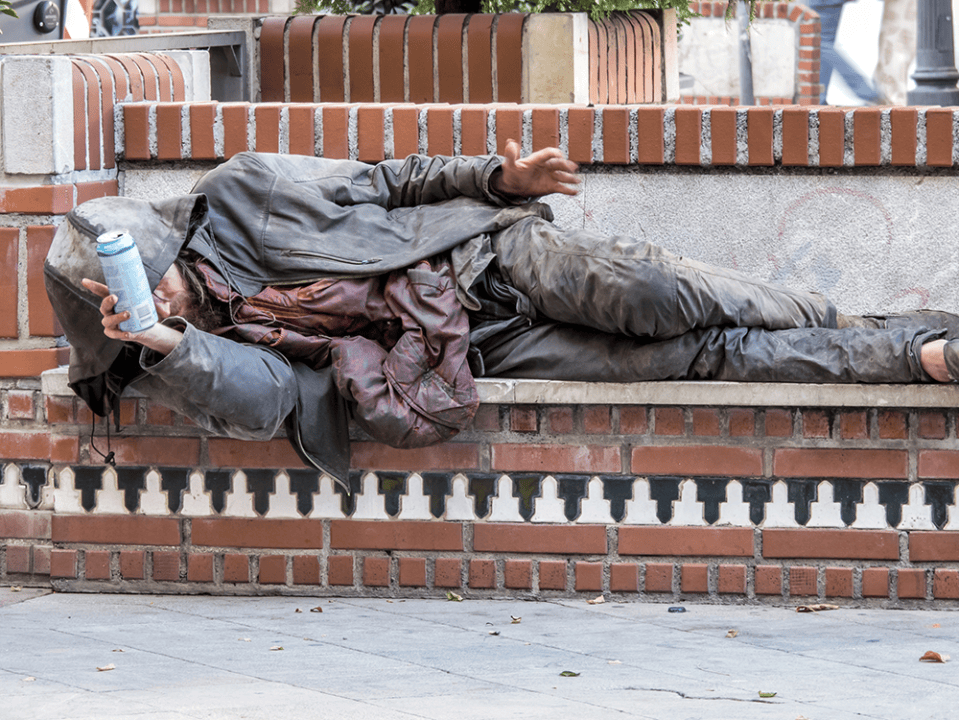
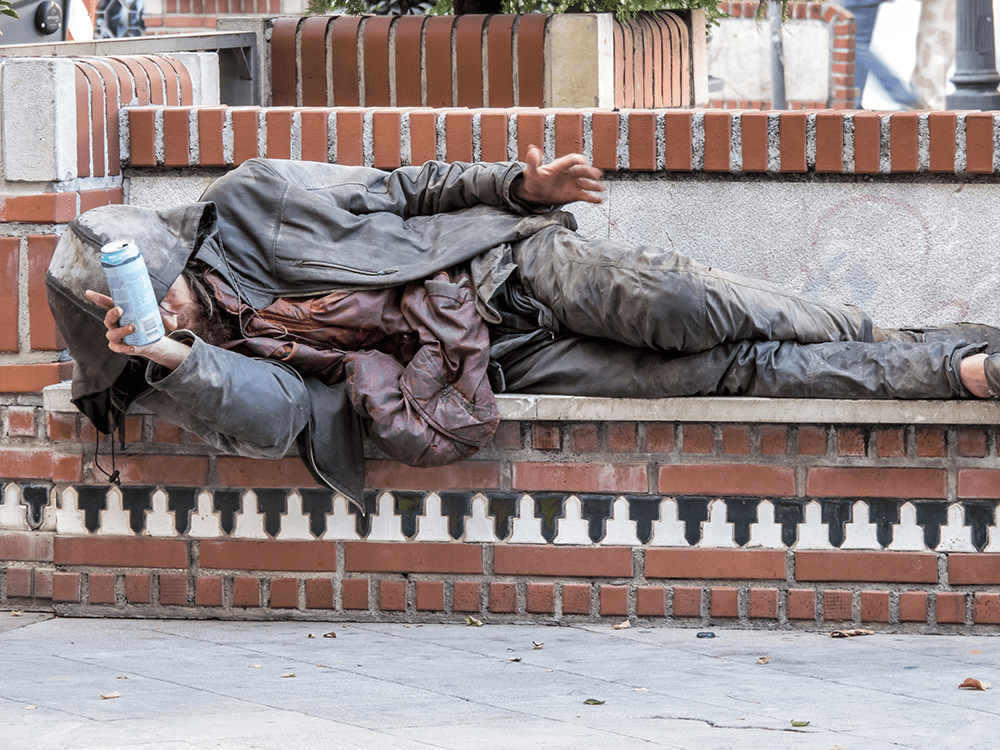
As a rule, I over-share with my son. I’ve told him about drugs and addicts because in my part of east London there are, increasingly, comatose men (not often women) lying sprawled in the streets. A fortnight ago we turned off Broadway Market and cycled straight into a pair of mottled legs sticking out from under an industrial bin. In the park just a few metres beyond, two thickset men were slumped unconscious on the swings. You have to explain, because if you don’t, what are the kids supposed to make of it? They’ll think that London is littered with dead bodies and no one ever talks about it.
Anyway, what I want to protect them from is not the existence of addicts so much as the ideology that says they must be catered for: the thinking that goes on behind the decision to put a needle-disposal unit in a playground, the idea that addicts have no agency, bear no responsibility – that the system is to blame. We all know what sort of world emerges when you follow that thinking to its natural end. We’ve ogled online at the twitching insanity on the streets of, say, Portland, Oregon or LA, where homeless addicts roam around trapped not just by the drugs but by the ease of using them. It’s not just sharps disposal – there’s free food, free tents, free needles, even free crack pipes handed out in the interests of ‘harm reduction’.
One of the most fascinating and horrifying reports coming regularly out of America is written by a former outreach worker, Kevin Dahlgren, who documents the addiction-fuelled homelessness on the streets of Portland on his Substack, Truth on the Streets. Dahlgren writes:

My concern is that in Portland, Harm Reduction has too often moved beyond reducing harm and into facilitating continued addiction. Outreach workers distribute supplies used to consume fentanyl, one of the most potent and deadly drugs on the street… Handing an addicted person the equipment needed to continue using fentanyl is not the same thing as helping that person recover.
You might assume, however, that we don’t have a fentanyl problem in the UK and that the sharps disposal unit is a one-off, not a portend. I think you’d be wrong.
On the east side of this east London park, along its more troubled edge, a long jewel-like line of blue police lights was flashing that day on and off. Two rival gangs, one Turkish, one Albanian, battle for ownership of the drug scene here, and there’s often a stabbing. Violent crime is going down, insists Mayor Sadiq Khan, but drug use and drug-related deaths are rising and the cocaine is increasingly cut with those same lethal, lab-made synthetic opioids. Earlier this week, a rehab centre in north Essex said addicts had begun to find fentanyl in their cocaine, and in Scotland even nastier opioids, nitazenes, are becoming common. If our coroners aren’t reporting opioids in post-mortem bodies, that’s only because our coroners lack the equipment to test for them.
If you’re in the drug trade, opioids make good business sense. They’re lab-made, no need to smuggle them across borders. They’re cheaper, more powerful and more addictive than plant-based drugs, and the highs are short, so the customer’s always calling. On the flipside, a single grain of fentanyl, left on a swing or on the flush button of a public toilet, say, can kill a child.
As I tried to distract my son from the sharps disposal mystery last Saturday, a group of bright and well-spoken young people started putting up trestle tables just by the toilets and engaging passers-by in conversation. These were the ‘Hackney Anarchists’, it turned out, and their mission was to persuade us never, ever to call the police. Any problem can be sorted out between free citizens, they said, no need to involve the fascist state. There were leaflets all written in the same reasonable tone: have you thought about anarchy? Could you be an anarchist without even knowing it? A cheerier, more middle-class cohort you couldn’t imagine: all the usual beanie hats and wide-leg jeans, just in black. Gen Z, just in a different colour-way.
I overheard an excellent debate about the bakery Gails: should you boycott it completely on the grounds that it once had an Israeli owner, or is it good anarchist practice to take the free bread they give away at the end of the day? ‘We have someone in Gails,’ whispered a tall young man to a girl he’d engaged in chat. ‘She’ll sort the bread for you.’
‘Are you planning any anarchist action?’ asked the girl. ‘At the moment,’ he said, ‘it’s more about propagandising the spaces, the anarchy is aspirational.’
I asked: ‘But what if there’s someone on crack in the playground with the children. Can I call the cops then?’
‘I’m glad you asked,’ said the man. ‘There’s always an alternative to calling the police.’ On page one was a flow chart to help me find the right response. I looked down the list of possible options to the very end, which read: ‘Perhaps, as a last resort you could use mediation to talk through what happened.’
‘So that’s what you’d suggest if there’s a violent addict attacking the kids? Mediation?’ ‘It’s their space too,’ said the man, and turned away to talk to someone less fascist.






Comments