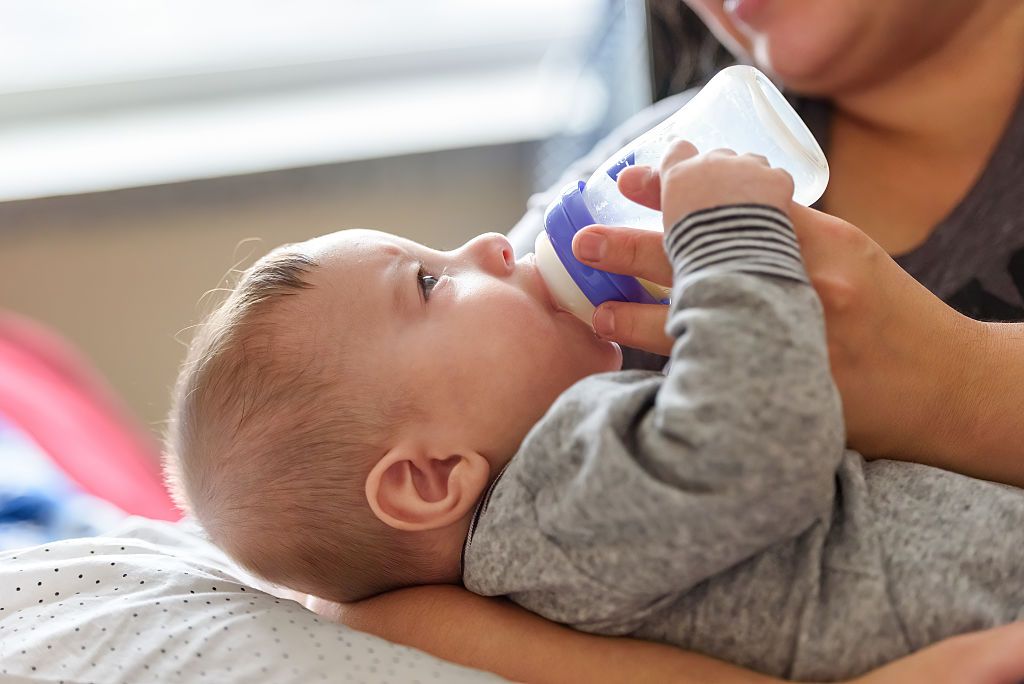
Tens of thousands of babies are being readmitted to hospital a few days after birth, every year, suffering from dehydration and jaundice – a figure that has risen over the past decade. Babies that don’t get enough milk are at risk from a build-up of levels of bilirubin, which causes jaundice and can lead to serious health complications. On top of that, dehydration can have fatal consequences. Put plainly, there are thousands of babies being starved to dangerous levels each year.
According to data from a report by the charity FEED, ‘emergency hospital admissions of babies under 14 days in England rose from 56.7 to 90.9 per 1,000 between 2013/14 and 2024/25’. What is perhaps worse than these shocking figures is the fact that much of the danger to these newborns is not only preventable but unwitting. The vast majority of babies brought into hospital with feeding complications are being exclusively breastfed. While breastfeeding might be sold by hippy propagandists and brainwashed midwives as mother nature doing her job, those of us who have been there know that it is much trickier and more technical than the uninitiated might suspect.
Far from throwing your baby on the boob and letting them get to work, the elusive nature of breastfeeding can make it hard to figure out whether your child is actually getting fed or treating your nipple like a chew toy. Unlike being able to look at a bottle and see that 150ml has disappeared into a satisfied stomach, the only quantifiable way to tell if breastmilk is transferring is by monitoring a newborn’s weight gain – or loss. In the cases of children being readmitted to hospital, many had lost a dangerous amount of their birth weight due to inadequate feeding. The more weight a baby loses, the sleepier they get, the more difficult it is for them to feed – unless caught early, this vicious cycle can prove fatal.

There are few things more cruel than ‘mum guilt’ – an often irrational feeling that you aren’t doing the right thing for your child. A new File on 4 Investigates programme on BBC Radio 4 has looked into this rising number of newborn readmissions, and much of the show was dedicated to stories from women wracked with this feeling; a terrifying sense of failure that they had been unable to do the most important thing for their child – to feed them. This guilt, pain and heartache being inflicted on women – let alone the danger to their babies – would all be easily prevented by a bit of common sense from an informed health professional. For me, it took my husband to shake some sense into me. A week and a half into feeding problems with my son, I was graced with a visit from a half-blind, Turkish male health visitor (with poor English) who stood in my sitting room wielding a knitted boob to try to explain to me what latch I should try with my son. The weirdest part of this interaction was that he refused to touch me, despite breastfeeding advice usually requiring some, err, hands-on help. After he left, my husband turned to me and said: enough. We have enjoyed bottle-feeding ever since.
Who or what is to blame for this very basic failing in the fundamentals of childcare? Certainly not the mothers – almost all of whom were following strict NHS, WHO and government guidelines to exclusively breastfeed their children, shunning formula and bottle-feeding for fear of ‘nipple confusion’ or ‘harming’ their ‘breastfeeding journey’. From the moment of conception, women are given leaflets, classes and frequent lectures on the pros of breastfeeding and the cons of formula, despite there being no credible evidence to prove that formula-fed children are at a disadvantage. Midwives, health visitors, doctors and an endless stream of campaigners and influencers compound this myth, leading to women refusing to bottle-feed their babies, even when it starts to become clear that they are not doing well.
Whatever your preference on the now intensely political debate between breast and bottle, one thing is clear – women aren’t being given the full picture when it comes to infant feeding. Not many people know that most antenatal classes will have three or more sessions on breastfeeding, but no information whatsoever on how to make a bottle, what brands are best and what amount of formula is best for what age. Fewer people still know that newborn babies are the only patient the NHS refuses to feed. So-called ‘baby friendly initiatives’, created by Unicef and the WHO and adopted by NHS hospitals, rule that maternity wards do not provide formula for newborns as a means of promoting exclusive breastfeeding. You read that right – if you give birth in the middle of the night, and your milk hasn’t come through yet, your partner is expected to head out to find a box of formula at the nearest petrol station or all-night Tesco in order to feed your child. This kind of bias in infant feeding purposefully tells women that formula-feeding is the wrong choice.
This is a scandal hiding in plain sight, and is perhaps unsurprising given the current crises in maternity services in the UK – a lot of which is based on a similar reliance on ‘nature knows best’ ideology in place of medical and technological intervention. What is even less surprising is the response from healthcare officials, who trot out the same old line about the NHS being under strain. In an interview on Radio 4, a representative from the Royal College of Midwives attempted to claim that the shocking number of sick and suffering babies was down to there being too few staff to help women breastfeed. When considering that all a jaundiced or dehydrated baby needs to improve is a good feed – almost always a few days on formula will do the trick – this is an incredibly negligent and ideological position to take at the expense of children’s health.
Those who imagine ‘mother nature’ as the kind, good and safe option forget what cruelties nature dealt to women over the centuries. Death and destruction in childbirth and infant life was commonplace until we – human beings – started meddling and intervening in order to save and preserve life against the natural odds. Caesareans, pain relief in birth, drugs, vaccines and formula milk are the tools which we have invented to keep mothers and babies alive and thriving. That the NHS has decided to turn against a number of these life-giving and lifesaving tools is a failure and a scandal that should be screamed from every maternity ward.






Comments