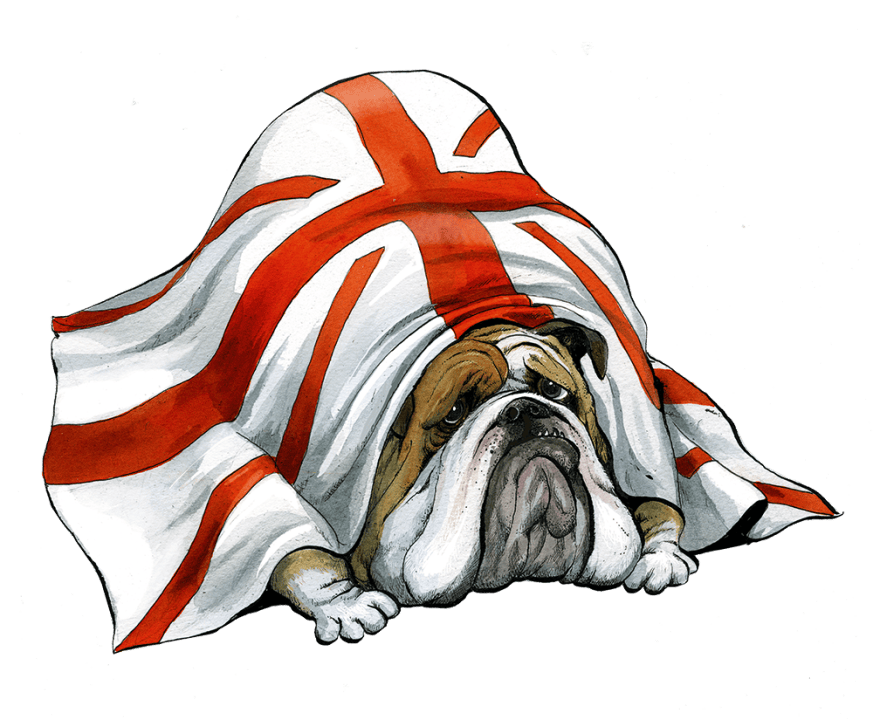


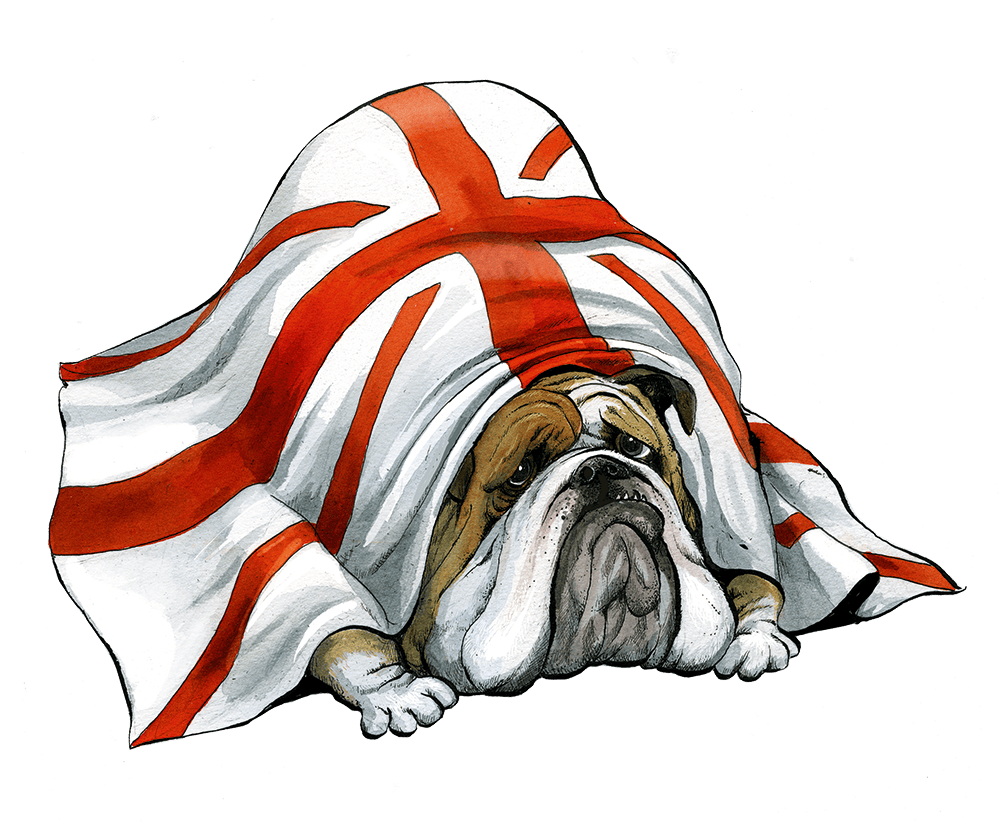
For a long time, the mainstream political parties have adhered to an omertà – a ‘never complain, never explain’ – on the subject of Englishness. The ghost of Powellism was deployed so effectively that the question of what it means to be English became the preserve of fringe figures on the right, while Westminster retreated into a fantasy world where national identity was, as once articulated by Sir Keir Starmer, defined by ‘cutting the half-time orange’. This cosy settlement is one of many things which the rise of Reform and Restore has blown apart.
Some indulge in the fiction that the English are a ‘mongrel people’, as Jacob Rees-Mogg recently put it
Be it on Question Time, on the doorstep at by-elections or even on-stage at Tory party conference, the question of what constitutes English identity has become a live political issue. Plenty in the commentariat want to maintain that this is only of interest to skull measurers and cranks and that talking about it only gives them succour. Admittedly, this position is made easier by the fact that the debate has so far been defined by an intervention by Suella Braverman, a controversial figure beyond her core support base. However, it’s a more serious fissure on the right than many ‘sensibles’ want to admit. Indeed, it may prove one of the critical things that stops the right uniting and thereby hands the next election to the left.
You can already see on the right different answers to the thorny question of national identity. Some choose to indulge in the fiction that the English – an ancient people who have lived within continuous national borders for about as long as any group can boast – are a ‘mongrel people’, as Jacob Rees-Mogg recently put it. (Ironically, this phrase has its origins in 19th-century scientific racism.) Others will believe, as I do, that Englishness can be both an ethnic and a cultural identity, but that cultural identity must actually mean something. There is something obviously nonsensical about being asked to declare that, say, Anjem Choudary is just as English as anyone else, or that Axel Rudakubana was merely a Welsh choirboy.

One problem for the right is that the left has its own, idealised national story, centring on the NHS and postwar, multicultural Britain. It might not be convincing (Windrush built Stonehenge, that sort of thing), but it is at least straightforward. It is also omnipresent in culture, education and the institutions, and the left can easily unite around the protection and propagation of it. The right cannot agree upon an answer to this, and, in some quarters, there is little curiosity about why insecurities around identity have suddenly blown up. Naturally, people were more relaxed about ethnicity when migration numbers were lower and the country was more culturally cohesive. Englishness, particularly English Christianity, infused modernity in so many ways that it was long mistaken for universal culture, which causes further confusion.
Another reason this debate might be awkward is the obvious double standards. I’ve attended Commons debates which are essentially proxies for foreign conflicts, based entirely on the ethnic make-up of constituencies. Many MPs lean heavily into their own ethnic identities when it’s politically convenient. Identity politics is not limited to left-wing parties – the Tories are certainly not averse to participating in the Balkanisation of Britain from time to time. Such behaviour is often overlooked simply because other parties do their sectarianism more brazenly, but that doesn’t mean it isn’t happening. It therefore becomes difficult for the Conservatives to speak to a sizable and growing minority of English people who feel that ethnicity is all they have left.
Yet Englishness has also not been exclusively about ethnicity for a very long time. Arguably the English have been considering what it means to have a relationship with the state not based solely on tribal or ethnic ties for longer than any other nation. We must go as far back as Alfred and Athelstan to begin to understand what a complex mix of faith, custom, geography, monarchy, language, law and – yes – ethnicity, Englishness really is. At the same time, many of these aspects have been undermined or even destroyed by political choices, social change and the realities of globalisation. Of those sinews of Englishness, ethnicity is the crudest. But with the complete denuding of our links to ancient custom, law, faith and liberty, there are many in England for whom, when it comes to identity, there is now nothing else left. And yet they are simultaneously told that they’re the only people in the world who cannot hold on to this thing.
All this is why the debate over Englishness cannot be dismissed as a mere racist fixation; and why it’s a particular problem for right-leaning parties. If it is not to threaten the electability of British conservative movements, three things need to happen. Firstly, there needs to be much greater honesty from politicians. People can see the illusion of coherence crumbling around them. There must be an acknowledgement that demographic change is not some great, unbridled good, nor is it an inevitable price of globalisation. There needs to be a greater recognition that what happened under nominally conservative administrations has made a non-racialised concept of Englishness more, not less, difficult. Some humility wouldn’t go amiss. Historically, it is incredibly difficult to assimilate millions of people from different cultures. Very few countries have managed it.
Secondly, in manifesto commitments, primary legislation and in the language they use, people on the right need to make a much stronger case for those other ancient demarcations of English identity. Vague mush about ‘British values’ and football isn’t enough. It has to be rooted in our history.
Finally, politicians and commentators must desist from the patronising lie that ‘Englishness’ is unique in never having had any relationship to ethnic identity, that we alone have always been a ‘melting pot’. It’s not borne out by history, it does not help our present reality, and if anything will drive dissatisfied voters into the arms of the genuinely extreme and racist, it is this lie.





Comments