
A few weeks ago I thought a March interest rates cut was ‘near certain’. Inflation was coming down and Bank of England rate-setters’ concerns about wage growth were being replaced by fears that higher rates were contributing to rising unemployment.
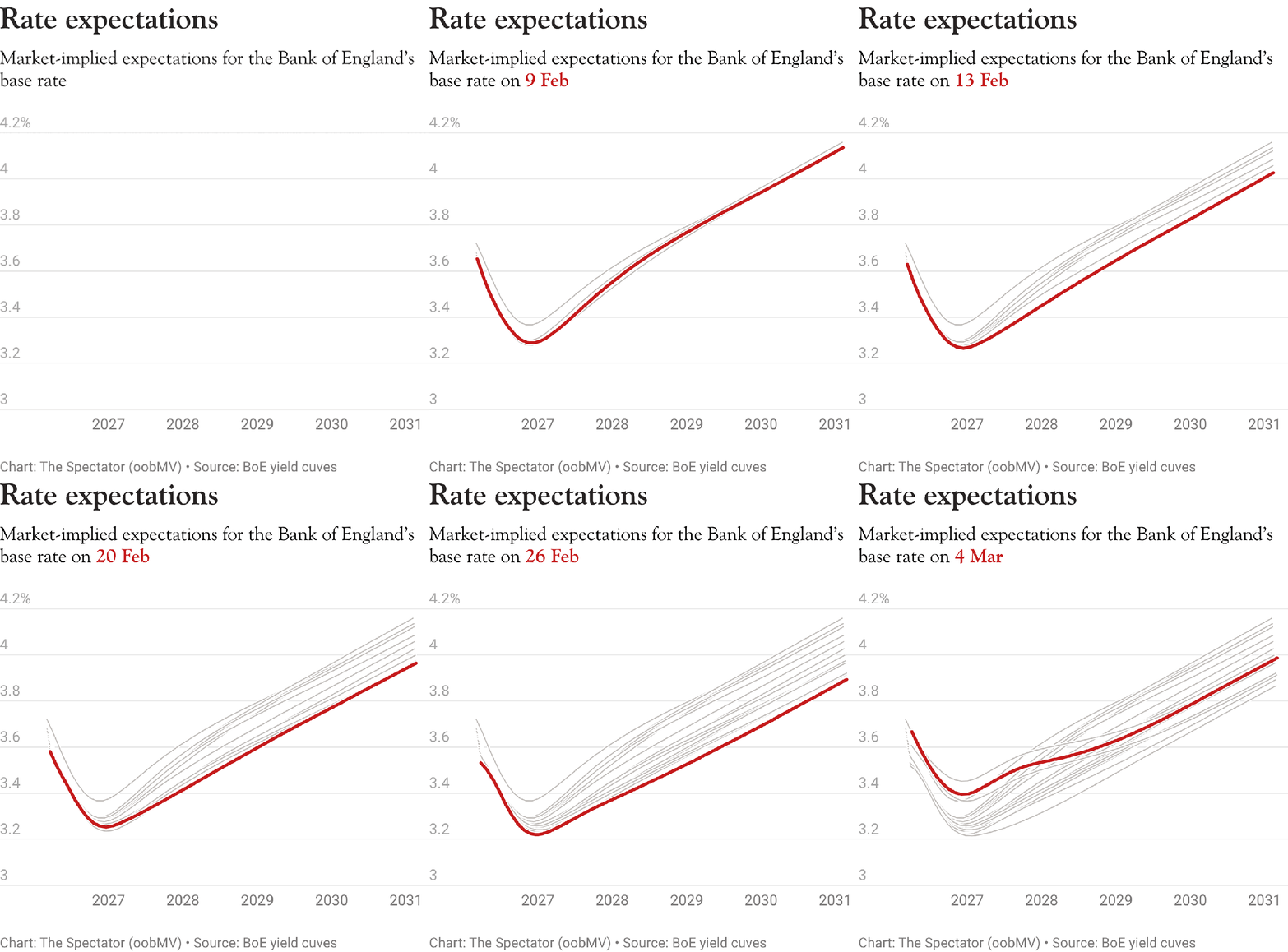
In my defence, markets agreed: they priced the chances of a cut at over 80 per cent. But since then, the world – and markets – have changed. The graph below shows something called the ‘overnight index swaps’ curve. Without getting too deep into the mechanics, it can be understood as a proxy for where traders think interest rates are heading. As you can see, the line had been steadily dropping before Donald Trump’s action in Iran sent it shooting back up – implying that a March rate cut has become much less likely.
The reason is obvious: the inflationary effects of rising energy prices. Consultancy firm Oxford Economics released an updated model of energy markets to clients yesterday and found that oil is likely to remain $15 a barrel higher than previously expected while gas prices have climbed 30 per cent. The result is global inflationary pressure of around 0.3 to 0.4 percentage points by the final quarter of this year.
But, as Oxford Economics’ client note points out, not everywhere will be hit equally. ‘The rise in inflation (and adverse effects on growth) will be greater in the Eurozone and UK,’ the economists conclude. That’s because of how exposed we are to wholesale gas prices.
In fact, Britain comes out pretty terribly in the new model: ‘In the UK, the effect of our updated energy price assumptions on CPI inflation is relatively high and (compared with our previous forecast) we will be lifting our CPI inflation forecast for Q4 this year by about 0.5 percentage points.’ In other words: a new cost of living crunch could be on the way.
It is far less likely the MPC cut rates when it next meets
Because of how the energy price cap is calculated, households won’t actually experience rising energy bills until July. However, the effect on inflation expectations could be immediate. That is something that explicitly worries members of the Bank’s Monetary Policy Committee (MPC), who believe that higher household expectations of inflation lead to stronger wage demands. It also increases the chances that the government feels it has no choice but to offer expensive price-capping support – as Liz Truss once did to the tune of hundreds of billions.
The net result of this chaos is that it is now far less likely the MPC will opt for a rate cut when it next meets on 19 March. Indeed, if gas prices don’t come down significantly over the next few months, another cut this year could be off the table entirely.
That is going to create a whole world of pain for Rachel Reeves. Having seemingly given up on ‘growth, growth, growth’, the government’s focus had shifted to tackling the cost of living. That looked like a sensible strategy when inflation was expected to fall sharply and the Chancellor could point to rate cut after rate cut. Not so any more.





Comments