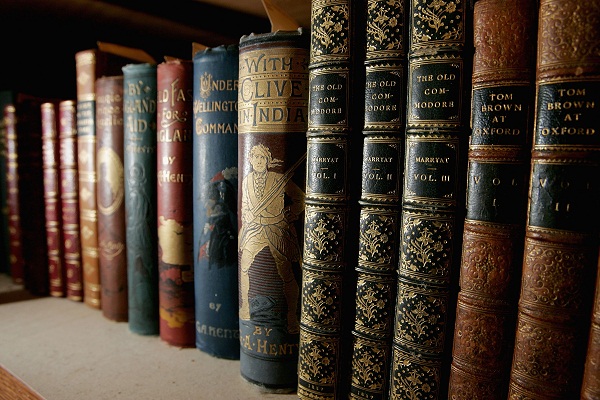
from Timber
These aphorisms are from a collection by Ben Jonson the full title of which is Timber: or Discoveries; Made Vpon Men and Matter: As they have flow’d out of his daily Readings; or had their refluxe to his peculiar Notion of the Times. They are miscellaneous and wide ranging but bound together by the figure of Jonson. The collection as a whole is a picture of his mind made up of loosely related fragments. To read them is to take a stroll through Jonson’s intelligence.‘There is a Necessity all men should love their country: He that professeth the contrary, may be delighted with his words, but his heart is there. Natures that are hardened to evil, you shall sooner break, then make straight; they are like poles that are crooked, and dry: there is no attempting them. We praise the things we hear, with much more willingness, then those we see: because we envy the present, and reverence the past; thinking ourselves instructed by the one, and overlaid by the other. Opinion is a light, vain, crude, and imperfect thing, settled in the imagination; but never arriving at the understanding, there to obtain the tincture of reason. We labour with it more than truth. There is much more holds us, then presseth us. An ill fact is one thing, an ill fortune is another: Yet both often times sway us alike, by the error of our thinking. Many men believe not themselves, what they would persuade others; and less do the things, which they would impose on others: but least of all, know what they themselves most confidently boast. Only they set the sign of the cross over their outer doors, and sacrifice to their gut, and their groin in their inner closets.’
Like Montaigne’s Essays (which were written a generation earlier) Jonson’s ‘Discoveries’ are about general themes such as patriotism or moral character. But both are written in a way which is inseparable from the ‘peculiar’ (i.e. unique) identities of their writers. Both collections have titles which describe them as pursuits hovering between deliberate activity and fortuitous accident. An ‘essay’ is an attempt. Montaigne doesn’t give answers, but tries to grapple with complex issues. He wants to do justice to all sides, normally gives up on any attempt to come to a definitive conclusion, and lets us draw what enlightenment we can from his falling short. Johnson’s aphorisms are ‘Discoveries’. Discovering is something we do, but discoveries are also things which happen to us. They require a bit of luck and what we find often isn’t what we started off looking for. Essays and Discoveries both shy away from claims to be comprehensive, definitive, or systematic.
Three hundred years later Virginia Woolf wrote Mrs Dalloway and tried to capture the tendency of one person’s conscious thought to jump between moments in a way which can seem capriciously playful. In fact this dance is governed by a logic determined by the thinker’s history, education, and emotions. Jonson’s aphorisms sketch a similar dance with himself as the subject. But whilst Woolf traces the uncontrollable currents which stir beneath the surfaces of people Jonson opens himself up to show a piece of literary clockwork. The mind Jonson depicts is shaped not by desire, fear, and memory, but by learning.
For whilst the structure of Timber as a whole is baggy and meandering, each individual aphorism is too polished to appear spontaneous. For instance the first and second aphorisms in this selection break into two balance halves. In the second one, each of these halves again splits into two parts. Wicked natures are first described (they are ‘hardened’ or ‘like poles that are crooked, and dry’) followed by advice to the reader (‘you shall sooner breake, then make [them]straight’ because ‘there is no attempting them’).
What’s more, Jonson’s collection falls within an established tradition of collections of proverbial wisdom. They would have reminded early readers of sections of the Bible like Proverbs and of ancient classics such as the Distichs of Cato (which every schoolboy knew). Traditional wisdom literature puts forward eternal moral truths. The identity of the author is, in a sense, irrelevant. But Jonson ties his reflections closely to himself. Their validity depends on our willingness to accept them either because we test them against our own experience or because we are prepared to acknowledge Jonson’s right to pronounce on such matters.
Jonson claims such a right by modelling himself so closely on his celebrated literary predecessors. The mind described by Timber is founded upon much reading and good writing. The assumption underpinning Timber is that wisdom and learning are inseparable. This is how Jonson tries to resolve the tension inherent in generalised observations about universal human nature given from a unique individual perspective.
The learning Jonson had was an incredibly detailed knowledge of books written in Athens and Rome about two-thousand years ago. Whether you think Timber works as Jonson wanted it to will depend on whether you think that this type of learning really lets you understand a single unchanging truth about all people everywhere.


Comments