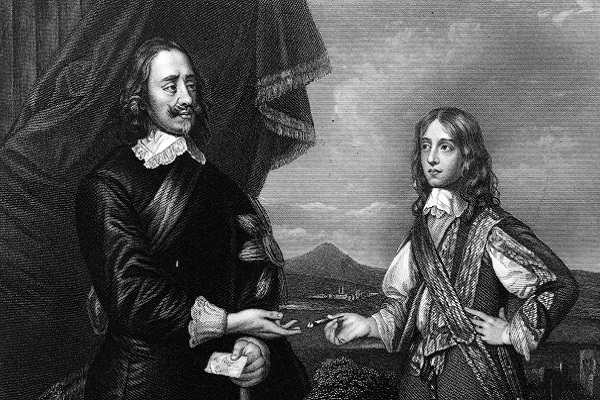
Stanzas from ‘The Retirement’
Many of the familiar themes of Romantic poetry jump out from these stanzas. Solitude is celebrated; ‘Lord! would men let me alone’. The speaker rejects public life (‘Farewell thou busy world’) which he condemns as inauthentic, a place of ‘conspicuous theatres, where nought but vice and vanity do reign’. He, on the other hand, is natural and unaffected. His poetry is peppered with heartfelt outbursts of ‘Good God!’ and ‘Lord!’. The frequent exclamation marks show us how strong (and therefore honest) his emotions are. The rhyme scheme and metre are irregular because the poem is a spontaneous product of his feeling, not something made according to rules.Farewell thou busy world, and may We never meet again: Here I can eat, and sleep, and pray, And do more good in one short day, Than he who his whole age out-wears Upon thy most conspicuous theatres, Where nought but vice and vanity do reign. Good God! how sweet are all things here! How beautiful the fields appear! How cleanly do we feed and lie! Lord! what good hours do we keep! How quietly we sleep! What peace! what unanimity! How innocent from the lewd fashion, Is all our business, all our conversation! Oh my beloved rocks! that rise To awe the earth and brave the skies. From some aspiring mountain’s crown How dearly do I love, Giddy with pleasure, to look down And from the vales to view the noble heights above! Lord! would men let me alone. What an over-happy one Should I think myself to be, Might I in this desert place, Which most men by their voice disgrace, Live but undisturbed and free! Here in this despised recess Would I maugre winter’s cold, And the summer’s worst excess, Try to live out to sixty full years old, And all the while Without an envious eye On any thriving under Fortune’s smile, Contented live, and then contented die.
The speaker is also a lover of natural beauty. Living in the countryside, he recognises ‘how sweet are all things here! How beautiful the fields appear!’. Furthermore, he draws solace from the wilderness which others find horrifying (‘this desert place, which most men by their voice disgrace’). It arouses an almost erotic intensity of feeling within him. They are his ‘beloved rocks’ and it makes him ‘giddy with pleasure, to look down and from the vales to view the noble heights above’. Everything we expect from a Romantic poet is here.
Except that this poem was published in 1676. This is well over a hundred years before Romantic poetry is meant to start in English (the publication of Wordsworth and Coleridge’s Lyrical Ballads in 1798 is its official birthday). So what’s going on?
Charles Cotton’s poem is a response to the political revolutions and civil wars of the mid-17th century. Cotton uses language we now associate with the Romantics as he tries to describe one aspect of those upheavals. Romantics like Wordsworth found poems about solitary nature-lovers an exciting way to write about the relationships between psychology, the natural world, and human society. Cotton used the same language to make an argument about royalists who were forced to into rural retirement after the execution of Charles I.
‘The Retirement’ was published in a new edition of Izaak Walton’s The Compleat Angler, a fishing manual for which Cotton had written a second part. Walton’s book is a practical guide to fishing. But its subtitle is ‘The Contemplative Man’s Recreation’. That describes both the book itself and the sport of angling as Walton understood it. He was a committed royalist and published The Compleat Angler in 1653. That was four years after Charles I lost his head. At the time, Walton was probably living an itinerant life alongside many of his well-to-do royalist friends who had retired from public life to live in the country. These men had been literally born to rule. They were used to wielding power in a divinely ordained system of government. How could they understand their new lives? Walton invented a myth for them — rural life (emblemised by the sport of angling) was a life of virtuous meditation safely removed from the iniquities of the city where evil men flourished.
Walton was drawing on an ancient literary tradition. The Romans in particular had been keen on poems which celebrated the goodness of life in the country and compared it to the wickedness of the city. But their poems were written and read by urban sophisticates who had no intention of relinquishing their power and wealth (a bit like Marie Antoinette playing at being a shepherdess). Walton’s work was different because it was written for people who had been forced to give up both. He was reinventing this idea for a new age.
Cotton’s poem wasn’t added to Walton’s book until after the Restoration of Charles II, but it looks back on that experience and describes it in the same way. Solitude is virtue. A retired life is a good life. Even if you’ve been forced to live in the back of beyond, you can love it in a way no-one else can (especially your enemies). That makes you different from them. And better.



Comments