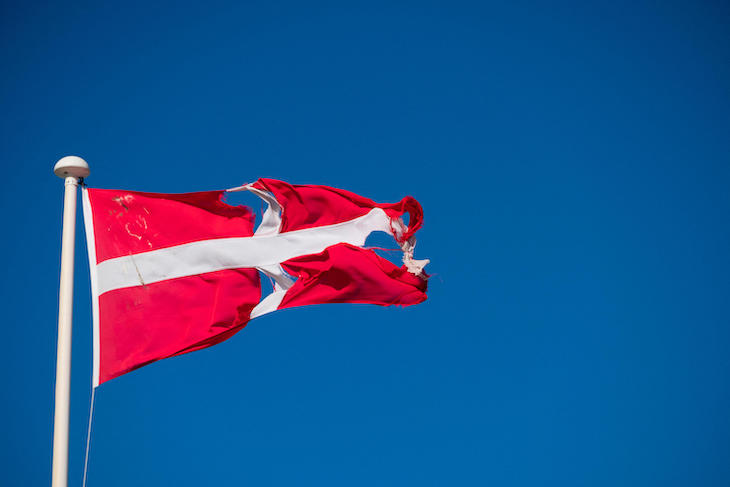
Denmark is, by almost any measure, an extraordinary success. A nation of six million that has produced Novo Nordisk, Maersk, Vestas and Lego. Its GDP per capita is comfortably ahead of Sweden and Finland. Greater Copenhagen (including Swedish Lund and Malmö) is ranked among Europe’s top innovation clusters. Danish film culture – Bier, Vinterberg, the Borgen phenomenon – has convinced the world that Denmark has solved democracy, one subtitled thriller at a time. Copenhagen airport is the undisputed transport hub of the Nordic region. Denmark remains among the very happiest societies on earth, according to the latest World Happiness Report.
Danish public debate has quietly narrowed to a short menu of centrist hobbyhorses
And yet something is quietly wrong – and this week’s election made it impossible to ignore.
The Social Democrats recorded their worst result since 1903, scraping just under 22 percent. The three centrist coalition parties that have governed Denmark for the past three-and-a-half years lost over ten percentage points and nineteen seats between them in a parliament of only 179 seats. Meanwhile, Dansk Folkeparti (DF) surged from 2.6 to 9.1 percent and Socialistisk Folkeparti (SF) broke into double figures at 11.3 percent. But the most likely outcome remains yet another centrist coalition; the system absorbing the shock, the centrist show carrying on, despite an ever weaker mandate from the people. This is Denmark’s velvet trap.
Public discourse, as across the Nordic countries, operates within a consensus so tight it is almost tangible. Imagine American politics, and even more so its media commentariat, spanning only the distance from Hillary Clinton to Jeb Bush. A range that might feel substantial from the inside but represents, viewed from any distance, a remarkably narrow band of opinion. Anyone outside that band gets quietly designated a “yderfløjsparti” – a wing party – with the clear implication of permanent unsuitability for power. In Denmark, that currently means Socialistisk Folkeparti (SF), a left-wing party with a strong welfare-state emphasis, and the anti-immigration but welfare-friendly Dansk Folkeparti (DF). Both are long-established parliamentary parties with substantial voter bases, yet they are treated by the movers and shakers as the cause of dysfunction, rather than as symptoms of a political class that has stopped listening. DF has campaigned on kitchen-table concerns like fuel and food prices. SF has surged in the very suburbs that the Social Democrats once considered their birthright – winning voters via a platform far closer to traditional Social Democracy than what the current Social Democrat leadership has offered. This reveals quite a bit about the shapeshifting of consensus perception.

Within polite society the narcissism of small differences flourishes: shades of center-left and center-right argue vigorously about minor tone and detail while the big structural questions go entirely unasked.
This explains why Danish public debate has quietly narrowed to a short menu of centrist hobbyhorses: EU enthusiasm, environmentalism as a moral alibi for yet more power centralization and the perpetual case for also yet more supranational “coordination.” Imagine a government that always looks, feels and sounds as if Elizabeth Warren were continuously in charge – possibly wearing a slightly different hat color after each election. Brussels has become the default source of political wisdom, grassroots credentials are performed rather than practiced and voters who dissent from the top-down mindset are dismissed as uneducated throwbacks in need of yet more official “information.”
What goes undiscussed is perhaps the most revealing thing of all. The EU’s steady cartelization of European economies – the quiet consolidation of corporate and bureaucratic interests at the expense of competition, innovation and democratic accountability – simply does not exist as a topic. Never mind that this arrangement has left Germany, once the continent’s economic engine, its sick man. Never mind that the push for cheap labor and cheap Russian gas have created migration havoc and even contributed to war. Never mind that growth, innovation and democratic vitality have been hollowed out across the EU area. The correct procedure in polite Danish society, endlessly repeated, is to identify the symptoms, blame insufficient, yep, coordination and prescribe yet more, yep again, power centralization. It is the political equivalent of a doctor whose answer to every ailment is a yet larger dose of a medicine that does more harm than good – delivered, naturally, from Brussels.
There is also a deep irony that Danish public debate refuses to confront. Looking to an unelected Commission in a foreign city for political guidance is about as un-Danish as it gets. Denmark’s historic genius – its ultimate competitive advantage since the industrial revolution – has always rested on an unusually short distance between those who govern and those who are governed. A minister buying groceries in Copenhagen, a business leader whose children attend local schools, a journalist who grew up in Ringkøbing: these people have historically been unable to entirely escape the society they serve. That proximity kept Danish politics honest: more pragmatic, more grounded, and less captive to its own progressive rhetoric than many outsiders assume.
That inheritance is now under quiet pressure. The metropolitan bubble is real even in Denmark, and Brussels provides a further layer of insulation. When your political parameters are set externally, and everyone you encounter already shares the Davos worldview, it becomes genuinely easy to mistake your postcode – or your Commission contact – for the country.
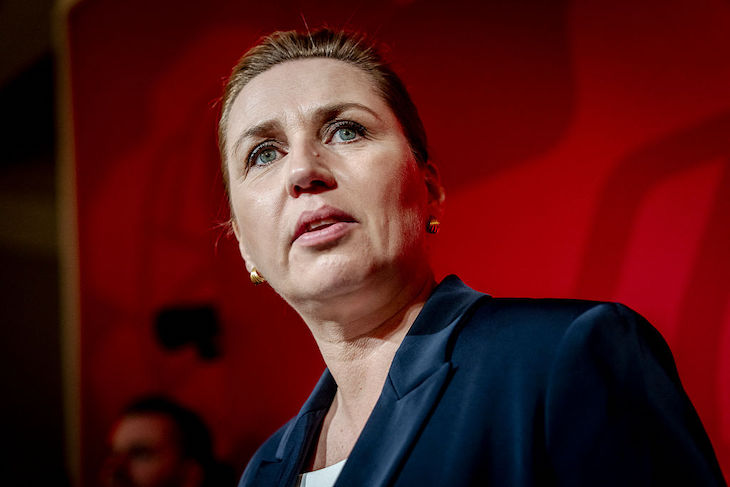
The Danish PM Mette Frederiksen’s considerable skill, during her rise to the top, has been her ability to absorb pressure from the flanks while keeping the essential consensus intact. Just like Emmanuel Macron, Keir Starmer and many other European leaders cut from the same cloth. It has worked until, as this week’s election results suggest, it rather suddenly did not.
It is not by accident that Hans Christian Andersen’s ugly duckling is one of Denmark’s greatest gifts to world literature
So now the Danish parliament is more fragmented than ever and not despite, but because, of a public discourse that has made serious dissent all but professionally and socially toxic.
It is not by accident that Hans Christian Andersen’s ugly duckling is one of Denmark’s greatest gifts to world literature. The story captures something until very recently genuinely true about Danish society: that the outsider, the awkward misfit who refuses the prevailing mold, might eventually be vindicated. That dissent has value. Received wisdom, as today’s political situation illustrates across the Western world for those willing to see, can contain serious flaws. The Danes once understood this at a cellular level. It was baked into the culture of Jylland’s self-reliant farmers, the cooperative movement and the folkehøjskoler. The latter meaning the folk high schools conceived by the visionary clergyman N.F.S. Grundtvig in the nineteenth century precisely to ensure that independent thinking remained a democratic habit, not an elite privilege. For good reason, Danes took pride in the belief that the ugly duckling – just about anyone, from just about anywhere – could become a swan.
In Denmark today that is far harder for anyone unwilling to sign up to the prevailing neopaternalist consensus. Then again, change in Nordic societies tends to follow a distinctive pattern. For long periods the political, commercial and social landscape tolerates only one dominant view. Then the dam breaks, typically at record speed, with everyone suddenly converting to a new position while blurrily insisting they were never strong advocates of the position abandoned.
Denmark has form here. It chose a more restrictive approach to migration than its Nordic neighbors, not because its voters were less enlightened but because, with a substantially higher population density, the side-effects of rapid change were more visible at an earlier stage. It can happen again.
The undercurrents are already detectable. The AI revolution is reshaping society in ways that reward bottom-up flexibility over top-down sclerosis – precisely what Denmark used to embody but pretty much the opposite of what the current political set up offers. As Danish business chafes against regulatory constraints it had no hand in designing – and as voters in suburb after suburb register their dissatisfaction with a political class that won’t engage on issues fundamental to Danish interests – the consensus is being tested in ways it has not been for generations.
So yes, the current parliamentary fragmentation points to a few more years of centrist nothingness; Denmark joins France and the UK in the unhappy business of managed decline. But Danes have never permanently abandoned their instinct that the outsider deserves a hearing, that received wisdom deserves challenge and that the misfit who refuses the prevailing mold might eventually be proved right. That instinct built modern Denmark. Given some time, it may yet reassert itself.




Comments