
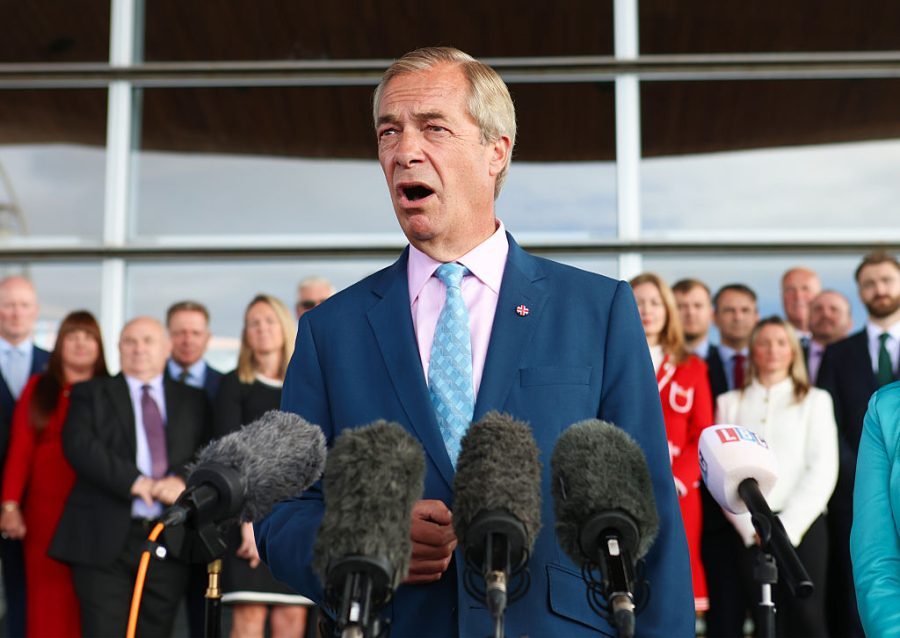
Small boat arrivals are down a bit. Meanwhile, Reform UK has had a difficult year over its donations and seen its vote eaten into by Restore Britain. Compound this with the arrival of a prime minister more energetic and popular than the last one and it has become possible to imagine Labour winning the next election – and with a healthy majority. On the other hand, it is possible to see the cavalry arriving over the hill to bolster Nigel Farage’s troops – in the shape of the slavery reparations movement.
The potential of slavery reparations to throw a hand grenade into UK politics should not be under-estimated. For the moment, the demands for compensation may seem a fringe issue, a bizarre joke even – especially the suggestion by a UN judge that Britain owed Caribbean nations £18 trillion and that this was an ‘under-estimate’ (for context, this is about six times Britain’s annual GDP).
The trouble is, though, for Caribbean and African nations it is very much not a joke. Many seem to have decided that the way to a brighter future is not so much development – such as that which has made some former western colonies such as Singapore wealthy – but the extraction of compensation cash from their former colonial masters. They are behaving like layabouts suddenly motivated by a daytime TV advert for an ambulance-chasing legal firm. Yet the UN appears to be on their side: in March, the UN General Assembly passed a non-binding motion by 124 to 3 for western countries to begin a dialogue to pay reparations. Since then, the campaign has intensified.
The drive for slavery reparations is not logical; it is pure emotion, bluster and outright greed
The case for reparations is quite obviously nonsense. You can’t compensate people who died two centuries ago. Many of their descendants have ancestors on both sides: slaves and slave-owners. Caribbean and African countries are demanding transfers of money on a nation-to-nation basis, which would have the perverse outcome of black UK taxpayers shelling out to fund public services used by wealthy white tax exiles living in the Caribbean. Legally, Caribbean governments are the successor organisations of the colonial authorities which owned and ran the plantations: surely if there are any liabilities to be paid it is them who should be paying the money, not receiving it. Moreover, haven’t western nations effectively paid billions of pounds of compensation over the years in the form of international aid to developing countries?
I doubt, however, whether any of these arguments are going to wash with the likes of the UN International Court of Justice, which seems a blatantly political outfit. In what real court would one of the judges actually lead the campaign in an issue which is likely to come up before him? The drive for slavery reparations is not logical; it is pure emotion, bluster and outright greed.
This is what makes it potentially deadly for the Labour party, several of whose MPs are very much active within it. At the weekend, Bell Ribeiro-Addy, MP for Clapham and Brixton Hill and chair of the all-party parliamentary group for Afrikan reparations, called upon Britain’s 2.4 million black population to join her fight. Why they would want to do this when it is they who would be paying, through their taxes, is not easy to discern. Clive Lewis, too, is an officer in the all parliamentary group. Nadia Whittome, Dawn Butler and Diane Abbot have also supported the cause, as did David Lammy while in opposition.
Is Labour’s leadership strong enough to reject the reparations cause in the face of left-wing activism? Andy Burnham, after all, has just said that he will support Keir Starmer’s decision to cede sovereignty of the Chagos Islands to Mauritius, a country which never possessed them in the first place. That was also on the back of a non-binding judgement from the UN court.
No one should be surprised that developing countries have taken that as a sign that Labour-run Britain could prove a pushover on the reparations cause. The government’s official position is still that Britain will not pay reparations, but pointedly it abstained rather than voted against the UN General Assembly motion in March.
If Burnham does not come out quickly and solidly against reparations, I think he will hand the initiative to the opposition parties who are prepared to condemn it. The reparations demands are only going to get louder, and somehow I don’t think that hard-pressed UK taxpayers, most of whose ancestors had nothing to do with the slave trade, are going to take kindly to the idea of paying yet more tax to hand over to ‘victims’ living several thousand miles away. What about my great-great-grandparents, who worked 14 hour days in the cotton mills, they might not unreasonably ask?
I sense that this might just be the issue which reboots support for Reform UK. If I were Nigel Farage, I would want those demands for trillions of pounds in compensation to keep on coming (as they will). I would make an absolute pledge never to pay a penny and to withdraw from the UN if that’s what it took. I would promise to lay a parliamentary Bill to claw back money personally from any MP who voted for reparations. Labour should be very careful to head off reparations as a political issue while it still – just – has the chance.





Comments