For any serious lover of cinema, the 1970s were both a golden decade and the beginning of the end of film as an art form. After the permissiveness and countercultural impact of the 1960s, a whole generation of new filmmakers emerged, many of whom remain household names. These men – and they were almost exclusively men – produced work that shook up expected norms and took the medium in new, thrilling directions. It is impossible to list all the pictures and their directors who made this difference, but there are good reasons why they remain celebrated today. And then Star Wars came along in 1977 and changed the trajectory of the industry forever.
Paul Fischer is not the first writer to examine this extraordinary decade, and indeed he follows in the footsteps of Peter Biskind, whose revelatory 1998 book Easy Riders, Raging Bulls was a sweeping examination of the films and filmmakers that changed Hollywood forever. Biskind was as concerned with the flops and failures as he was with the successes of the era, and many of those featured in the book, including the late Robert Altman and the present Francis Ford Coppola, denounced Biskind for what they perceived as his relentless negativity and factual mistakes. Even the great Steven Spielberg remarked “every single word about me in that book is either erroneous or a lie.”
Fischer made the sensible decision to focus on the directors responsible for the three biggest hits of the decade
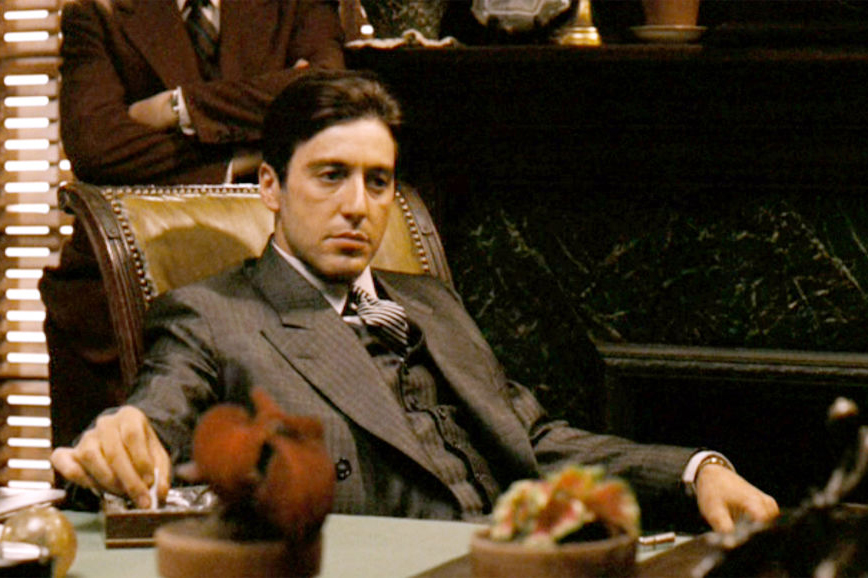
There was clearly the opportunity, then, for another writer to set the record straight, and Fischer has made the sensible, and probably inevitable, decision to focus largely on the directors responsible for the three biggest hits of the decade, in the forms of Coppola, Steven Spielberg and George Lucas. The filmmakers were behind, respectively, The Godfather, Jaws and Star Wars, all of which overcame uncertain origins and troubled productions to become enormous box office and critical hits; their success would redefine Hollywood in the process.
The most surprising thing to remember is the way in which the darkness and moral complexity of The Godfather was so entirely superseded by the more straightforward good-and-evil, family-friendly dynamic of Star Wars, which brought about the template that countless big blockbusters have since followed – including a further eight Star Wars films and myriad television series.
The Last Kings of Hollywood is at its most persuasive and interesting when Fischer does not attempt to retread stories of these films’ productions that even the most casual fan will be familiar with – if you didn’t know that Jaws was bedeviled by a faulty mechanical shark, or that The Godfather was feared to be a flop right up until the moment of release, you’ve been living under a rock – and instead concentrates on the individual characters involved. (Martin Scorsese, who did not have any significant commercial hits during the 1970s, is an antic, anxious presence on the sidelines.)
Coppola is a larger-than-life bon vivant, committed to wine, women and the pursuit of excellence in cinema, as long as he can glorify himself and live la dolce vita in the process. Lucas is a subdued, vaguely somber presence, initially in the shadow of the more charismatic Coppola and drawn to experimental filmmaking rather than blockbusters. And Spielberg is Spielberg, the wunderkind with innate commercial instincts that saw him become the most famous director in the world in the mid-1970s – and retain that position for decades.
Fischer has some interesting observations on the dynamic between the three men, although nothing is as pithily expressed as Eleanor Coppola’s remark, cited as the book’s epigraph, that, “Between them, their films have grossed over a billion dollars. Steve calls them the billion boys. They are talking about the depression they felt after a big success.” And even committed scholars – or fans – of the filmmakers may be amused to be reminded, for instance, that Apocalypse Now was a Lucas project that ended up being assumed by Coppola after the two men fell out (about money, naturally) or that one of Spielberg’s first directorial efforts, the made-for-TV short Eyes, contained a late-era Joan Crawford performance.
At times, one wishes for more characters. Coppola aside, the swashbuckling, larger-than-life figures who inhabited Hollywood during this period, the Brian de Palmas and John Miliuses, did not enjoy the same levels of approbation as the hitmakers profiled here, and so are relegated to entertaining walk-on appearances. The charismatic, satanic William Friedkin, who scored with The French Connection and The Exorcist before badly bombing with Sorcerer, barely appears at all, although a certain sort of cineaste might sympathize with his comment, when shown the original screenplay treatment of The Star Wars, as it was then: “What is this shit?”
“This shit” would become the highest-grossing picture in Hollywood history, and remain testament to audiences’ desires to be swept away by spectacle and adventure alike: a golden moment that has been sought, and imitated, countless times since, but never quite recaptured. While Fischer’s breathless, faux-intimate style grates on occasion, he nonetheless should be lauded for telling an interesting story in a highly readable fashion.
It is no great surprise to reflect that, of his “last kings,” Lucas hasn’t made a film in more than two decades (and shows no signs of returning to the art form that he did more than anyone to popularize, either); Coppola lost his shirt on his recent vanity project Megalopolis. Only Spielberg, the affable Boy Wonder, has held on to his place at the top of the Hollywood tree, parlaying his commercial instincts and artistic nous alike into a series of blockbusters that have thrilled and moved audiences for decades. His story here ends with his taking on Schindler’s List, his move into cinematic maturity: a stirring conclusion to a fascinating, if oddly depressing, saga.


Comments