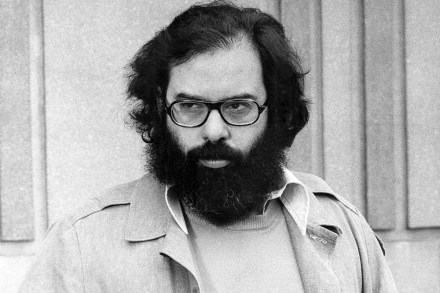
Francis ford coppola

Coppola, Lucas and Spielberg’s outsized impact on 1970s cinema

For any serious lover of cinema, the 1970s were both a golden decade and the beginning of the end of film as an art form. After the permissiveness and countercultural impact of the 1960s, a whole generation of new filmmakers emerged, many of whom remain household names. These men – and they were almost exclusively men – produced work that shook up expected norms and took the medium in new, thrilling directions. It is impossible to list all the pictures and their directors who made this difference, but there are good reasons why they remain celebrated today. And then Star Wars came along in 1977 and changed the trajectory of the industry forever.

coppola

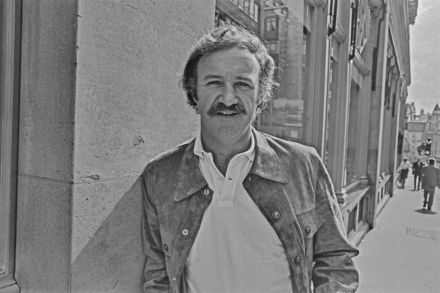
Gene Hackman was never, ever bad, whatever the role

Somehow the strange circumstances of the death of Gene Hackman, found dead in his New Mexico home with his wife Betsy and their dog, make the end of one of America’s finest actors all the more poignant. The full details will presumably become clear soon — but whatever happened, it is more important to remember Hackman’s legendary on-screen career than to waste time fixating on his final moments. He was an actor without sentiment, but with enormous amounts of fierce compassion — even when playing villains — and it is those qualities that should be celebrated. Hackman began his life in the Marine Corps before he became an actor, and many of his best performances have the tough, unbending quality that he developed in the military.

Megalopolis and the strange art of negative marketing

After a fairly barren summer movies-wise (I’m just waiting for the Alien: Romulus backlash to begin, and will be only too pleased to join in with it), there are more promising movies coming our way this fall. Yet the one that’s attracted more attention and interest than possibly anything else this year, maybe even this decade, is the grand return of Francis Ford Coppola with Megalopolis, a self-funded, wildly ambitious folie de grandeur that premiered at this year’s Cannes Film Festival to predictably mixed reactions and an overall consensus that, alas, the one-time visionary genius of theater is no longer a force to be reckoned with, however loopily wild his latest (and, one reluctantly assumes, last) movie is.

megalopolis

This month in culture: September 2024

Slow Horses, season 4 Apple TV+, September 4 Apple TV+’s adaptations of Mick Herron’s excellent espionage novels, led by Gary Oldman on magnificent form as the belching, flatulent, brilliant Jackson Lamb, have quietly become the streaming service’s MVP, and their strong showing in this year’s Emmy nominations has reinforced the company’s continued faith in the unmissable series. This fourth installment, based on Herron’s novel Spook Street, guest stars the ever-excellent Hugo Weaving as a mysterious interloper with a close personal connection to Jack Lowden’s bratty Bond-in-training River Cartwright. Expect the usual mixture of big laughs, shocking twists and high-octane action scenes.

Culture

Cannes 2024: the highs and lows (so far)

Although this year’s Cannes Film Festival hasn’t concluded yet (it runs until this Saturday), there is a general sense that the true talking-point pictures have been frontloaded into the opening week, both in competition and out of it. Without doubt, the one that has attracted the most attention is Francis Ford Coppola’s sci-fi epic Megalopolis, which premiered last Thursday to a mixture of outright scorn and bemused but respectful appreciation, all of which suggests that, although it still lacks a US distributor, it will keep making waves upon its release later this year — although the chances of Coppola regaining anything like his $120 million investment are slim, to say the least.

demi moore cannes

Francis Ford Coppola and Megalopolis: genius or flop?

This Friday sees the Cannes premiere of a film that, by rights, really ought not to exist. As the likes of its stars Adam Driver, Giancarlo Esposito, Dustin Hoffman and Shia LaBeouf all assemble on the Croisette, it will be its now eighty-five-year-old director, screenwriter and producer, Francis Ford Coppola, who will be the most closely watched figure of the night, if not the entire festival. Megalopolis, the movie that they are all gathering to promote, has been Coppola’s great passion project all through his career. He first came up with the idea in 1977, began to develop it in 1983 and, finally, sold part of his wine empire a few years ago to raise the film’s $120 million budget.

francis ford coppola megalopolis

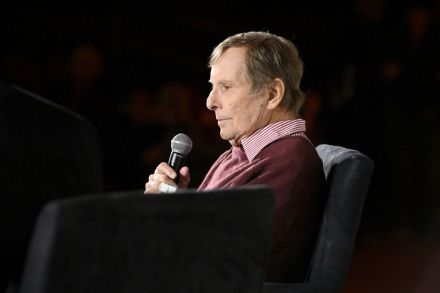
Why didn’t William Friedkin get much credit when he was alive?

Ask your average man on the street — or at least your average clued-up man with a decent knowledge of modern Hollywood — about the films of William Friedkin, who has died aged eighty-seven, and he will confidently sing the praises of Friedkin’s legendary pictures, The French Connection and The Exorcist. Then if he is pressed on the other eighteen films Friedkin directed, ranging from the excellent and underrated to the dismal, and a look of panic is likely to come over his face before he excuses himself and rushes into a nearby subway (or, if he is in New York, flees to an overground railway in homage to the legendary car chase scene in The French Connection). It is your choice whether you do a Popeye Doyle and head off in frantic pursuit, or leave him be.

william friedkin

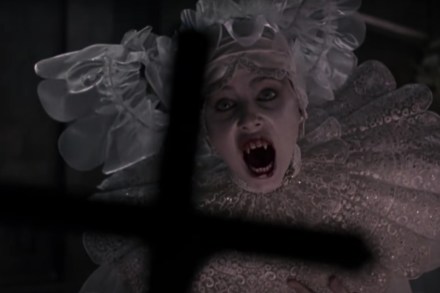
Bram Stoker’s Dracula was a grand and glorious folly

Thirty years after it was first released in America, Francis Ford Coppola’s Bram Stoker’s Dracula is returning to theaters, appropriately enough for a Halloween re-release. (It also serves as a soft preview for Coppola’s newly announced passion project, Megalopolis, an epic drama starring Adam Driver and Aubrey Plaza.) It is hard to overstate what a difference the past three decades have made in Dracula's popular reception. Although it was a significant commercial hit upon release, thanks in part to Annie Lennox’s enormously popular theme tune "Love Song For a Vampire," it was critically derided as poorly acted, overblown, excessively bloody without being frightening and a travesty of the original novel.

Out of Nam’s way

When I was a teenager whiling away the endless hours with VHS video rentals, Vietnam movies were pretty much the only game in town. I must have watched The Deerhunter a dozen times, and the scene in the rat-infested river cage well over a hundred times. Even now, I can’t watch it without being surprised at how De Niro manages to pull off that extraordinary escape stunt. My, how I covet those tiger-stripe Special Forces camouflage fatigues. The problem is, The Deerhunter has loads of boring non-war stuff either side of the good bits. That’s why I much prefer Platoon — controversial choice, Oliver Stone being a pinko — all of which takes place in-country.

nam

We’re not going to take it — again

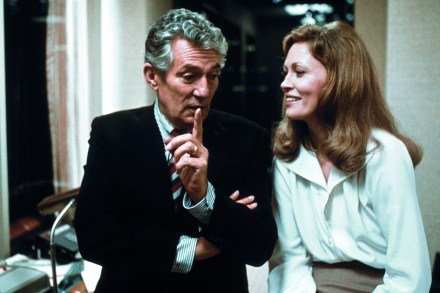
The everyday experience of 2020 includes televised demagogy and a national media making pure spectacle out of domestic terrorism and race riots. The less we believe what we see, the stranger the sights become. These experiences are also the story of Network, the 1976 Paddy Chayefsky/Sidney Lumet hit which won four Oscars out of its 10 nominations. We must ask ourselves why are we living out the 1970s again and, indeed, enacting its satire in deadly earnest. Marx said history repeats itself, first as tragedy, then as farce, but what did he know of Hollywood? A remake is the safest bet. We, however, have reversed Marx’s sequence.

network