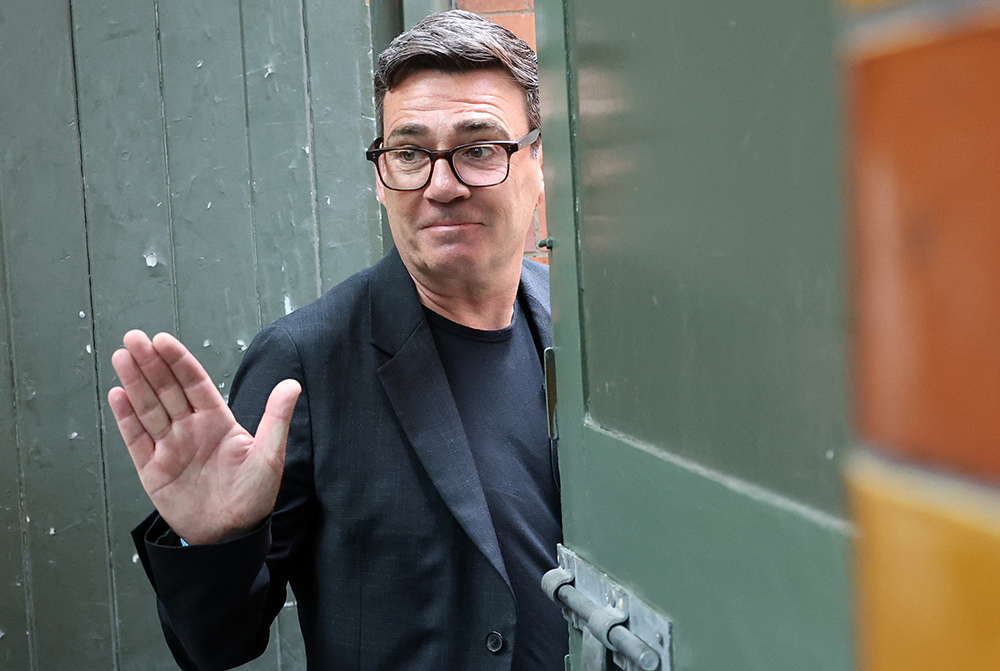
There are so many hopes invested in Andy Burnham’s premiership that disappointment is inevitable. In some cases, it is also desirable.
The member for Makerfield has been co-opted by Labour’s soft left and communitarian right for their respective agendas. To govern will be to choose. But a particularly poisoned chalice has been proffered to the next prime minister, one he should dash from his lips.
Of all the figures on the left who made the pilgrimage to Makerfield to campaign, the presence of Hugh Grant was most ominous. Perhaps the actor who played the prime minister in Love Actually with such élan was there to school our would-be premier on how to deal with obstreperous American presidents. But Hugh Grant is not just a more metrosexual Cary Grant. He is also an indefatigable and determined campaigner for restrictions on a free press and free speech.
Grant is the most recognisable face and suavest voice backing the Hacked Off campaign to revive press regulation, initiate another chapter in the Leveson Inquiry and push for more state control of free expression. And there are already signs that Burnham is sympathetic to the arguments of this charming man. Burnham voiced support for continuing with Leveson’s work while serving as Jeremy Corbyn’s shadow home secretary. He also advocated for Section 40 of the Crime and Courts Act, which sought to make publishers liable for all costs in libel and privacy lawsuits unless they were members of a state-run regulator, even if they won their case.
Those may be past convictions, Corbynite clothing he now wishes to discard, but the indications so far are not promising. The Burnham ascendancy has been marked by a reluctance to embrace accountability and transparency. At both his by-election victory rally and at his speech last Monday outlining his plans for ‘No. 10 North’, Burnham refused to take questions from the press.
His unwillingness to face the media is an extraordinary evasion of accountability. Burnham looks likely to become prime minister without a contest, challenge or debate. On the current timetable, he might ascend to the premiership during the summer recess, meaning it will be weeks until MPs can question him. If the Labour party does not wish to, and parliament cannot, subject him to scrutiny, the press must.
That searching scrutiny should not be countered with the threat of further press regulation. Many of his allies will be urging him to seize the moment. There is a coterie of former tabloid journalists, including Alastair Campbell and David Yelland, itching to become 21st-century Lord Chamberlains, censoring dangerous speech. Burnham’s campaigning for the victims of the Hillsborough disaster has been heartfelt and noble but some of those most ardent in that campaign make little secret of their wish to see the media further regulated.
The temptations are there, but the consequences for liberty would be calamitous. In a Britain where free debate has already been stifled by the legacy of ‘non-crime hate incidents’, in which ordinary mothers are imprisoned for over-hasty social media posts, where shadow-banning, advertising boycotts and existing regulators all restrict free expression, we need a premier campaigning for greater freedom of speech, not less. A former culture secretary should know an attack on press freedom threatens the freedom of us all.
When press regulation was legislated for in 2013 – never implemented and repealed in 2024 – The Spectator’s opposition was unambiguous. While no ‘right-thinking person’ could ‘fail to be appalled at the hacking scandal’, we argued that ‘tackling this crime [was] a matter for the police, not for a press regulator’. While supporting self-regulation, we refused to join anything government-enforced. Any scheme subordinating the press to parliament ‘would be a betrayal of what this paper has stood for since its inception in 1828’.
A free and fearless press remains the most robust way of holding power to account in Westminster and beyond
As we approach our 200th birthday, The Spectator’s commitment to liberty remains unchanged; our opposition to government press regulation stands firm.
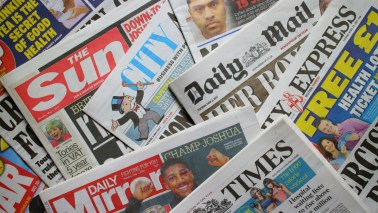
Britain’s press is not in the healthiest of states. Scandals, social media and AI have reduced its prestige and seen smaller titles go bust. Since 2005, a third of local titles have shut, leaving Britain with fewer regional newspapers than at any point since the 18th century.
Yet a free and fearless press remains the most robust way of holding power to account in Westminster and beyond. It would be even more important if Burnham’s putative devolution revolution is enacted. Local power brokers were all too willing to shield disgraces like the grooming gangs from examination; it took the late Andrew Norfolk’s reporting at the Rupert Murdoch-owned Times to expose their full horrors, just as justice for Stephen Lawrence relied upon the campaigning of the Paul Dacre-edited Daily Mail.
If Burnham really does wish to ‘do politics differently’ and reconnect power with the public, he would embrace scrutiny and keep our press free. If he instead surrenders to those who see journalists as a threat to their privileges and pomposity, he will buy himself freedom from the media glare at the cost of leaving a broken press and a more authoritarian country.


Comments