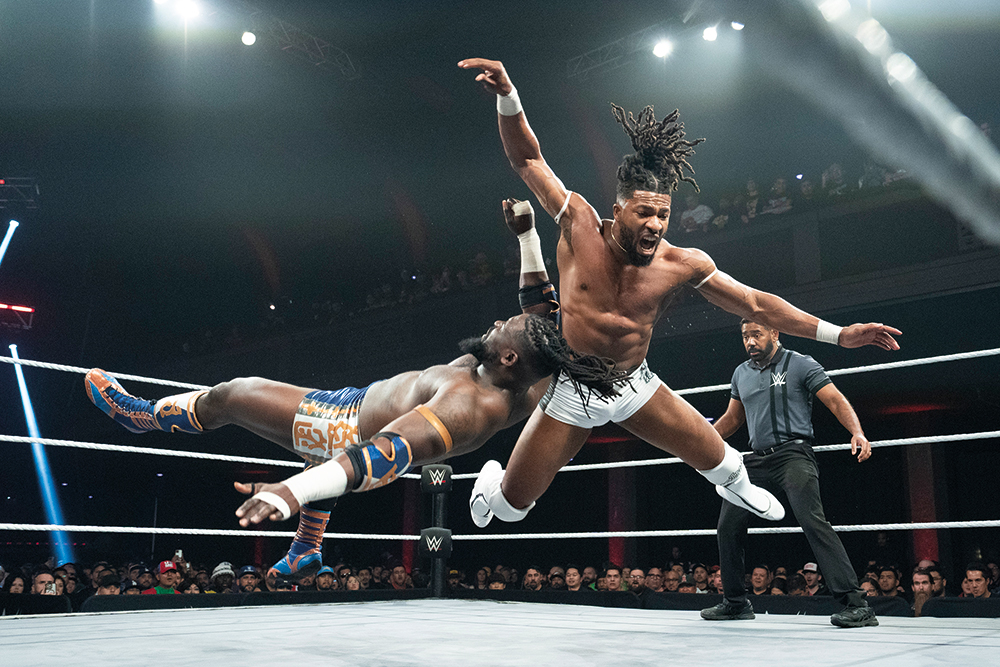
For British readers of a certain age, wrestling occupies a very particular place in the collective memory. Long before the triumph of World Wrestling Entertainment (WWE), long before the pyrotechnics and the Trump-adjacent billionaire promoters, there were those long-lost innocent Saturday afternoons watching World of Sport with your nan, as men with cauliflower ears, wearing improbable hand-stitched trunks, wrestled in grim, determined, municipal fashion in local leisure centres and town halls up and down the land.
If your last points of wrestling reference are those great monoliths Big Daddy and Giant Haystacks lumbering around like coal-fired power stations, today’s wrestling world is almost unrecognisable. It’s no longer a regional live entertainment business that happens to be televised; it’s a global media behemoth, part sport, part soap opera, part stunt show, part Hollywood franchise, worth billions of dollars – and arguably in part responsible for the absurd spectacle that is politics today.
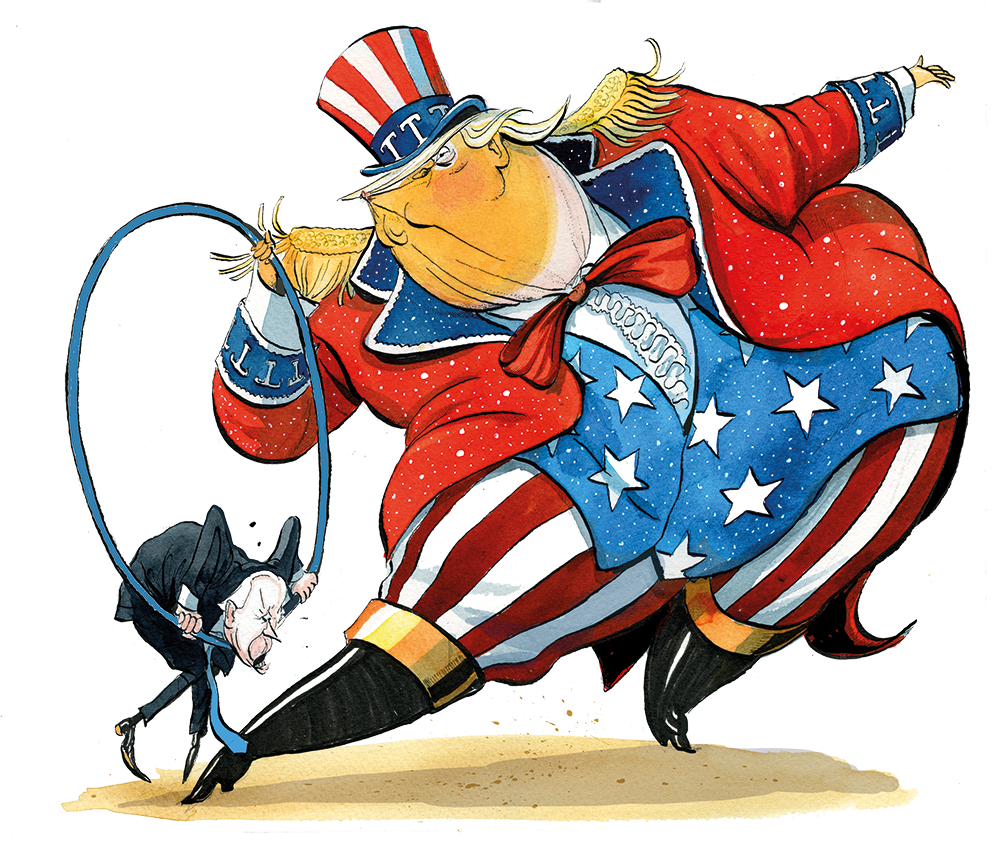
Dan Higgins’s Lords of the Ring is a useful introductory guide to this new era. If you already get your wrestling news from the ‘dirt sheets’ – F4WOnline and the endlessly proliferating wrestling podcasts and social media feeds – you’re not going to learn much new here. But if you don’t know your Rikishi Phatu from your Muhammad Hassan and you want to understand why half the world seems perfectly happy to be living in an alternative universe inhabited by unbelievable goodies and baddies, this might be the place to start.
The book consists of almost 60 very short chapters which bounce around from subject to subject and from place to place – from Zoom interviews to actual encounters with wrestlers, journalists and fans at conventions. Higgins narrates everything in that ever so slightly annoying historic present podcast style, which tends to mistake immediacy for vividness: ‘It’s 2013 and Mark Henry is walking to the ring in Grand Rapids, Michigan, dressed in a striking salmon-coloured blazer and a pink-and-blue striped tie.’ Buckle up for the smack-downs.
From amid all the confusion and carnage a few key insights emerge. Higgins is very good at teasing out nice little anecdotes and stories from the wrestlers he interviews. The great, improbable Mick Foley, who wrestled for almost 30 years as Mankind, Cactus Jack and Dude Love, comes across as a thoroughly nice sort of chap; and it’s wonderful to hear from a pioneer of women’s wrestling, Jayne Porter, aka Klondyke Kate. Higgins’s low-key, respectful approach to these conversations is an important reminder of the blurred boundaries between performance and reality, life and art. Klondyke Kate, for example, now lives in Weymouth, where she fosters children and works with disadvantaged youngsters.
But there are a lot of important and interesting things to be said about wrestling that Higgins doesn’t quite get round to. Admittedly, once you start treating the sport, Roland Barthes-like, as a metaphor for everything, it’s not long before everything starts looking like wrestling: not every headlock conceals a useful theory of late-stage capitalism and not every bout requires an accompanying seminar in cultural studies. Nonetheless, wrestling isn’t merely entertainment. It’s one of the stories – and these days one of the most important and popular ones – that societies tell themselves about themselves.
This is why the book is perhaps rather more significant than it might appear. Like it or not, American wrestling has exported itself around the globe so successfully that it has become one of the dominant languages of contemporary popular culture. It is no longer just an eccentric pastime enjoyed by a small, devoted minority: increasingly, it’s how we conduct ourselves in public life. And we’re all expected to play along.
The word to describe this phenomenon in wrestling – and Higgins devotes a chapter to it – is ‘kayfabe’: the convention that the fictional world should be treated as real. We understand that matches are scripted, yet willingly suspend disbelief, much as audiences do with theatre or cinema. We all agree to participate in the illusion, which means that the key question is no longer ‘Is it fake?’ but ‘Is it a good story?’ Andy Burnham’s comeback, Nigel Farage as heel, Donald Trump’s endless feuds and grievances – Vince McMahon, the co-founder of WWE, might have scripted it all.
Lords of the Ring doesn’t pursue such arguments. It is instead an energetic, accessible and often entertaining survey of modern wrestling and the people who devote their lives to it. But in an age when so much of public life resembles a wrestling storyline, understanding the sport begins to look rather less like a guilty pleasure than a civic necessity. If you’d told the audience at the Deeside Leisure Centre 40 years ago – if you’d told me – that one day the whole world would come to resemble professional wrestling, they’d probably have laughed. We’re not laughing now.




Comments