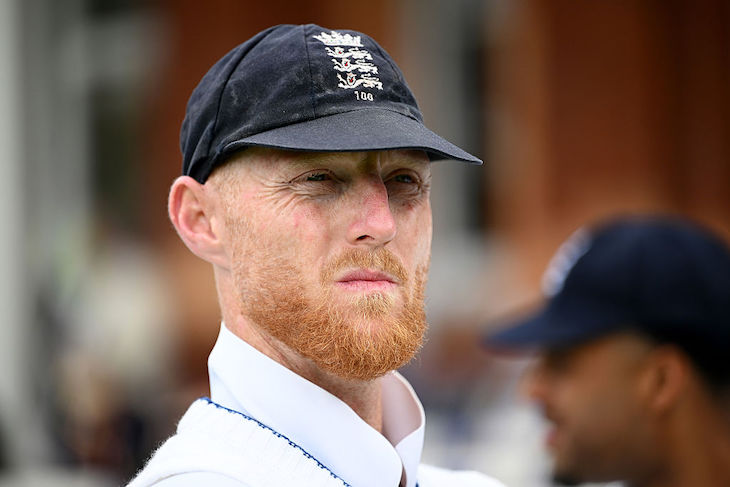
The England cricket captain, Ben Stokes, was involved in an altercation at a night club in the early hours of Monday morning. Also present was his team mate, Gus Atkinson. The players were celebrating England’s victory over New Zealand in the first Test match of the summer. Full details of what exactly took place are yet to emerge but since they were clearly in breach of the team’s new midnight curfew, both players seem likely to miss the second match of the series which starts at the Oval on Wednesday next week.
The omission of Stokes and Atkinson for the second Test match should be viewed not as a crisis, but as a catalyst
The midnight curfew and a new code of conduct were put in place following a number of unfortunate off-field incidents during last winter’s disastrous tours of New Zealand and Australia. In the Test matches ‘down under’, England were comprehensively outplayed by a weakened Australian team, losing the series 4-1. Although it was entirely predictable , the architects of that Ashes debacle – Rob Key, the managing director, Brendan McCullum, the coach, and the captain Ben Stokes – were all confirmed in their posts.
Despite the poor performances of almost all the players on that tour, there have also been disappointingly few changes in the composition of the team. Our batsmen let us down time and again in Australia yet six of the seven who played in the final depressing defeat at Sydney also took the field last week against New Zealand; Zak Crawley was the only batsman to be dropped. It is a great pity that it’s so hard to get into or out of this England team; ‘Competition for places,’ as Sir Geoffrey Boycott has pointed out, ‘is the lifeblood of sport.’

In that sense a temporary sidelining of Stokes and Atkinson might well turn out to be a blessing in disguise. Stokes’ batting, once so important to the team, has become a source of major concern; his average over the last six Test matches is a paltry 16. Nevertheless until this incident in the night club he was certain to play in the next Test. Invoking the mantra that ‘You can’t change a winning team’ (however badly some of its members may have performed), the selectors normally seize on a victory as an excuse to name an unchanged team.
Indeed it’s a shame that they won’t also omit batsman Ben Duckett for next week’s match. Duckett has played many fine innings for England and should certainly be part of England’s plans for the future but he was clearly found out last winter when facing Australia where he barely averaged 20 and didn’t manage a single half century in his ten innings. It wasn’t as if he had a couple of bad games but otherwise played well; his constant failures were, to put it bluntly, one of the reasons why England lost so badly.
And Joe Root, although one of England’s all-time greats, has failed in nine of his last 12 Test match innings and will turn 39 during England’s next Ashes series in Australia. It’s surely time then for the selectors to start the search for his replacement. But that of course is most unlikely to happen; with nearly 14,000 runs in Test cricket. Root is closing in on Sachin Tendulkar’s record (just under 16,000 runs) and personal milestones, unfortunately, often take precedence over the long-term good of the England cricket team. When players’ past achievements cloud the selectors’ judgment in this way, both team and fans are short changed.
Stokes and Atkinson are also very fine players who, it’s to be hoped, can yet play an important part in England’s future. However, this self-inflicted absence accidentally hands the selectors the perfect opportunity to break their own inertia. In the first Test match, the only new player, Emilio Gay – Crawley’s replacement, plucked from the obscurity of the second division of county cricket – played beautifully and was the top scorer on either side. How many more might succeed if only they were given a chance?
If confirmed then, the omission of Stokes and Atkinson for the second Test match should be viewed not as a crisis, but as a catalyst. Penalising them for breaking the curfew doesn’t just uphold team discipline, it inadvertently kick-starts the injection of fresh blood that this England side desperately needs.






Comments