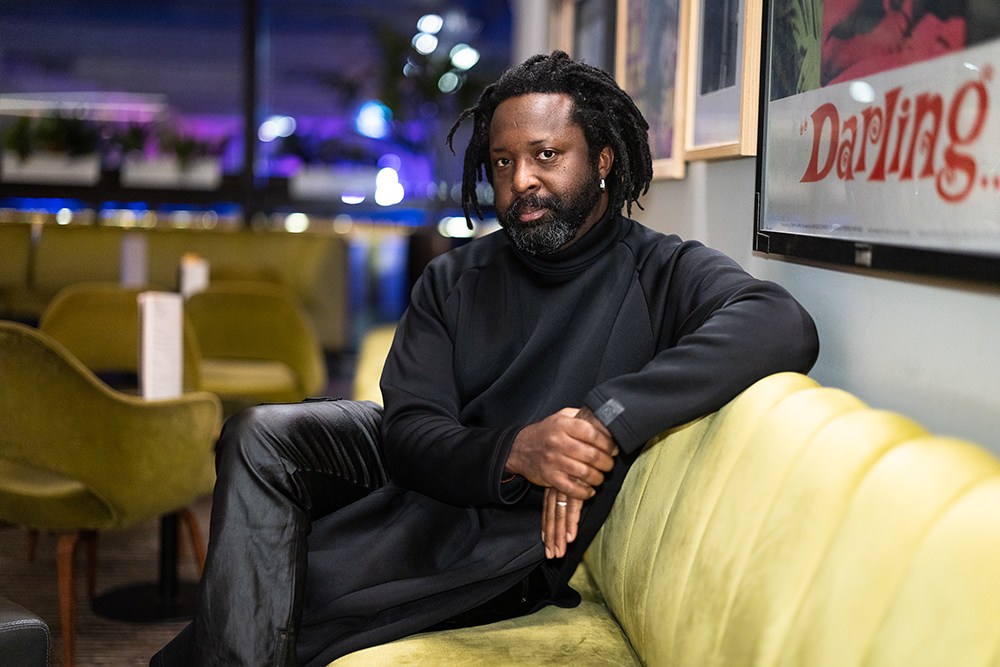
Gothic fiction is full of Jekylls and Hydes. For every castle, there is a dungeon; for every locked door, a hidden chamber; and for every repressed secret, there is a ghost who won’t keep quiet. In his Booker-longlisted novel The Disappearers, Marlon James brings the Gothic to Jamaica. Built on the outcrop of a vast underwater mountain range, at the depths of which are some of the most hostile conditions on earth, it is a place where being gay is also a matter of survival. If countries have basements, then Jamaica’s goes a long way down.
In an abandoned house in Kingston at the height of the 1980s Aids crisis, eight queer men meet to rehearse John Herbert’s gay prison play, Fortune and Men’s Eyes. While in their normal lives they have all mastered the art of disappearing in plain sight, of moving through the world like ghosts, here they briefly feel what it’s like to live. As they discover, ‘The love that dares not speak its name speaks loudly behind bars,’ and through art it is set free.
That is, until an act of barbaric violence sends them hurtling back to ‘the valley of death’. Told from the perspective of the assailants, the mob attack that leaves in its wake ‘six broken ribs’, ‘three fractured arms’, ‘two gouged eyes’, ‘two sodomised rectums’, ‘eleven knocked out teeth’ and a dead man is fuelled by a homophobia so entrenched in Jamaica that the crime is viewed as an act of ‘national service’. It is a scene rendered with such visceral precision that not even the reader can just get up and walk away.
Nor should we be able to. For James, only badly written violence ‘is something you can easily move on from’. The well-written kind should haunt you, as it haunts its victims, who are frozen in time, spectres of a perpetual present. As is the case with his Booker Prize-winning A Brief History of Seven Killings, The Disappearers is an antidote to the pornographic spectacle of violence promoted by Hollywood movies. In a James novel, the only people entertained by watching a man being raped by a tree branch are the dead souls who set out to kill.
The Disappearers is about the lasting effects of violence, but it is also about the immediate pleasure of sex. J.B. Priestley once wrote that ‘as soon as two bodies turn into the beast with two backs’, the writer should close the door – for James, it should swing wide open. To read his exhilarating descriptions of dark nightclubs full of grabbing hands is to understand that desire is universal, that nobody should be denied its fulfilment based on who they choose to love.
In a novel that spans 17 years, hops across three countries, shifts from journal entries to letters to interview transcripts; that moves between classes, voices, from the Gothic to the detective to the revenge plot, there are bound to be moments when it doesn’t quite hold together. What ultimately unites all these moving parts, however, is the message that art, in both its high and low forms, can give us the strength to live. Whether it’s Aids – that ‘one long set of disappearing acts’ – or violence that seeks to vanish these eight gay men, it is art that, however briefly, makes them feel seen. Music, novels, poetry, movies – all of it is a life raft on the wine-dark sea. ‘Poetry makes nothing happen,’ W. H. Auden wrote, ‘it survives’; and because it does, so can we.






Comments