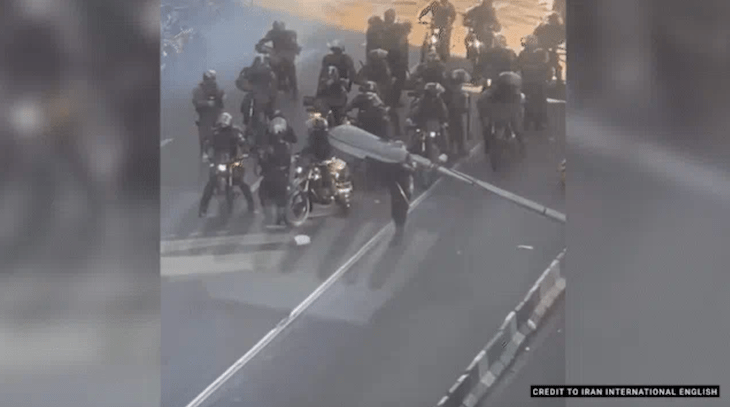
Iran’s clerical establishment has spent nearly half a century insisting – always with that brittle certainty peculiar to ideologues – that history culminated in 1979. That the Shah is a hushed embarrassment, monarchy a quaint relic, and the very notion of a crown something to be packed away with mothballs and other discarded finery. Yet politics, like biology, evolves in defiance of official catechisms. And Iran, in these final days of 2025, looks less like a regime in command than a contraption still whirring chiefly because no one has yet found the off-switch.
Iran, in these final days of 2025, looks less like a regime in command than a contraption still whirring chiefly because no one has yet found the off-switch
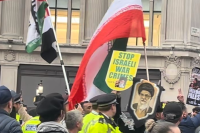
The past week has brought a small parade of humiliations, each more revealing than the last. The rial has continued its grim impersonation of confetti; protests have spread beyond the usual flashpoints; and the central bank chief’s resignation has been reported as the sort of administrative manoeuvre that tries to look like competence while smelling faintly of panic. The bazaar – those old Iranian seismographs of public mood – has reportedly rumbled again, with shopkeepers closing, chanting, and clashing with police in the capital and beyond. When a regime cannot keep its currency from melting, it is not merely suffering an economic wobble; it is watching its credibility liquefy in public.
In such an atmosphere – where state promises feel less like pledges than like taunts – something curious has happened. Reza Pahlavi’s name, long the subject of diaspora disputation and the occasional nostalgic sigh, has risen again, not as an echo of the past but as a provocation to the present. The son of the last Shah has for years occupied an awkward political niche: too royal for republicans, too Western for purists, too associated with memory for a generation that has known only clerical rule. And yet it is often the symbol a regime tried hardest to bury that returns most insistently when that regime begins to fail.
There are reasons for this. The Islamic Republic has, by the sheer, unrelenting consistency of its failures, revived the comparative appeal of what it overthrew. A state that cannot deliver basic economic stability, that devotes greater ferocity to policing women’s hair than to policing corruption, and that responds to dissent with tear gas and batons while demanding gratitude for ‘security’, performs a kind of reverse propaganda for the ancien régime. It makes ‘order’ sound tempting again. It makes the notion of national dignity – uncoupled from clerical metaphysics – feel positively radical.
One must, however, resist the easy romance of inevitability. Iran is not a normal state and cannot be read as one. The opposition remains fragmented, often performative, frequently quarrelsome. The Islamic Republic has survived crises that would have shattered less ideologically armoured systems because it is not primarily a government; it is a survival apparatus. The Revolutionary Guards and their auxiliaries were designed less to administer a country than to keep it hostage. A collapsing currency and popular anger do not automatically translate into collapse so long as coercion remains coherent.
And yet – here lies the point that must not be missed – coercion remains coherent only until it doesn’t. Even a small fracture in the obedience of security forces can alter the mathematics of regime survival. In that regard, it is not merely the protests that warrant attention but the increasingly persistent indications – circulating in open reporting and in the broader information environment – that parts of the security apparatus may be straining under the burden of enforcement, and that, in at least some instances, senior personnel may be balking at the harshest instructions. Such claims are notoriously difficult to verify in real time, and propaganda travels fast in moments of upheaval. But the strategic significance is plain enough: if even a minority of high-ranking officers begin to refuse orders, delay compliance, or quietly obstruct repression, the regime’s most reliable instrument – fear – starts to lose its edge.
This is where Reza Pahlavi’s rising salience becomes analytically interesting. It does not necessarily indicate a straightforward desire for the restoration of monarchy in its old hereditary form. More plausibly, it suggests that many Iranians want a focal point: a name and face around which the idea of ‘after’ can coalesce. A transitional figure. A convenor. A symbol of national continuity untainted by the Islamic Republic’s clerical project. Iran’s current unrest has already featured pro-monarchy slogans, which is itself telling: a society does not chant for a return unless it has concluded, at some level, that the present is intolerable.
So will the Shah return? Not, perhaps, in the literal, cinematic sense. But might we be witnessing the beginning of the end of the regime? It is no longer an outlandish question. When an economy decays into permanent crisis; when the streets turn economic grievance into political repudiation; when the bazaar stops playing along; and when obedience within the coercive apparatus begins to fray – then the speed of events can surprise even those who spend their lives predicting them. Legitimacy, once spent, is not replenished by slogans. And the Islamic Republic, by every visible sign, is running out of credit.
Comments